Top 5 Hemorrhoid Solutions of 2026—Ranked From Best to Worst by a Colorectal Surgeon
Colorectal surgeon Dr. Matthew Hayes reviewed and ranked the 5 most-used at-home hemorrhoid solutions of 2026—from the one that rebuilds the tissue to the ones that just keep you buying.

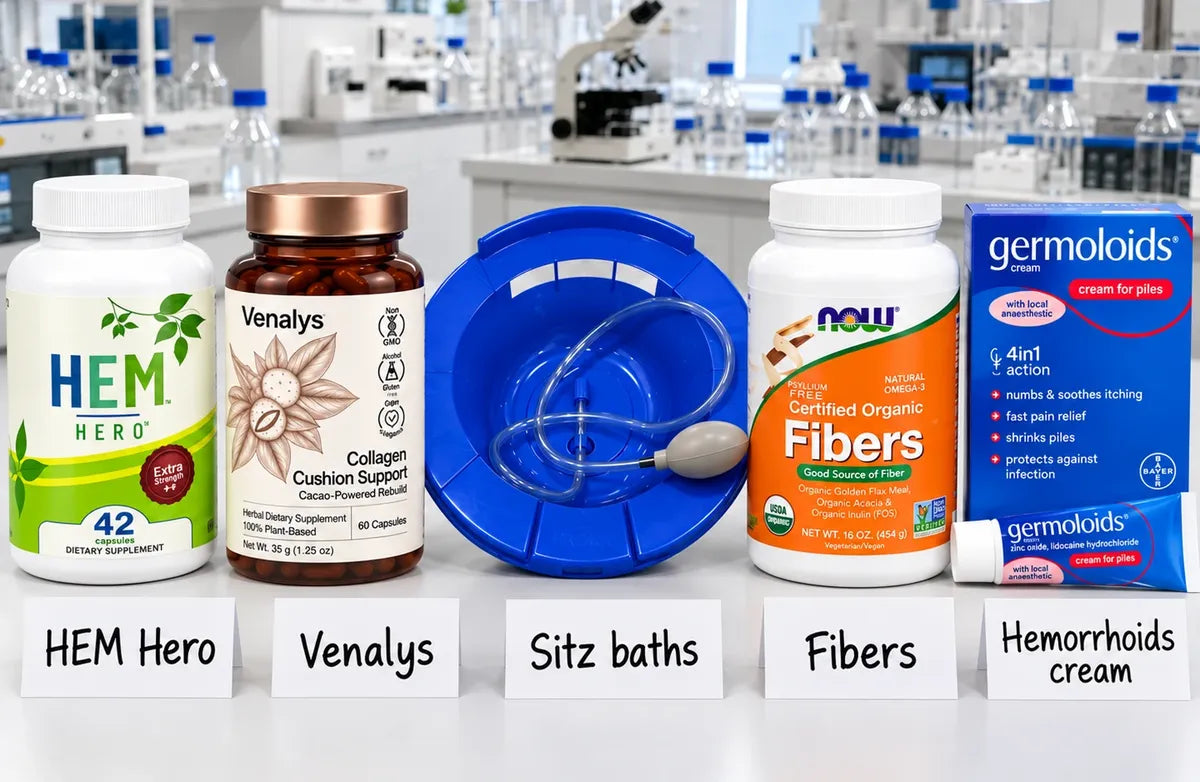
Most people who end up in my office have been treating their hemorrhoids for years.
They've used the creams. They've sat in the sitz bath. They've tried the pills they saw online and the fiber their doctor told them to take. Many have spent hundreds of dollars, some well over a thousand, and they're sitting across from me because it keeps coming back.
That isn't bad luck. It's what happens when everything on the shelf is aimed at the wrong target.
The word hemorrhoid comes from the Greek for "flowing blood." So almost everything sold for it has been built to stop the bleeding, numb the itch or shrink the swelling for a few hours.
Almost nothing is built to fix the tissue that actually failed.
Here is how I ranked the five most-used at-home hemorrhoid solutions of 2026, based on what they actually act on, how long the result lasts once you stop, what the evidence says, and what they cost you over time:
Quick Reminder: What Is a Hemorrhoid—and Why Does It Keep Coming Back?
Everyone has hemorrhoids. Not the painful kind: the anal cushions you were born with. Three soft pads of blood vessels held in place by a mesh of collagen and elastic fibers. Their job is to seal the canal. When they're healthy, you never think about them.
The trouble starts when that collagen mesh weakens. After 40, your body makes roughly 1% less collagen every year, and the tissue holding your cushions in place starts to stretch, slip and bulge. Every hard morning and every long day in a chair puts pressure on tissue that can no longer repair itself fast enough.
When researchers examined hemorrhoid tissue under the microscope, they found weaker collagen than in healthy tissue, and more of the enzymes that break collagen down (Aigner et al. 2009, Willis et al. 2010).
That's when the swelling, the bleeding, the itching and the lump you feel after the bathroom show up. Those are the symptoms. The collapsed cushion is the cause. And it's why treating the symptom alone never holds.
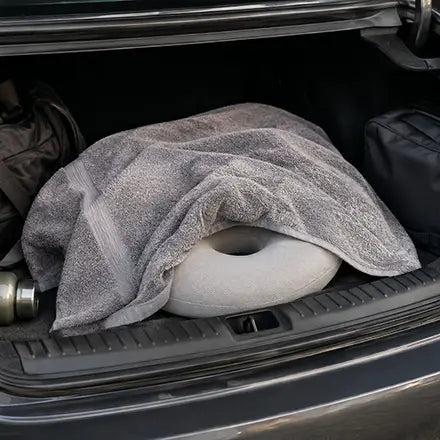
Here are the most common signs your cushion is collapsing ↓




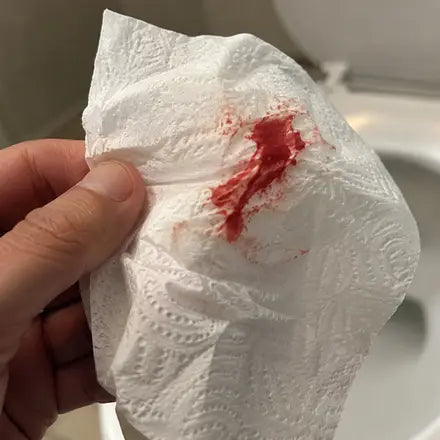
If you see blood, get it checked once. My first job with any patient is to rule out something more serious. Once that's done, what's left is almost always the cushion.
1. Treating the Bleeding Instead of the Tissue
Blood is what scares you, so it's what every product is built to stop. But the bleeding comes from a cushion that has already slipped. Stop the bleeding without fixing the cushion, and it's back the next hard morning.
2. Using Hemorrhoid Creams Long Past Their Label
Over-the-counter hydrocortisone creams are labeled for no more than 7 days of use. I meet patients who have used them for years. Steroid creams used long term can thin the very skin you're trying to protect.
3. Thinking "Vein Support" Means Repair
Diosmin, hesperidin and horse chestnut on their own act on the blood vessels. But the vessels aren't what collapsed. The collagen holding them is. Tone the vessels, ignore the mesh they sit in, and you've built a product you have to keep buying.
4. Buying a Solution That Never Ends
If a product has no finish line, ask why. Creams, wipes, pads and autoship pills all run on the same model: it works while you use it, so you use it forever.
5. Trusting "Natural" and "Homeopathic" Labels
"Natural" on a hemorrhoid product tells you nothing about what it does to the tissue. Some best-selling "natural" formulas are homeopathic dilutions so extreme that none of the original plant is left in the bottle.
Popular hemorrhoid products that don't work ↓
1. It Targets the Collagen Cushion, Not Just the Vessels
The collagen mesh is what failed. A real solution has to help your body rebuild it, not just calm the vessels sitting inside it.
2. It Works From the Inside
Your cushions sit inside the anal canal, above where a cream reaches. If it only touches skin, it only treats skin.
3. It Has a Finish Line
Collagen turns over slowly, so repair takes months, not days. Look for a defined protocol with an end date, not a lifetime subscription.
4. Non-Alkalized Cacao at a Real Dose
Cacao flavanols (epicatechin, catechin, procyanidins) are among the most studied plant compounds for collagen. But most cacao is "Dutch processed" with alkali, which strips out most of the flavanols. The label still says cacao. The part that works is gone.
5. A Guarantee That Starts After You Stop
Anyone can promise you'll feel better while you use their product. Look for a brand willing to guarantee the result after you've stopped taking it.
Feature Comparison & Rating
| Venalys | Creams | Sitz Baths | Hem Hero & Amoils | Fiber | |
|---|---|---|---|---|---|
| Targets the collagen cushion | |||||
| What it acts on | Collagen, vessels & pressure | Surface skin | Surface skin & muscle spasm | Vessels / surface skin | Stool softness |
| Relief lasts | Built to hold after you stop | Hours | While you soak | While you take it | While you take it |
| Has a finish line | 150 days | ||||
| Daily effort | 2 capsules | Up to 4 times a day | 10–15 min, 2–3 times a day | 3 capsules or oil 3 times a day | 1–3 doses a day |
| Money-back guarantee | 12 months after you stop | 90 days | |||
| Long-term cost | $179.50, once | Ongoing | Low, ongoing | Ongoing (autoship) | Ongoing |
| Final Score | 9.2 | 5.5 | 4.0 | 2.0 | 1.0 |
1. Collagen Cushion Support
by Venalys
Our Rating
9.2/10
Overall Score
4.8/5 Excellent
Over 872 verified customer reviews
Current Promotion: Save up to 40% + Free Shipping
CHECK AVAILABILITY ➤Pros
- The only hemorrhoid formula built on cacao — no other brand uses it
- 120 mg non-alkalized cacao extract, the form that still carries its flavanols
- Rebuilds the collagen cushion instead of numbing, shrinking or softening around it
- Works from the inside, right where the cushion collapsed
- A finish line: 150 days, then you stop for good
- 2 capsules a day. No creams, no soaking, no wipes
- 12-month guarantee that starts after you stop
- Third-party tested, made in the USA
- Free Freedom Protocol ebook with the 5-bottle program
Cons
- Only available online
- Sells out often (small batches of non-alkalized cacao)
- Nothing to feel in the first weeks — collagen takes time
- The 12-month guarantee requires the full 5-bottle program
Why Venalys Was The Clear Winner
Every other product on this list is aimed at what you feel: the bleeding, the itch, the swelling, the pressure on the way out.
Venalys is the only one aimed at why you feel it.
The people I see don't just want less itching. They want to stop living around it:
The cushion hidden in the trunk. The one-cheek sit at dinner. Checking the paper every single time. Planning the day around the nearest bathroom.
To stop living around it, you have to fix the thing that failed. And that comes down to one ingredient.
The biggest difference? Non-alkalized cacao.
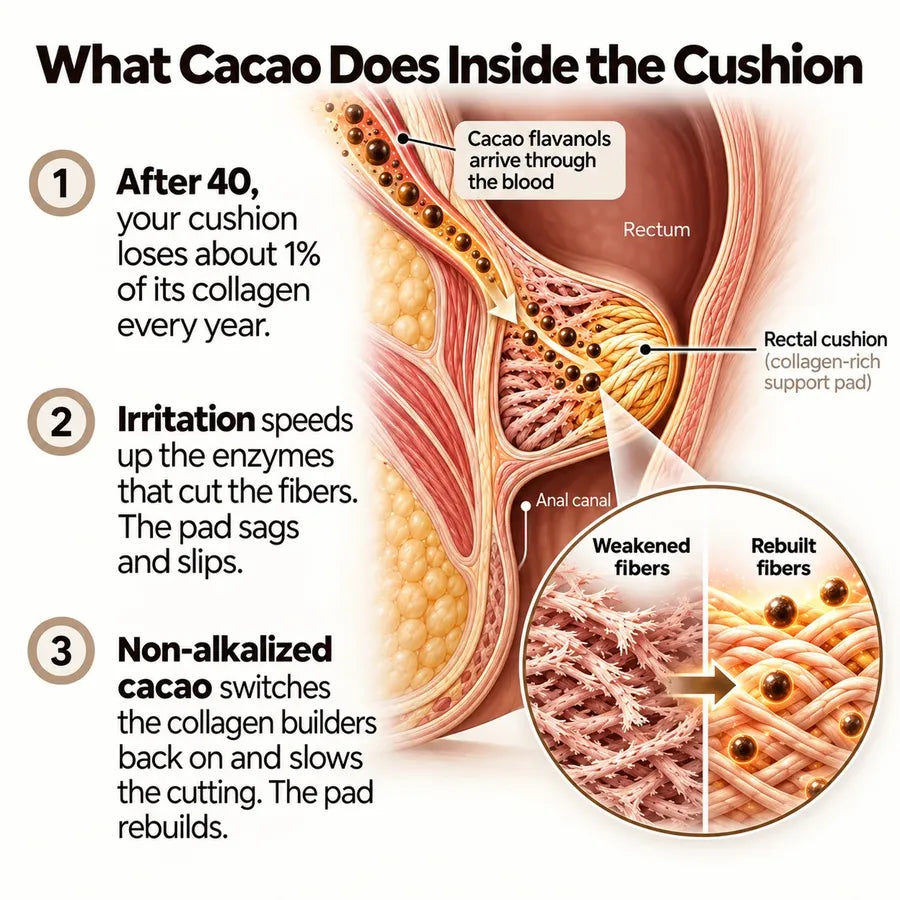
A hemorrhoid is a collagen problem. The pad that seals your canal is held up by a collagen mesh, and after 40 that mesh loses ground every year. Irritated tissue makes it worse: it floods the area with enzymes that cut collagen faster than your body can replace it. The cushion sags, slips and bulges. That bulge is your hemorrhoid.
Cacao flavanols (epicatechin, catechin and procyanidins) hit that problem from three sides at once:
1. They switch on the fibroblasts, the cells that build new collagen.
2. They block the enzymes that cut the collagen you still have.
3. They protect the fibers from the oxidative damage that weakens them.
Build more, lose less, protect what's there. That's how a collapsed cushion lifts back into place. No cream, pill or powder on this list does any of the three.
Why can't you just take collagen powder, or eat dark chocolate?
Collagen powder gets broken down in your stomach into loose amino acids that scatter to your skin, joints and hair. Almost none of it reaches the cushion, and none of it tells your cells to build.
Chocolate and cocoa powder fail for a different reason. Almost all of it is alkalized, "Dutch processed" to make it darker and smoother, and that process destroys most of the flavanols. The label still says cacao. The part that works is gone.
Venalys uses 120 mg of non-alkalized cacao extract, the form that keeps its flavanols intact. As far as I can find, it's the only hemorrhoid formula in the country built on cacao at all.
Why it takes 150 days, and why you can stop
Collagen is slow. New fibers take months to lay down and mature, which is why the first few weeks feel like nothing. That's normal, and it's why Venalys runs for 150 days, five bottles.
But once the mesh is rebuilt, the cushion holds itself up again. There's nothing left to keep treating, so you stop. That's the opposite of every other product here, which only works while you keep using it.
That's why Venalys earned my only score above 9.
2. Hemorrhoid Creams & Ointments
Preparation H, hydrocortisone and lidocaine creams
Our Rating
5.5/10
Overall Score
Pros
- Fast relief, often within minutes
- Cheap and sold everywhere
- Numbing (lidocaine) and shrinking (phenylephrine) ingredients do calm a flare
- Useful as a short-term rescue on a bad day
Cons
- Relief lasts hours, not months
- Acts on surface skin only — nothing reaches the cushion's collagen
- Hydrocortisone is labeled for 7 days max — long-term steroid use can thin the skin
- Phenylephrine only squeezes the vessels down for a few hours
- Messy, several times a day, every flare, for years
Our Conclusion:
Hemorrhoid creams earn a 5.5. For a bad flare, they work: a numbing agent, a vasoconstrictor or a mild steroid will calm the surface fast, and that's worth something when you can't sit down.
Where they lose points is everything after the first few hours. A cream sits on the skin. The collapsed cushion sits above it, untouched. The flare settles, the tissue underneath keeps weakening, and the next flare comes.
And the one ingredient that feels strongest, hydrocortisone, is labeled for no more than a week, not the years most people end up using it.
A good fire extinguisher. A terrible fire prevention plan.
3. Sitz Baths
Warm-water soaks, basin or bathtub
Our Rating
4.0/10
Overall Score
Pros
- Warm water relaxes the sphincter and eases spasm pain
- Cheap: a basin costs about $15
- No side effects
- Soothing after a painful bowel movement
Cons
- Relief lasts about as long as you're in the water
- 10–15 minutes, 2–3 times a day
- Does nothing for the collagen or the cushion
- Hard to do at work, on the road or with a full house
- Weak evidence for any lasting benefit
Our Conclusion:
Sitz baths earn a 4. They're safe, cheap and genuinely soothing. Warm water relaxes the muscle around the canal, and after a hard bowel movement that relief is real.
But a soak can't reach collagen. It calms the muscle and the skin for a few minutes and changes nothing about the cushion. And fitting 30 to 45 minutes of soaking into a normal day, every day, is where most people quietly give up.
Comfort, not a solution.
4. Hemorrhoid Supplements & "Natural" Oils
Hem Hero® by Hem Healer, H-Hemorrhoids Formula by Amoils
Our Rating
2.0/10
Overall Score
Pros
- Hem Hero is taken by mouth, so at least it works from the inside
- Diosmin and hesperidin have studies for short-term symptom relief
- Amoils is gentle and easy to apply
- Both offer a 90-day money-back guarantee (Amoils asks you to return the bottles)
Cons
- Hem Hero is a vein formula (diosmin, hesperidin, horse chestnut) with nothing aimed at the collagen
- Hem Hero: 3 capsules a day, and its own page says to expect results "from the 2nd bottle"
- Hem Hero is pushed on autoship — built to be taken indefinitely
- Amoils' actives are homeopathic 12C dilutions — too dilute for any of the original plant to remain
- Amoils says itself it "has not been clinically tested"
- Amoils' formula is for non-bleeding hemorrhoids — bleeding needs a second product
Our Conclusion:
Hemorrhoid supplements and "natural" oils earn a 2. They look like the modern answer, and they're priced like one: Hem Hero lists $199.99 for five bottles, and Amoils runs about $35 for a 3–4 week bottle.
Hem Hero is at least built from real ingredients. But it's a vein formula. Diosmin, hesperidin and horse chestnut act on the vessels, not on the collagen mesh the vessels sit in, which is why it's sold on autoship and never with a finish line.
Amoils is harder to defend. Its active ingredients are homeopathic 12C dilutions, diluted so far that no molecule of the original plant is expected to remain, and the brand's own page says the product has not been clinically tested.
A pill for the vessels and an oil with no measurable plant in it. Neither one touches the cushion.
5. Fiber Supplements & Psyllium
Metamucil, Benefiber and generic psyllium powders
Our Rating
1.0/10
Overall Score
Pros
- Softer stools mean less straining
- Cheap and easy to find
- Good for general gut health
- A good daily habit — soft psyllium is even inside Venalys
Cons
- Softens what passes through the cushion, does nothing for the cushion itself
- Reverses nothing that has already collapsed
- Bulk fiber can cause bloating and gas, especially at first
- Needs plenty of water, or it can make constipation worse
- A habit for life, not a solution
Our Conclusion:
Fiber earns a 1 as a stand-alone hemorrhoid solution, and I say that as someone who tells every patient to eat more of it.
Fiber does one thing well: it softens the stool, so there's less pressure on the way out. That helps protect a healthy cushion. It does nothing for one that has already slipped. The collagen stays weak, the cushion stays where it fell, and the first hard week brings the flare right back.
That's the trap. People take their fiber faithfully for years, still bleed, and conclude nothing works.
Keep the fiber. Just don't expect it to rebuild a cushion that's already collapsed.