
Table of Contents
- What natural remedies can and can't do
- The natural remedies with the most support
- Oils, vinegar and kitchen remedies, one at a time
- Homeopathic remedies for hemorrhoids
- Home care that matters most
- When to stop home remedies and see your doctor
- Why flares come back after natural remedies
- Sources
- About Venalys
The natural remedies for hemorrhoids with the best support are simple: more fiber, more water, no straining and a warm soak when it flares. Oils, vinegar and homeopathic products get a lot of attention, but US doctors don't list them, and that's the line between real hemorrhoid relief and a cabinet full of maybes.
Maybe you've been there. A flare starts, you search at night, and you end up with a jar of coconut oil, a bottle of vinegar and a list of tips from ten different sites. Some nights it calms down. Then a few weeks later, it's back, and you start the list again.
Here's the thing. Everyone has hemorrhoidal cushions, soft pads of blood vessels and tissue near the opening. Doctors at Cleveland Clinic describe hemorrhoid disease as that tissue sliding down out of place. Pressure pushes it down. So the remedies that work best are the ones that take pressure off.
What natural remedies can and can't do
Every natural remedy you'll read about does one of two jobs. It either lowers the pressure on the area, or it calms the skin for a while. Both have a place. They're just not equal.
| Remedy | What it does | How much support |
|---|---|---|
| Fiber and psyllium | Softer stool, less pushing | Strong, in US guidelines |
| Water and movement | Helps fiber work, keeps things moving | Strong, part of first line care |
| Warm soak | Calms itching and soreness | Common home care advice |
| Plant flavonoids | May ease bleeding and itching | Some, small studies |
| Oils and vinegar | Soothe or moisten the skin | Not listed by US guidelines |
| Homeopathic products | Unclear | Not listed by US guidelines |
The top of that table changes your bathroom habits. The bottom only touches the skin. That's why the top does more.
The natural remedies with the most support
Fiber and psyllium
Fiber is the one remedy every US guideline puts first. The 2024 guideline from the American Society of Colon and Rectal Surgeons, summarized in American Family Physician, says fiber cut lingering symptoms by 53%. That's a big number for something you can buy at any grocery store.
A 2019 review in the Cleveland Clinic Journal of Medicine recommends at least 28 grams of fiber a day for women and 38 grams for men, and names psyllium husk as a good way to add it. Dr. Majd, a family medicine physician, gives simple advice in her video on home care: "Start small and increase it slowly in order to avoid side effects." Too much too fast can bring gas and cramps.
Water and movement
Fiber needs water to do its job. Without it, fiber can make a stool harder, not softer. A 2018 review in American Family Physician puts first line care at 25 to 35 grams of fiber a day along with plenty of water.
Moving matters too. A walk after meals, a short break every hour at a desk or behind the wheel. Long sitting keeps pressure on the same spot all day.
A warm soak
The NIH page on hemorrhoid treatment lists sitting in a tub of warm water as part of home care. It doesn't change the hemorrhoid. It calms the itch and the soreness for a while, which can be exactly what you need on a bad night. We cover how to do it in our sitz bath guide.
Plant flavonoids
Flavonoids are plant compounds, and most of the research uses a purified citrus extract. The ASCRS guideline says flavonoid supplements "can be suggested" for itching, bleeding and leakage. The American Family Physician review adds two cautions: the studies are small, and these products are not FDA approved for hemorrhoids.
Horse chestnut is often sold for veins. Memorial Sloan Kettering says there are no data to support its use for hemorrhoids, that the raw seed is toxic, and that it may raise bleeding risk if you take a blood thinner. Ask your doctor first.
Oils, vinegar and kitchen remedies, one at a time
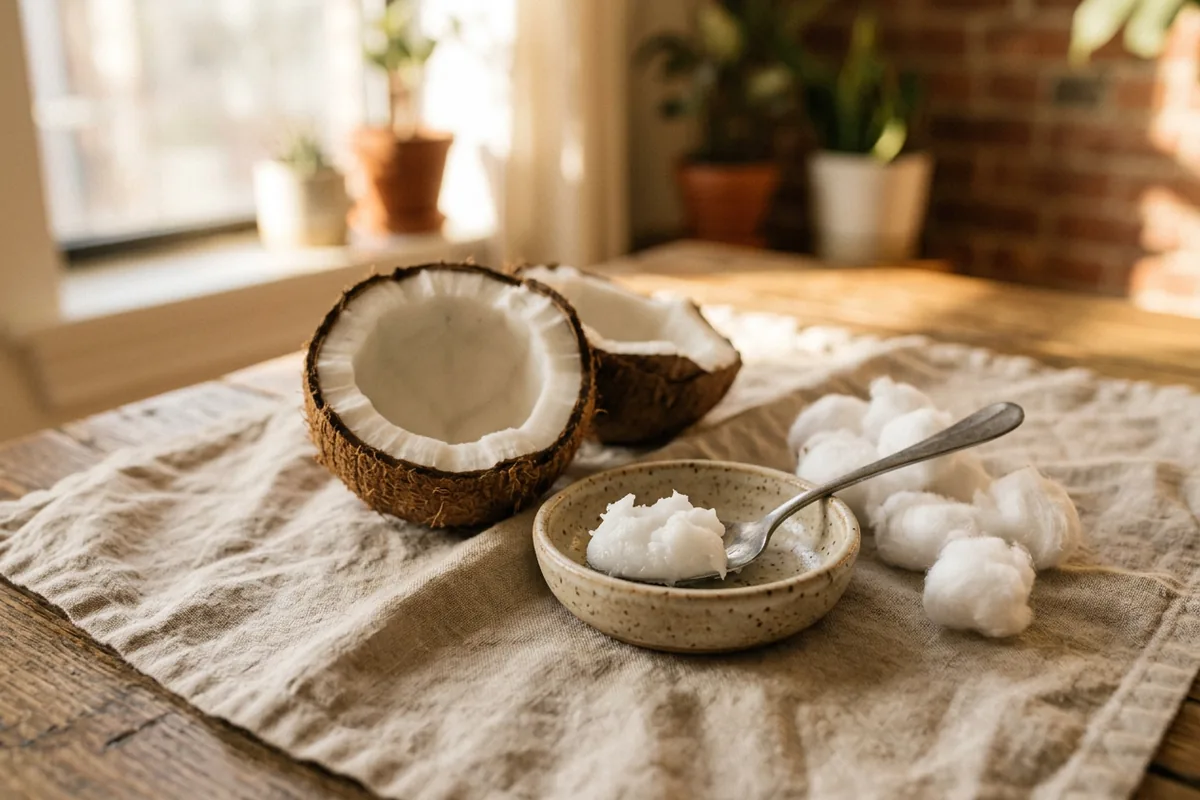
These are the remedies people search for most. None of them is listed in the US guidelines we rely on. That doesn't make every one of them harmful. It means you should treat them as comfort for the skin, not as a plan.
Castor oil
Castor oil shows up in a lot of home remedy lists, both rubbed on the skin and taken by mouth. Don't take it by mouth for hemorrhoids without asking your doctor. Loose, frequent stools can irritate the area too. On the skin, it's a thick oil that some people find soothing. There's no good research on it for hemorrhoids. If you want to try it on the skin, test a small spot first and stop if it stings.
Coconut oil
Coconut oil is popular because it's in most kitchens and feels gentle. People use a thin layer to soften dry, sore skin after wiping. That's about all you can expect from it. It moistens the skin. It doesn't change the swollen tissue inside. Use plain oil with nothing added, keep the jar just for this use, and don't expect it to replace fiber and water. If the skin gets red or itchy, stop.
Tea tree oil
Tea tree oil has a reputation as a skin oil, so people try it on hemorrhoids too. It's strong, and the skin around the opening is thin and easy to irritate. Never use it straight from the bottle on that area. Even mixed into another oil, it can burn. With no solid research for hemorrhoids and a real chance of irritation, this is one most people can skip.
Essential oils
Lavender, peppermint, cypress, frankincense. You'll see lists of essential oils for hemorrhoids everywhere. They're concentrated plant oils, and that's the issue. On thin, sore skin, they can sting, itch or cause a rash. If you still want to use one, it has to be well diluted in a plain carrier oil, and it should never go inside. A warm soak with plain water gives the same calming effect with far less risk.
Oil for piles
In some countries, hemorrhoids are called piles, and you'll find oils and herbal blends sold under that name, often from traditional medicine. Many mix several plant oils and extracts. The label rarely tells you how much of each is inside, and none of these blends is listed in US guidelines. If you buy one, read the full ingredient list, skip any blend with strong essential oils, and ask your pharmacist if it mixes with your other medicines.
Apple cider vinegar
Apple cider vinegar is one of the most shared tips online. A cotton ball soaked in vinegar, pressed on the area. But vinegar is an acid. On sore or broken skin, it can sting and burn, and that can make a flare feel worse. Some people add a splash to a warm bath instead, where it's very diluted. Plain warm water does the calming part on its own.
Homeopathic remedies for hemorrhoids
Homeopathic products for hemorrhoids are sold as creams, drops and tablets, often with plant names on the label. They're made by diluting a substance many, many times, often until very little of it is left. None of the US guidelines on hemorrhoids recommends them. If you like using one, check the full ingredient list, especially in creams, and tell your doctor about it, the same way you would for any supplement. Don't let it delay a visit if you have bleeding or pain that won't stop.
Home care that matters most
Hemorrhoids home care, day by day
Good home care is mostly a set of small daily habits. The NIH page on treatment covers most of them:
- Eat fiber at every meal, or add a fiber supplement.
- Drink water through the day.
- Go when you feel the urge. Don't hold it.
- Don't strain, and don't sit on the toilet with your phone.
- Take a warm soak when it's sore.
- Get up and walk if you sit for long hours.
None of these is exciting. Together, they take daily pressure off the area, and that's the part that counts.
Is there a hemorrhoid cure at home?
Honest answer: not in the way most people hope. Home remedies can calm a flare, and many flares settle with soft stools and less sitting. But a remedy doesn't remove a hemorrhoid, and no oil or herb makes the tissue go back to where it was. When home care isn't enough, doctors have office procedures and, for some people, surgery. That's a talk to have with your doctor, not something to solve with one more jar from the kitchen.
When to stop home remedies and see your doctor
A lot of men wait too long because it feels awkward to bring up. Dr. Majd says it plainly: "Honestly, we see this every single day. Although it may be a potentially embarrassing topic for you, it's really not at all for us."
See your doctor if you have:
- any rectal bleeding, especially if it's new
- pain that's severe or getting worse
- a lump that doesn't go away
- a change in your bowel habits
- no improvement after several days of home care
Bleeding is never something to guess about. Hemorrhoids are only one possible cause, and your doctor can check.
Why flares come back after natural remedies
A natural remedy works on tonight. The swelling goes down, the itch fades, and you feel normal again. But the tissue that slid out of place is still there. The next hard morning or long drive puts the same pressure on the same spot.
That's why the boring habits matter more than the jar. Soft stools, short bathroom visits, water and movement lower the pressure every single day, not just during a flare. Hemorrhoids are most common between ages 45 and 65, according to American Family Physician, and the daily pressure adds up over those years.
Sources
- American Family Physician, 2025, summary of the ASCRS guideline on hemorrhoids
- Cengiz and Gorgun, Cleveland Clinic Journal of Medicine, 2019, Hemorrhoids: a range of treatments
- Mott and colleagues, American Family Physician, 2018, Hemorrhoids: diagnosis and treatment options
- Memorial Sloan Kettering Cancer Center, Horse chestnut (About Herbs)
- NIDDK (NIH), Treatment of hemorrhoids
- Majd MD, 6 Home Hemorrhoid Treatment Tips, How Doctors Treat Hemorrhoids (YouTube)
This article is for general information and is not medical advice. If you have rectal bleeding, severe pain or a change in your bowel habits, see your doctor.
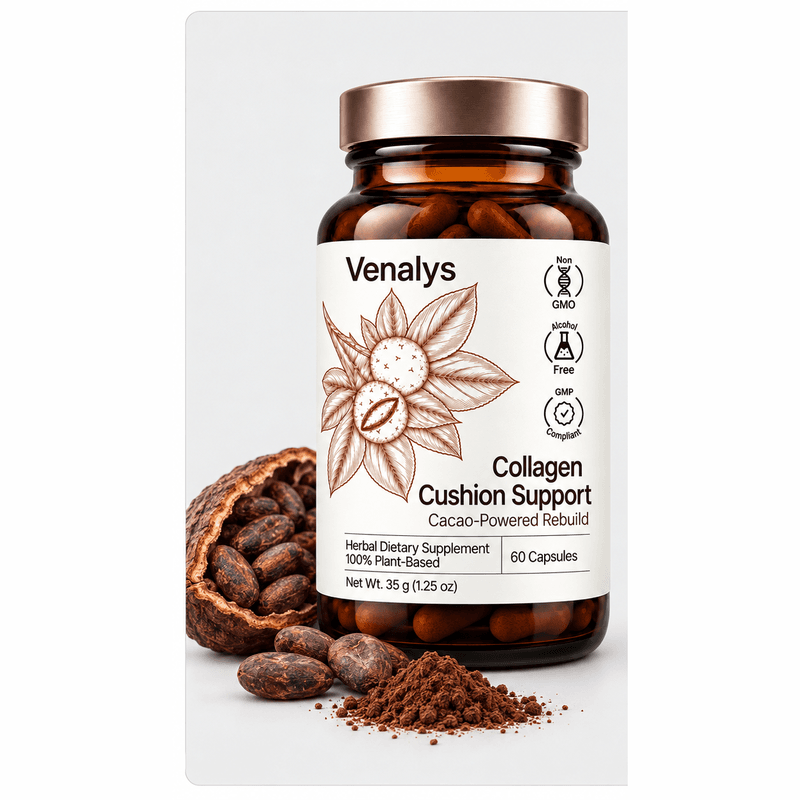
About Venalys
Venalys Collagen Cushion Support is a daily, plant based capsule made with cacao, horse chestnut, butcher's broom, soft psyllium and chicory root. It is formulated to support healthy vein tone and comfortable, regular bowel movements.†
Learn more about Venalys†These statements have not been evaluated by the Food and Drug Administration. This product is not intended to diagnose, treat, cure, or prevent any disease.
FAQs
What is the fastest natural remedy for a hemorrhoid flare?
A warm soak calms itching and soreness quickly for many people. Pair it with soft stools and no straining. Those two do more together than any oil.
Can you dissolve a hemorrhoid naturally?
No remedy dissolves a hemorrhoid. The swelling of a flare often goes down on its own with good home care. If a lump stays or hurts a lot, see your doctor.
What drink helps hemorrhoids?
Plain water is the best drink, because it helps fiber keep your stool soft. There's no special juice or tea that works on hemorrhoids directly. Drink through the day, not all at once.
What is the biggest enemy of hemorrhoids?
Straining. Hard stools and long sitting on the toilet push the tissue down. Fiber, water and short bathroom visits work against it.
Are herbal remedies safe if I take a blood thinner?
Not always. Some herbs, like horse chestnut, may raise bleeding risk with blood thinners. Ask your doctor or pharmacist before you start any herbal product.