
Table of Contents
- Why is fiber good for hemorrhoids
- High fiber foods for hemorrhoids
- Soluble or insoluble fiber for hemorrhoids
- Fiber intake for hemorrhoids: how much and how fast
- High fiber meals for hemorrhoids
- High fiber diet after hemorrhoid surgery
- Fiber, food and bowel habits
- When fiber isn't enough
- Sources
- About Venalys
A high fiber diet helps hemorrhoids because fiber holds water in your stool, so it comes out soft and you don't have to strain. Most adults need somewhere around 28 to 38 grams a day, and most get far less from food.
You've probably heard "eat more fiber" a dozen times. Maybe you bought a tub of powder, felt bloated for a week, and quietly gave up. Or you did everything right and still flared. Fiber does one job very well, and doing it the right way makes a big difference.
Why is fiber good for hemorrhoids
Everyone has hemorrhoidal cushions, soft pads of collagen and blood vessels that help seal things shut. Hemorrhoids show up when the tissue that holds them weakens and they slide down. Researchers at Cleveland Clinic Florida found a weaker mix of collagen in hemorrhoid tissue than in normal tissue, according to their 2015 study of hemorrhoid collagen.
Every hard stool pushes on that weak tissue. Every minute of straining adds pressure. Fiber takes that load off. That's why surgeons put it first. Their current guideline found that fiber cuts symptoms that stick around by about half, as summarized in the American Family Physician summary of the 2024 ASCRS guideline.
So yes, a high fiber diet is good for hemorrhoids. It takes pressure off the cushions every single morning. It won't make every flare disappear, and that's why doctors also look at bathroom habits, movement and, when needed, office options.
High fiber foods for hemorrhoids
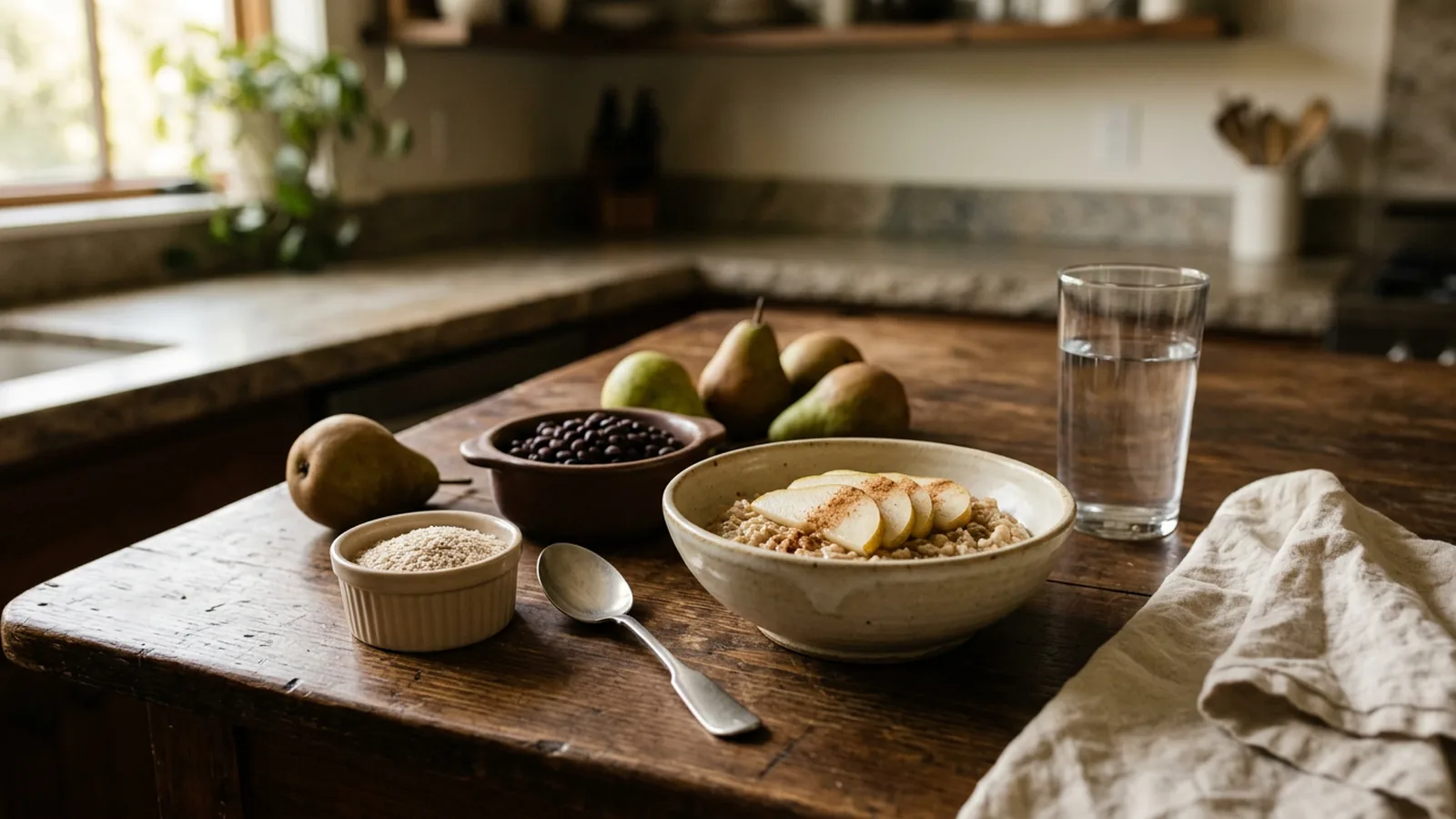
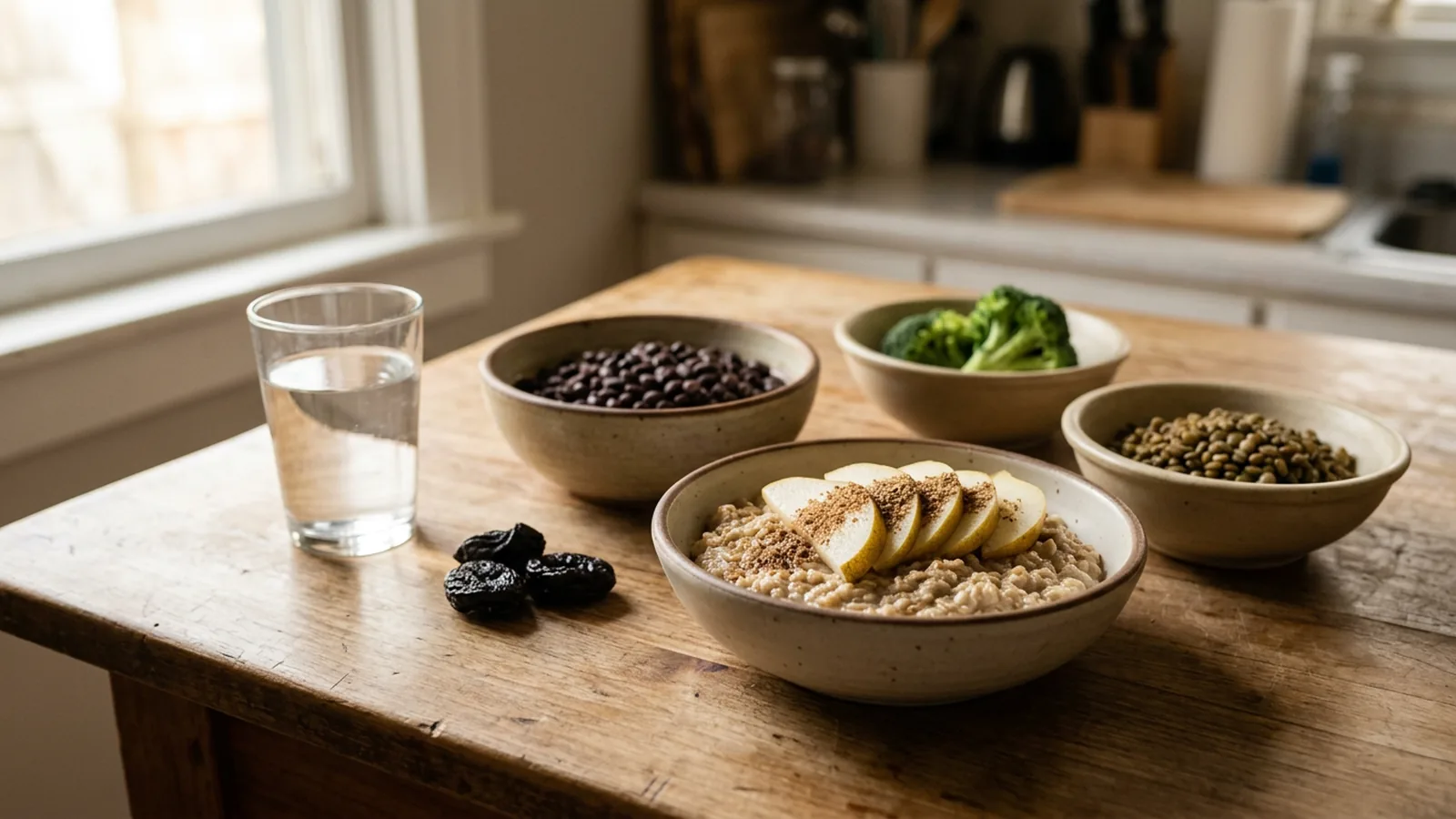
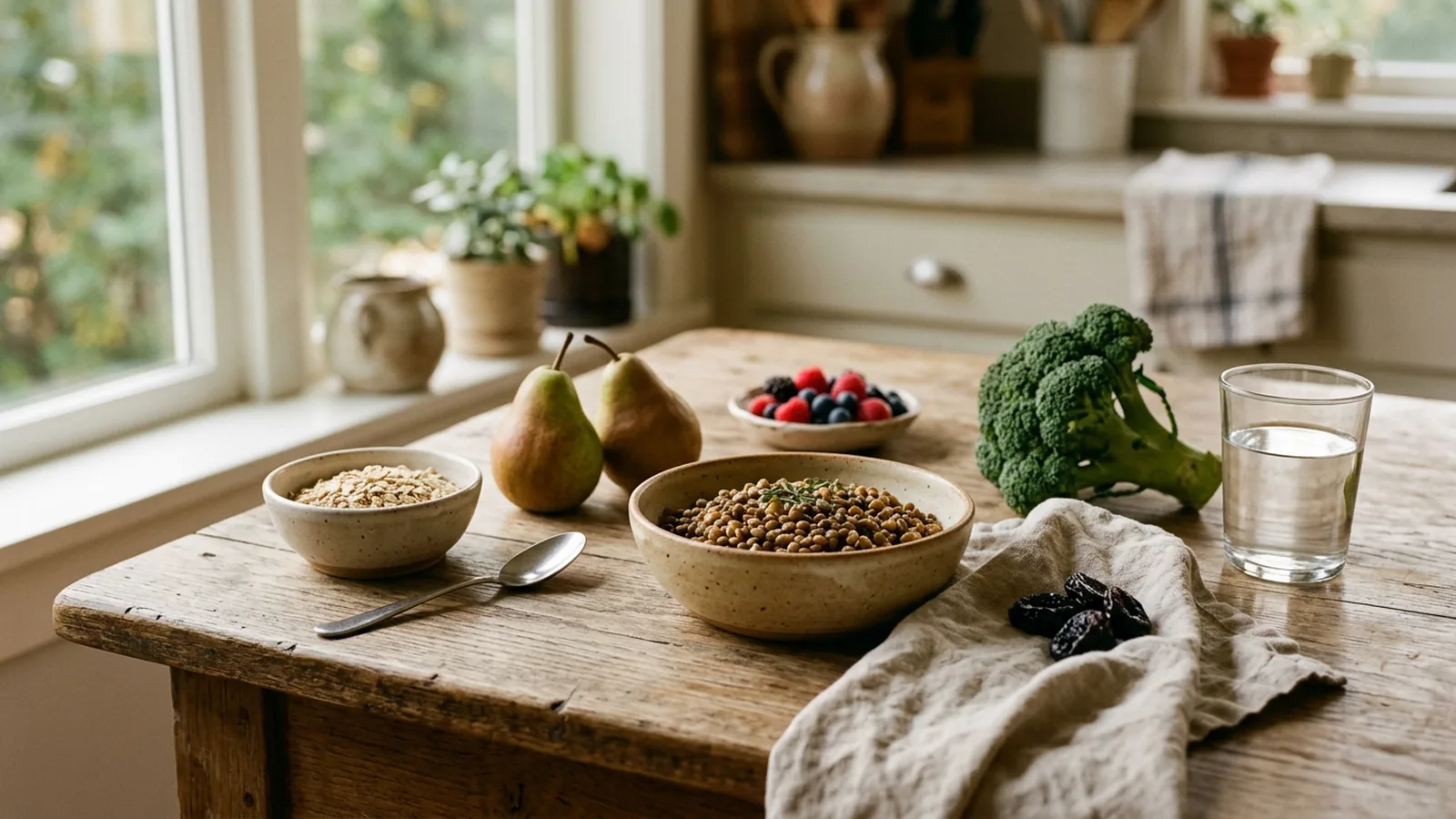
You don't need special food. You need more of the plain stuff, spread across the day. Here are the easiest wins:
- Beans and lentils: black beans, chickpeas, lentils, split peas. Great in soups, chili and salads.
- Whole grains: oatmeal, bran cereal, brown rice, barley, whole wheat bread.
- Fruit with the skin on: pears, apples, berries, kiwi, oranges, prunes.
- Vegetables: broccoli, carrots, peas, Brussels sprouts, sweet potatoes, leafy greens.
- Seeds and nuts: chia seeds, ground flaxseed, almonds. A spoonful goes a long way.
- Popcorn: plain, air popped. A whole grain snack that feels like a treat.
Pick two or three you already like and eat them more often. That beats a perfect list you'll never follow.
Soluble or insoluble fiber for hemorrhoids
There are two kinds of fiber. Soluble fiber soaks up water and turns into a soft gel. Oats, beans, apples, chia and psyllium are rich in it. Insoluble fiber adds bulk and roughage. Wheat bran, nuts and vegetable skins are rich in that. More detail in our guide to fiber for hemorrhoids.
For hemorrhoids, soluble fiber does the heavy lifting, because soft is what protects the cushion. Insoluble fiber helps keep things moving, but too much of it without water can make stool rough and hard to pass. You want both from food, with a tilt toward the soft kind. If you add a supplement, psyllium is the one doctors mention most.
Fiber intake for hemorrhoids: how much and how fast
Cleveland Clinic doctors suggest at least 28 grams a day for women and 38 grams for men, and they note that psyllium husk can round out the diet, in their 2019 review in the Cleveland Clinic Journal of Medicine.
How you get there matters as much as the number:
- Go slow. Add a little each week, not all on Monday.
- Drink with it. The NIH guide to eating for hemorrhoids pairs fiber with plenty of liquids, because fiber without water can backfire.
- Spread it out. Some at breakfast, some at lunch, some at dinner.
- Expect some gas at first. It usually settles as your gut adjusts.
If you get cramps, bloating that won't settle or harder stools, back off a little and drink more. More fiber isn't always better. The right amount is the one that gives you soft, easy mornings.
High fiber meals for hemorrhoids
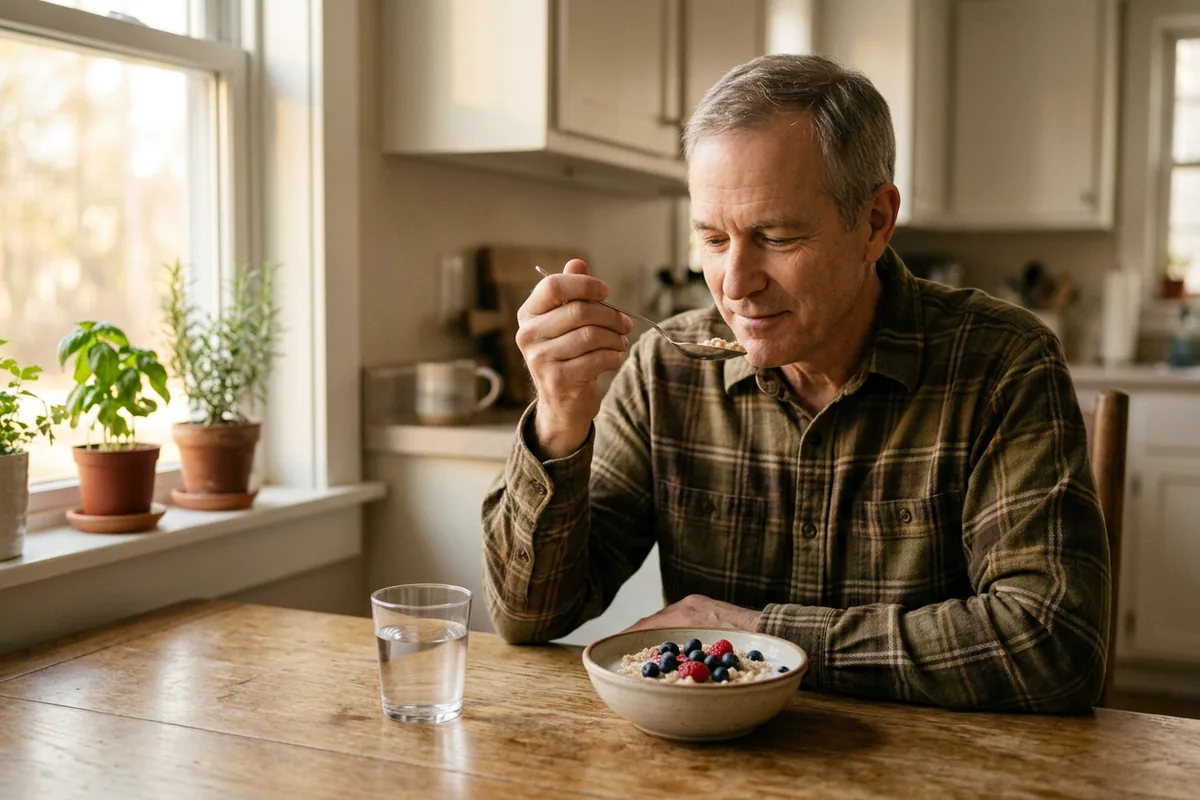
Here's what a simple high fiber day can look like. No recipes, no special shopping.
- Breakfast: oatmeal with berries and a spoonful of ground flaxseed, plus a big glass of water.
- Lunch: a bowl of lentil or bean soup with a whole wheat roll, and a pear.
- Snack: an apple with a handful of almonds, or air popped popcorn.
- Dinner: chicken or fish with brown rice, broccoli and a side salad.
- Evening: a couple of prunes or a kiwi, and another glass of water.
Swap freely. Chili for soup, barley for rice, chickpeas on the salad. The pattern is what counts: a plant food at every meal, and water all day.
High fiber diet after hemorrhoid surgery
After surgery or banding, the first bowel movements are the ones people dread most. Soft stool makes them easier. Your surgeon will usually ask you to eat fiber, drink plenty of fluids and often take a stool softener. Follow their plan exactly, because it's built around your procedure.
In the first days, gentle foods like oatmeal, soup, cooked vegetables and soft fruit are easier on the gut than big bowls of raw salad. Build back up from there. And once you've recovered, keep the habit. A procedure removes the bulge. It doesn't change the hard mornings that made it.
Fiber, food and bowel habits
Fiber sits inside a bigger picture: what you eat, how your gut behaves and what your stool tells you. Here's the short version of each piece.
Fiber for hemorrhoids
Fiber is the first thing doctors suggest for hemorrhoids, and for good reason. It keeps stool soft so each trip to the bathroom puts less stress on the cushion. You can get it from food, from a supplement, or both. Food brings other nutrients along. A supplement makes it easier to hit the daily target. Psyllium is the supplement with the most support. Start with a small dose, take it with a full glass of water, and build up over a couple of weeks.
Hemorrhoid diet
A hemorrhoid diet is mostly a gut friendly diet. More beans, whole grains, fruit and vegetables. More water. Less of what tends to harden stool or upset your gut, like lots of cheese, white bread, fried food and heavy drinking. Spicy food doesn't cause hemorrhoids, but some people find it stings during a flare. Pay attention to your own triggers. A food diary for two weeks often shows a clear pattern. More detail in our guide to the hemorrhoid diet.
Do hemorrhoids cause diarrhea
No. Hemorrhoids don't cause diarrhea. It often works the other way: frequent loose stools irritate the area and can set off a flare. Wiping again and again also rubs the skin raw. If you have diarrhea that lasts more than a few days, or it comes with blood, fever or weight loss, see your doctor. Soluble fiber can help firm up loose stool a little, which is why it helps on both ends.
Do hemorrhoids constipate you
Not directly, but they can feel like they do. A swollen hemorrhoid can make you feel like you haven't finished. And when going hurts, many people hold it, which dries the stool and makes the next one harder. That's how the cycle feeds itself. Soft stool from fiber and water breaks it. Go when you feel the urge, and get up when you're done.
Treatment for hemorrhoids and constipation
When both show up together, doctors usually start with the constipation, because it drives the hemorrhoids. That means fiber, fluids and daily movement, sometimes a stool softener or a gentle laxative for a short time. For the flare itself, warm sitz baths and a soothing cream can help. If constipation is new, lasts weeks or comes with pain or bleeding, see your doctor to find the cause.
Blood or food in stool
Red bits in the toilet can be scary. Beets, red peppers, tomato skins and berries can all look like blood. Bright red blood on the paper often comes from a hemorrhoid or a small tear. Dark, tarry stool or blood mixed into the stool is different and needs a doctor soon. Never assume bleeding is "just hemorrhoids". Let your doctor check it.
When fiber isn't enough
Soft stool takes pressure off the cushions, but some people eat well for years and still flare. Age, long hours of sitting, heavy lifting and the weaker supporting tissue found in hemorrhoid studies all play a part. If you still flare often, or you see blood, talk to your doctor. Office procedures like banding are an option for some hemorrhoids, and other conditions can look the same.
You may also see collagen powder suggested online. Collagen supplements have mostly been studied for skin and joints. No study has tested them for hemorrhoids, so ask your doctor before counting on one.
Sources
- Nasseri and colleagues, Cleveland Clinic Florida, 2015, collagen in hemorrhoid tissue
- American Family Physician, 2025 summary of the ASCRS hemorrhoid guideline
- Cengiz and Gorgun, Cleveland Clinic Journal of Medicine, 2019, Hemorrhoids: A range of treatments
- NIDDK (NIH), Eating, diet and nutrition for hemorrhoids
This article is for general information and is not medical advice. If you have rectal bleeding, severe pain or a change in your bowel habits, see your doctor.
About Venalys
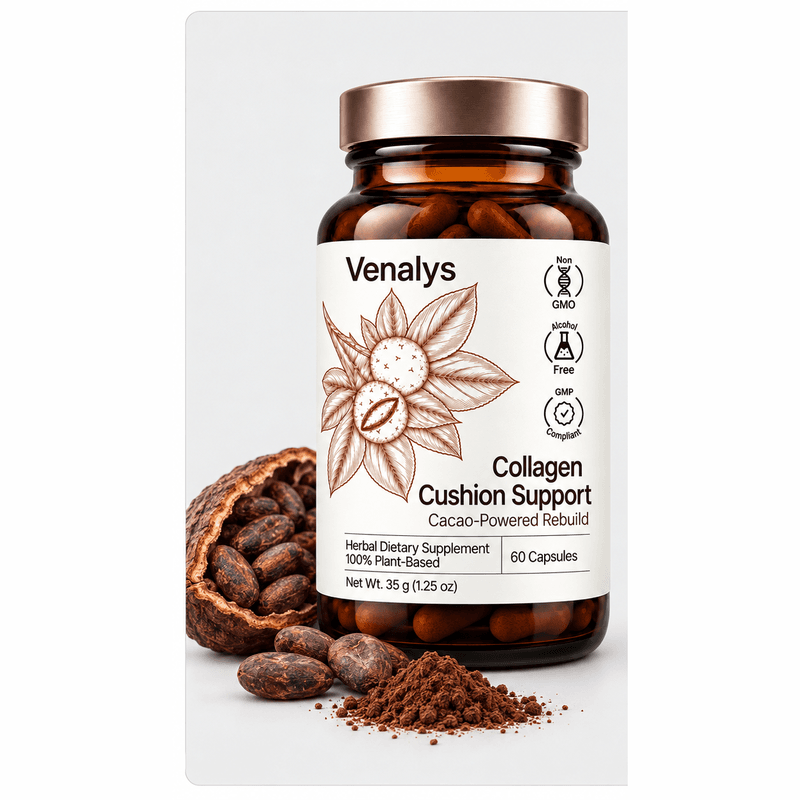
Venalys Collagen Cushion Support is a daily, plant based capsule made with cacao, horse chestnut, butcher's broom, soft psyllium and chicory root. It is formulated to support healthy vein tone and comfortable, regular bowel movements.†
Learn more about Venalys†These statements have not been evaluated by the Food and Drug Administration. This product is not intended to diagnose, treat, cure, or prevent any disease.
FAQs
Is a high fiber diet good for hemorrhoids?
Yes. It's the first step doctors recommend, because soft stool means less straining and less pressure on the cushion. Raise it slowly and drink water with it.
What foods relieve hemorrhoids?
Foods that soften stool: beans, lentils, oats, pears, apples, berries, prunes, broccoli and whole grains. They help the next bowel movement more than the flare you have today.
What drink shrinks hemorrhoids?
No drink shrinks them. Water helps the most, because it keeps fiber working and stool soft. Cutting back on alcohol helps too, since it dries you out.
Which fruit is not good for hemorrhoids?
No fruit is off limits for everyone. Unripe bananas can be binding for some people. If a fruit seems to harden your stool, eat less of it and see if things change.
What is the biggest enemy of hemorrhoids?
Straining. Hard stool, long bathroom visits and holding it in all add pressure. Fiber, water and getting up when you're done take that pressure away.