

Table of Contents
Most hemorrhoids are treated first at home, with fiber, water, warm sitz baths and a short course of an OTC cream. When that isn't enough, doctors offer quick office procedures like rubber band ligation, and surgery is kept for large hemorrhoids or ones that keep coming back.
You probably know the cycle. A flare starts, you buy a cream, it calms down, and a few weeks later you're back in the same aisle. Maybe you've already had a banding that held for a while. That pattern is common, and it helps to know what each option can and can't do, so you and your doctor can choose the next step.
Everyone has hemorrhoidal cushions, normal pads of tissue, blood vessels and collagen inside the lower rectum. Harvard Health explains that the tissue holding them in place can weaken with age, so they bulge and slide down. Researchers at Cleveland Clinic Florida found a weaker mix of collagen in hemorrhoid tissue than in normal tissue, according to their 2015 study. Every treatment below works on part of that picture.
How doctors treat hemorrhoids
Doctors work in steps, from the simplest to the most involved. The NIH page on hemorrhoid treatment describes the same ladder: home care first, then office procedures, then surgery when needed. Here's how the main options compare.
| Option | Where it's done | What it does | Trade off |
|---|---|---|---|
| Fiber, water, sitz baths, OTC cream | At home | Softens stool, calms itching and swelling | Slow, needs daily habits |
| Rubber band ligation | Doctor's office | Cuts blood flow so the hemorrhoid shrinks and falls off | Pressure and ache for a few days, may need repeats |
| Sclerotherapy | Doctor's office | An injection that shrinks the hemorrhoid | Often needs more than one session |
| Infrared coagulation | Doctor's office | Heat that scars the tissue and cuts blood flow | Best for small hemorrhoids |
| Surgery | Surgery center or hospital | Removes or lifts the hemorrhoid tissue | More pain and a longer recovery |
Hemorrhoid treatment at home
To treat hemorrhoids at home, start with your stool. Fiber is what surgeons recommend first. The current guideline from the American Society of Colon and Rectal Surgeons found that fiber cuts persistent symptoms by about half, as summarized in American Family Physician. The same guideline says flavonoid supplements can be suggested to help with bleeding and itching.
- Fiber every day, from food or psyllium, the soft, not bulk kind. Add it slowly.
- Water with it, so the fiber softens instead of hardening.
- Short bathroom visits. No phone, no pushing.
- Warm sitz baths to soothe the area after a bowel movement.
- OTC creams for a short time. Hydrocortisone creams can calm itching, but a family doctor on YouTube reminds viewers they're meant for short use, because long use can thin the skin. Follow the label.
Treatment for internal hemorrhoids
Internal hemorrhoids sit inside the rectum. They usually bleed without pain, and some slip out during a bowel movement. People search for a cure for internal hemorrhoids, and here's the honest answer. Home care settles most flares. Office procedures shrink or remove the swollen tissue. None of them changes the fact that you still have hemorrhoidal cushions, because everyone does. What doctors aim for is a cushion that stops bleeding and stays inside.
Hemorrhoid banding
Rubber band ligation is the most common office procedure for internal hemorrhoids. Harvard Health describes it: the doctor places a small band at the base of the hemorrhoid, which cuts off its blood supply. It shrinks and falls off within days, often without you noticing. It takes a few minutes and needs no sedation. You may feel pressure or a dull ache for a few days. Some people need more than one session. Read our full guide to hemorrhoid band.
Hemorrhoid laser procedure
Laser procedures use focused light energy to shrink hemorrhoid tissue or close the blood vessels feeding it. Some clinics advertise them as painless or quick. Results depend a lot on the type of hemorrhoid and the surgeon's experience. Ask your doctor how laser compares with banding or surgery for your case, how often they do it, and what recovery really looks like.
Hemorrhoid laser removal cost
The cost of laser removal varies widely. It depends on where you live, whether it's done in an office or a surgery center, the anesthesia and your insurance. Some plans cover it when it's medically needed. Before you book, ask the clinic for a written estimate and call your insurance to check what's covered, including copays.
Treatment for hemorrhoids on the anus
External hemorrhoids sit under the skin at the opening, so they can hurt, itch and swell. Most settle with warm sitz baths, soft stools and gentle cleaning with water. If one turns hard and very painful, it may have a clot inside. See a doctor early. Seen soon enough, the clot can sometimes be removed in the office.
For an external hemorrhoid that keeps bothering you, one colorectal surgeon explains that a small one can sometimes be removed in the office with local numbing. That avoids a full operation. The wound is still sore for a while, though, and keeping stool soft matters a lot during recovery. The consultation is where your doctor decides what makes sense for you.
Hemorrhoid surgery
Surgery is for hemorrhoids that are large, stay out, or keep coming back after office procedures. It's a real decision, and a good surgeon will walk you through it.
Hemorrhoidectomy
A hemorrhoidectomy removes the extra hemorrhoid tissue. It's the most thorough option for large or stubborn hemorrhoids. It's also the most painful option, which is why doctors usually try other steps first. Other surgical options, like stapled procedures or tying off the blood vessels, may fit some cases. Your surgeon will explain which one fits yours. Read our full guide to hemorrhoidectomy.
What happens during a hemorrhoidectomy
You receive anesthesia, so you don't feel the procedure. The surgeon removes the swollen tissue and closes or leaves the small wounds to heal. Many people go home the same day. You'll get instructions for pain relief, stool softeners and sitz baths before you leave. Ask someone to drive you home. Read our full guide to what happens during a hemorrhoidectomy.
Hemorrhoidectomy recovery
Recovery is the hard part, and it's better to know that going in. The first bowel movements hurt. Pain relief, stool softeners, fiber, water and warm sitz baths help a lot. Most people need some time off work. Follow your surgeon's plan closely, and call right away for heavy bleeding, fever or trouble passing urine. Read our full guide to hemorrhoidectomy recovery.
Is hemorrhoid surgery worth it?
For many people with large, bleeding or prolapsing hemorrhoids, yes. They often say the recovery was tough but life is better after. For small hemorrhoids, simpler steps usually make more sense. The best way to decide is an honest talk with a colorectal surgeon about your symptoms, your options and what recovery would mean for your work and family. Read our full guide to is hemorrhoid surgery worth it.
Finding the right doctor
Doctors see hemorrhoids every day. You won't surprise anyone, and the visit is usually quick.
Specialist for hemorrhoids
Start with your primary care doctor. They can examine you, rule out other causes and handle simple cases. For procedures, they'll send you to a colorectal surgeon, sometimes called a proctologist, or to a gastroenterologist who does office procedures. Colorectal surgeons focus on the colon, rectum and anus, and they do hemorrhoid procedures all the time.
Colonoscopy with external hemorrhoids
External hemorrhoids don't stop you from having a colonoscopy. Tell the team beforehand, and they'll be gentle. The ASCRS guideline, as summarized in American Family Physician, says a colonoscopy should be considered when there's bleeding with no obvious source. A colonoscopy also checks for problems that can look like hemorrhoids, like polyps. If you're due for colon cancer screening, ask your doctor about it.
Treatment for hemorrhoids in women
Treatment for hemorrhoids in women is the same as for men: fiber, water, short bathroom visits, short use of creams, then office procedures or surgery if needed. Many women first notice hemorrhoids in midlife, when long workdays, constipation and tissue that weakens with age add up. If you have bleeding, don't assume it's hemorrhoids. Ask your doctor to check.
Sources
- Harvard Health Publishing, Hemorrhoids and what to do about them
- Nasseri and colleagues, Cleveland Clinic Florida, 2015, collagen in hemorrhoid tissue
- National Institute of Diabetes and Digestive and Kidney Diseases (NIH), Treatment of hemorrhoids
- American Family Physician, 2025 summary of the ASCRS hemorrhoid guideline
This article is for general information and is not medical advice. If you have rectal bleeding, severe pain or a change in your bowel habits, see your doctor.
About Venalys
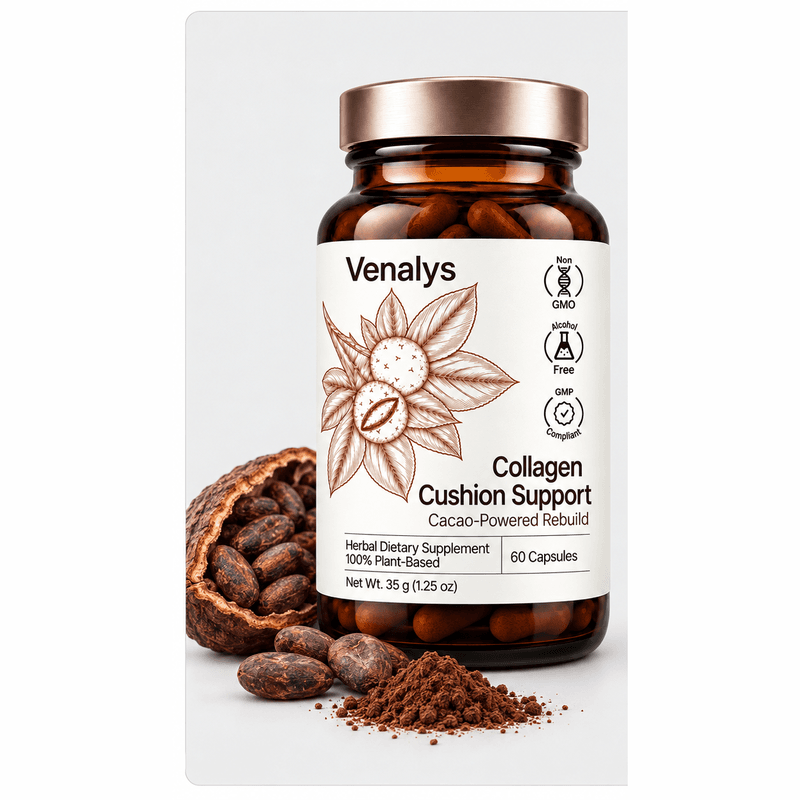
Venalys Collagen Cushion Support is a daily, plant based capsule made with cacao, horse chestnut, butcher's broom, soft psyllium and chicory root. It is formulated to support healthy vein tone and comfortable, regular bowel movements.†
Learn more about Venalys†These statements have not been evaluated by the Food and Drug Administration. This product is not intended to diagnose, treat, cure, or prevent any disease.
FAQs
How do you treat internal hemorrhoids?
Start with fiber, water and short bathroom visits. If bleeding or prolapse keeps happening, your doctor may suggest banding or another office procedure. Surgery is for large ones that keep coming back.
Can internal hemorrhoids be cured?
The swollen tissue can be shrunk or removed, and many people stay symptom free for a long time. The cushions themselves are normal and stay. Good habits help keep symptoms from coming back.
How do you get rid of internal hemorrhoids fast?
There's no safe instant answer. Soft stools, no straining and warm sitz baths calm most flares within days. For fast and lasting results on bigger ones, an office procedure is usually the quickest route. Ask your doctor.
Can you treat internal hemorrhoids with cream?
Creams mostly work on the skin at the opening. Some come with an applicator or as suppositories for inside. They can ease itching and discomfort for a short time. They don't shrink the tissue for good.
How do you get rid of hemorrhoids you've had for years?
See a colorectal surgeon. Long standing hemorrhoids often need an office procedure or surgery. Keep fiber and water going before and after, because the habits protect whatever treatment you choose.
Do I need a colonoscopy if I have hemorrhoids?
Not always. Your doctor may suggest one if you have bleeding with no clear cause, other symptoms, or you're due for screening. Never assume bleeding is only hemorrhoids.
What shrinks a hemorrhoid the fastest?
For a flare, cold packs wrapped in a cloth, warm sitz baths and soft stools help most at home. For a hemorrhoid that keeps returning, a doctor's office procedure works faster than any home remedy.