
Table of Contents
- Pooping with hemorrhoids: what's normal and what isn't
- How to poop with hemorrhoids, step by step
- Internal hemorrhoids and poop
- Pooping with external hemorrhoids
- Pooping with hemorrhoids and constipation
- When going feels hard or blocked
- Cleaning up after a bowel movement
- When to see your doctor
- When bathroom trouble keeps coming back
- Sources
- About Venalys
Yes, you can poop with hemorrhoids, and you should go when your body tells you to. The goal is a soft stool that comes out without pushing, because hard stools and straining are what make the area sore and make it bleed. This page is part of our guide to living with hemorrhoids.
Maybe you know the routine. You feel the urge and you hold it, because the last time hurt. Then you sit for ten minutes with your phone, waiting. You push a little, then a little more. And afterward you check the paper, worried about what you'll see.
Here's the thing. Hemorrhoids aren't something foreign. Cleveland Clinic explains that we're all born with them. They're soft cushions of blood vessels just inside the opening. The NIH lists straining, long sits on the toilet and constipation as the usual reasons they swell. So how you poop matters a lot.
Pooping with hemorrhoids: what's normal and what isn't
Hemorrhoid poop doesn't look any different from other stool. The difference is what you notice after. A few things are common:
- a little bright red blood on the toilet paper or in the bowl
- itching or a mild sting for a while
- a bit of mucus
- a feeling that you're not quite done
Common doesn't mean you should guess, though. Blood that is dark, mixed into the stool, heavy, or new for you needs a doctor's look. The American Cancer Society points out that rectal bleeding and changes in your bowel habits can come from other causes too, like polyps or colorectal cancer. A tear in the skin, called a fissure, can bleed as well. Only an exam can tell them apart.
How to poop with hemorrhoids, step by step
You can't control everything. But you can control how you sit and how you push. Many pelvic floor physical therapists teach a routine close to this one:
- Go when you feel the urge. Waiting lets the stool sit, dry out and get harder.
- Raise your feet. Put a small footstool or a few books under your feet, so your knees sit higher than your hips.
- Lean forward. Rest your forearms on your thighs and keep your back fairly straight.
- Breathe slowly. Let your belly fill and relax. Don't hold your breath and bear down.
- Let it come. A gentle push is fine. Hard pushing is what loads the cushions.
- Get up if nothing happens. After a few minutes, stand, walk around and try again later.
- Leave the phone outside. A short visit is better than a long one.
- Clean gently. Pat, don't rub. More on that below.
This routine won't make a hemorrhoid disappear. It just stops adding pressure every time you go.
Internal hemorrhoids and poop
Internal hemorrhoids sit higher up, inside the anal canal. Cleveland Clinic notes that they rarely hurt unless they prolapse, which means they slip out through the opening. So the most common sign is painless bright red blood after you go.
A large internal hemorrhoid can push out during a bowel movement and slide back in on its own. It can also give you that feeling of fullness, like there's still something left. You can still poop with internal hemorrhoids. Soft stools and no straining matter most. We cover the rest in our page on internal hemorrhoids.
Pooping with external hemorrhoids
External hemorrhoids sit under the skin around the opening. They can sting during and after a bowel movement, and they make cleaning harder. Keep stools soft, go gently, and pat the area dry.
A sudden hard, painful lump that looks blue or purple can mean a blood clot has formed inside. That's called a thrombosed hemorrhoid, and it's worth calling your doctor about soon. It's not something to push through on the toilet.
Pooping with hemorrhoids and constipation
Constipation and hemorrhoids feed each other. A hard stool makes you push. Pushing loads the cushions. Then a sore bottom makes you hold it, and the stool gets harder.
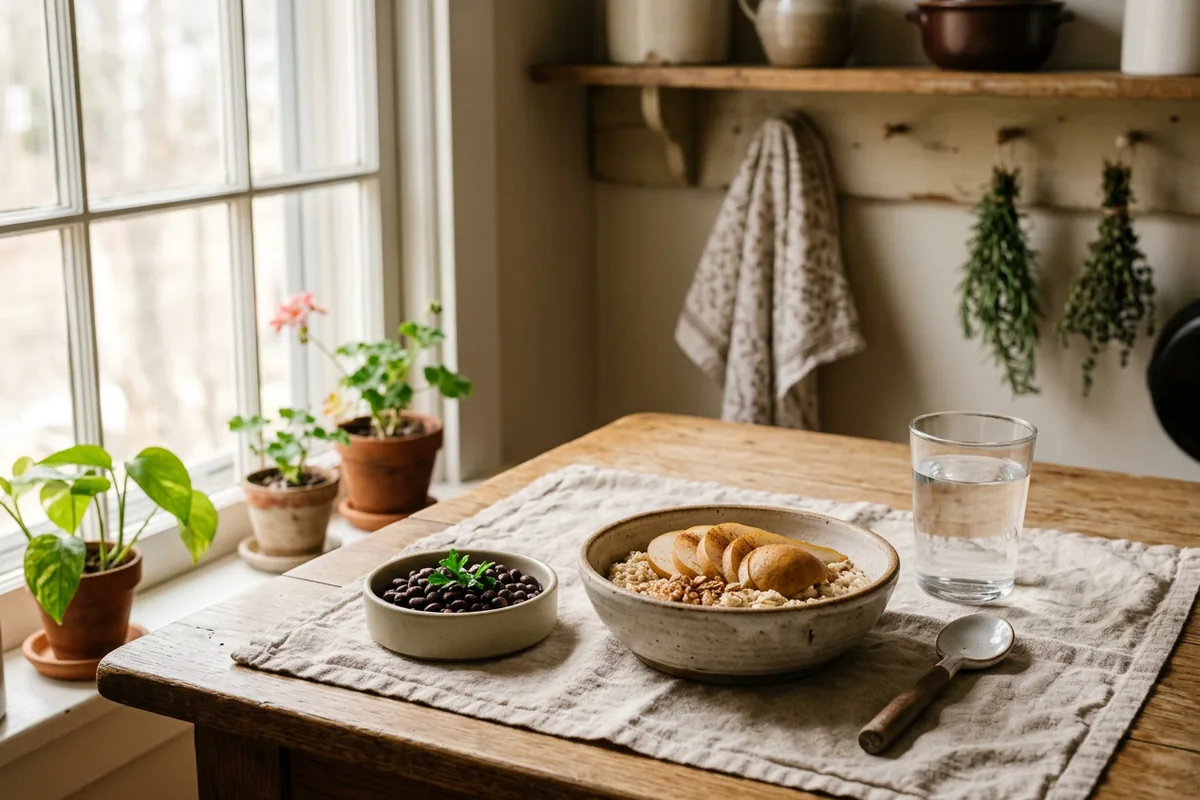
Fiber breaks that loop for a lot of people. A 2018 review in American Family Physician found that fiber supplements cut bleeding by about half and improved symptoms overall. It recommends 25 to 35 grams of fiber a day, with plenty of water.
A few habits help:
- Add fiber slowly over a week or two, so you don't get gassy.
- If you use psyllium, choose the soft, not bulk kind, and drink water with it.
- Walk every day. Movement helps the gut move too.
- Ask your doctor before you use a stool softener or laxative for more than a few days.
When going feels hard or blocked
Do hemorrhoids make it hard to poop?
Hemorrhoids can make pooping feel harder, but they're rarely the real reason. Most of the time, the problem is a hard stool, plus muscles that tighten because you expect it to hurt. That guarding is natural. Your body braces against pain. But tight muscles make you push harder, and pushing makes the hemorrhoids worse. Softer stools, a footstool and slow breathing usually make the biggest difference. If going stays hard for weeks, or your bowel habits change, tell your doctor so they can look for other causes.
Hemorrhoid blocking poop
A lot of people feel like a door is shut and something is in the way. Dr. Albert Chung, a proctologist who answers this on his Your Friendly Proctologist channel, says that's usually not the hemorrhoid. In his words, "the hemorrhoids are actually soft enough to push out of the way." What he says blocks the stool most often is the ring of sphincter muscles that won't relax. For that, he suggests a pelvic floor physical therapist and a visit to a specialist, to make sure nothing else is going on.
Straining during a bowel movement
Straining means holding your breath and bearing down hard to force a stool out. It's one of the main triggers the NIH lists for hemorrhoids. Every hard push raises the pressure in your belly and fills the cushions with blood. Done once, it's no big deal. Done every morning for years, it adds up. The way out is a softer stool and a better position, so you don't need to strain in the first place. If you strain even with soft stools, mention it to your doctor.
Can you poop out hemorrhoids?
No. Hemorrhoids are part of your body, attached to the lining of the anal canal. They don't fall off into the toilet. What people notice is a hemorrhoid that pushes out of the opening during a bowel movement, then slides back in, or stays out. That's called a prolapse. If you see a piece of tissue in the toilet, or a lump stays outside and hurts, call your doctor. Don't try to guess what it is at home.
Do hemorrhoids make you poop more?
Hemorrhoids don't speed up your gut. But they can make you feel like you need to go more often. A swollen cushion near the opening can feel like stool that's still there. So you sit down again, and nothing much comes. Mucus can also give a wet, urgent feeling. If you're truly pooping more often than usual, or your stools have changed for more than a few days, that's a change in bowel habits, and your doctor should hear about it.
Cleaning up after a bowel movement
How to clean hemorrhoids after a bowel movement
Gentle wins here. Rubbing hard with dry paper scrapes sore skin and can start the itch all over again. Try this instead. Use a little warm water on soft paper or a soft cloth, and pat. Rinse in the shower if you can. Then pat the area dry, because damp skin itches. Skip soaps with perfume, and skip harsh scrubbing. A short warm sitz bath after a hard bowel movement can also calm things down.
Soft toilet paper for hemorrhoids
Your toilet paper does more than you'd think. MedlinePlus, the NIH consumer library, suggests you avoid toilet tissue with perfumes or colors when you have hemorrhoids. Plain, soft, unscented paper is the safest pick. Use it a little damp, and pat instead of wiping back and forth. If you use wipes, choose unscented ones without alcohol, and don't flush them. If the skin stays red or raw for days, ask your doctor, since other skin problems can look the same.
Using a bidet with hemorrhoids
A bidet, or a bidet seat on your toilet, rinses the area with water, so you wipe less. For a lot of people with sore hemorrhoids, that feels better than paper. Keep the water lukewarm and the pressure low. A strong jet aimed at a swollen spot can sting. Afterward, pat dry with a soft towel or paper. A handheld bottle of warm water does the same job when you're away from home.
When to see your doctor
Call your doctor if you have:
- any rectal bleeding you haven't had checked
- blood that is dark or mixed into the stool
- a change in your bowel habits that lasts
- severe pain, or a hard lump that stays
- symptoms that don't get better after a week of home care, which is the line Cleveland Clinic draws
Get help right away if you lose a lot of blood, or if you feel dizzy, lightheaded or faint. MedlinePlus lists those as signs you need care now. Don't wait for routine screening if you're bleeding. Bleeding is a symptom, and symptoms get checked.
When bathroom trouble keeps coming back
Maybe this is the third time this year. You did the fiber, the water, the warm baths, and it calmed down. Then one hard morning, it was back.
That pattern makes sense once you see it. A flare settles when the swelling goes down. The cushions are still there, and so is the daily pressure on them, from the toilet, the chair and the car seat. That's why the habits on this page are worth keeping even on good weeks. And if flares keep coming back anyway, it's a good time to talk to your doctor about why hemorrhoids keep coming back and what options fit you.
Sources
- NIDDK (NIH), Symptoms and causes of hemorrhoids
- Cleveland Clinic, Hemorrhoids
- Mott and colleagues, American Family Physician, 2018, Hemorrhoids: diagnosis and treatment options
- MedlinePlus Medical Encyclopedia (NIH), Hemorrhoids
- American Cancer Society, Signs and symptoms of colorectal cancer
- Your Friendly Proctologist, Hemorrhoids block my poop? (YouTube)
This article is for general information and is not medical advice. If you have rectal bleeding, severe pain or a change in your bowel habits, see your doctor.
About Venalys
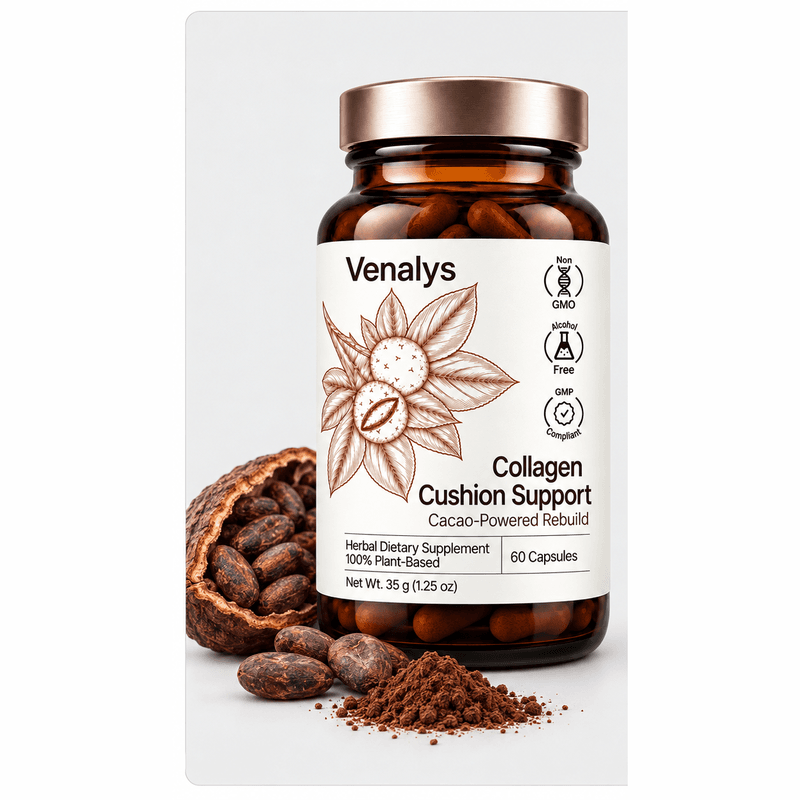
Venalys Collagen Cushion Support is a daily, plant based capsule made with cacao, horse chestnut, butcher's broom, soft psyllium and chicory root. It is formulated to support healthy vein tone and comfortable, regular bowel movements.†
Learn more about Venalys†These statements have not been evaluated by the Food and Drug Administration. This product is not intended to diagnose, treat, cure, or prevent any disease.
FAQs
How do you poop with hemorrhoids?
Go as soon as you feel the urge. Put your feet on a small stool, lean forward and breathe slowly instead of pushing hard. If nothing happens after a few minutes, get up and try again later.
Can you poop with a hemorrhoid?
Yes. A hemorrhoid doesn't stop stool from passing. Soft stools and gentle pushing keep it from getting more sore.
Do internal hemorrhoids hurt when you poop?
Usually not. Internal hemorrhoids often bleed without pain. They can hurt if they push out through the opening, so tell your doctor if that happens.
How do you poop without hurting a hemorrhoid?
Keep your stools soft with fiber and water. Raise your feet, relax your belly and don't strain. Pat the area clean afterward instead of rubbing.
Can internal hemorrhoids make it difficult to poop?
They can make you feel full or blocked. But the real problem is more often a hard stool or tight muscles. If going stays hard, see your doctor.
How do you poop with hemorrhoids and constipation?
Soften the stool first. Add fiber slowly, drink water and walk every day. Ask your doctor before you use a laxative for more than a few days.
Can a hemorrhoid cause poop to get stuck?
Hemorrhoids are soft, so they rarely block stool by themselves. A stuck feeling usually comes from a hard stool or muscles that won't relax. If you can't pass stool at all, or you have belly pain, call your doctor.
Can you poop after hemorrhoid surgery?
Yes, and your surgeon will want you to. The first bowel movements can be painful. Follow your surgeon's plan for fiber, fluids, stool softeners and pain medicine.
What if you can't poop after hemorrhoid surgery?
Call your surgeon's office. Don't strain to force it. They'll tell you what to take and when you need to be seen.
How do you empty your bowel with hemorrhoids?
Sit with your knees higher than your hips and lean forward. Breathe into your belly and let the stool come without bearing down. A soft, well formed stool empties most easily.