
Table of Contents
Sitting all day doesn't create hemorrhoids by itself, but long hours in a chair put steady pressure on them and can make them swell, itch and flare. The risk is highest when you also strain, get constipated or barely move. This page is part of our guide to living with hemorrhoids.
Maybe you know the routine. You sit down slowly, like the chair might bite. In a long meeting you shift to one cheek, then the other. By late afternoon you're perched on the edge of the seat, and when you finally stand up, you do it in two careful steps. Nobody at the office notices. You do.
Here's what's going on underneath. Everyone has hemorrhoidal cushions. They're soft pads of blood vessels just inside the opening. A 2016 review from Duke University explains that trouble starts when the tissue holding those cushions in place wears down, and it names age, straining and prolonged sitting as things that add to it. Harvard Health adds that this supporting tissue can weaken as you get older. So the chair isn't the whole story. It's the pressure, landing every day on support that has gotten looser.
What sitting all day does to your hemorrhoids
Sitting isn't bad on its own. Dr. Albert Chung, a proctologist who answers this on his Your Friendly Proctologist channel, puts it simply: "sitting down in itself is not a bad thing." The trouble is hours of it without a break.
He compares it to your legs. When you sit all day, "gravity pulls the blood down just like your ankles may be swollen at the end of that work day." Your cushions fill the same way. Blood flows in, and it drains out more slowly when you don't move.
Long sitting works on you in three ways:
- Steady pressure. Your weight presses on the area for hours with no break.
- Slow draining. The vessels stay full, so they swell and get tender.
- A slower gut. Dr. Chung notes that your intestines move better when you stay active. Less movement often means harder stools, and harder stools mean pushing.
None of this happens in one day. It's the same eight or ten hours, five days a week, for years.
Can you get hemorrhoids from sitting
Yes, sitting can help bring them on, but it rarely acts alone. Remember, you already have hemorrhoidal tissue. What sitting does is add pressure to it, hour after hour. The NIH lists the main causes as straining during bowel movements, sitting on the toilet for long periods, constipation or diarrhea that won't go away, and a low fiber diet. Long days in a chair often bring several of those together. You move less. You drink less. You hold it until a break, and the next stool comes out harder. That mix is what turns normal cushions into the swollen, itchy kind.
Desk, toilet, plane and truck: where the sitting adds up
Hemorrhoids and sitting at a desk
When people talk about hemorrhoids sitting all day, they usually mean desk work. You sit down at eight, look up at noon, and eat lunch at the same desk. How long you stay in the chair matters more than the chair itself. A soft seat may feel kinder than a hard one, but no chair makes four straight hours okay. What helps most is breaking the sitting into pieces. Stand up for calls. Walk over to a coworker instead of sending a message. Refill your water often, which gets you up and keeps your stool softer. If your flares line up with busy weeks at work, the hours in the chair are a good place to start looking.
Sitting on the toilet and hemorrhoids
The toilet is the worst seat in the house for hemorrhoids. A chair holds you up. A toilet seat leaves the area open with nothing under it, and a lot of people push while they wait. The NIH lists sitting on the toilet for long periods as a common cause. A phone turns a two minute visit into fifteen. Dr. Gary Hoffman, a colon and rectal specialist in Los Angeles, sums up his advice in a patient video: "Try to keep your stool soft, stay off the toilet for too long, get a lot of exercise, stay hydrated." If nothing happens after a few minutes, get up and try again later.
Does flying make hemorrhoids worse
A flight can set off a flare, mostly because of what comes with it. You sit for hours in a tight seat. You drink less so you won't have to climb over your neighbor. Your meals and your bathroom routine change, and that can leave you backed up. Then the first stool after the trip comes out hard. To make flying easier, pick an aisle seat when you can. Walk the aisle when the seat belt sign is off. Drink water through the flight, and keep your fiber steady in the days before you leave.
Truck driver hemorrhoids
Few jobs keep you in a seat as long as driving a truck. Long shifts behind the wheel, meals from truck stops and bathroom breaks that depend on the schedule all add up. Holding a bowel movement until the next stop lets the stool get harder. A few habits help on the road. Walk around the truck at every stop, even for five minutes. Keep a big water bottle in the cab. Pack fiber you can eat while you drive, like fruit, nuts or whole grain snacks. And don't skip a bathroom stop when you feel the urge.
Can sitting on cold surfaces cause hemorrhoids
This one comes up a lot, often as a warning from a parent or a grandparent. The causes the NIH lists are about pressure: straining, long sits on the toilet, constipation and diarrhea. Cold isn't on the list. A cold concrete step or a metal bleacher may feel bad when you already have a sore spot, and that feeling is real. But what matters is how long you sit and how hard you push, not the temperature of the seat. If a cold seat bothers you, sit on a folded jacket and keep it short.
When you already have a hemorrhoid
Can sitting make hemorrhoids worse
Yes. Once a hemorrhoid is swollen, long sitting keeps it full and keeps pressing on it. That's why many people feel fine in the morning and sore by the evening. The swelling may stay longer, the itch may get stronger, and a little bleeding can show up after a hard day. It doesn't mean something new went wrong. It means the pressure never got a break. Short, frequent breaks do more than the perfect chair. If sitting starts to hurt sharply, or you feel a hard, painful lump, call your doctor.
How to sit with a hemorrhoid
There's no perfect position, but a few things make sitting easier:
- Sit all the way back, with your feet flat and your weight spread across both sides.
- Use a soft cushion or a folded towel if a hard seat hurts.
- Change position often instead of locking into one.
- Stand up at least once an hour, even for a minute.
- Don't sit and push on the toilet. Go when you feel the urge, then get up.
The goal is less time under pressure, not a perfect posture.
A simple day plan if you sit for work

You may not be able to change your job. You can change how the hours are spent. Here's a plan that fits most desk days:
- Morning. Drink a glass of water and eat a breakfast with fiber, like oatmeal or fruit.
- Every hour. Stand up, stretch, and walk down the hall.
- Calls. Take them standing, or walk while you talk. Dr. Chung even suggests taking a business meeting over a slow walk outside.
- Lunch. Eat away from your desk and take a short walk.
- Bathroom. Go when you feel the urge. Leave the phone at your desk. Get up after a few minutes if nothing happens.
- Evening. Take a walk after dinner to keep your gut moving.
Fiber is the base of all of this. A 2018 review in American Family Physician found that fiber supplements cut bleeding by about half and improved symptoms overall. It recommends 25 to 35 grams of fiber a day, with plenty of water. If you use psyllium, choose the soft, not bulk kind, and add it slowly so you don't get gassy.
Why sitting weeks bring flares back
A flare often follows a stretch of long days. A deadline, a road trip, a week of back to back flights. Then it calms down, and you forget about it until the next busy stretch.
Here's what happens underneath. The swelling goes down, but the support under the cushion doesn't snap back with it. So the next long week finds the same loose tissue, and the cushion slides and swells again. That's why the same hours in a chair can feel harder on you at 58 than they did at 35. Why hemorrhoids keep coming back has its own page in this guide. For now, the lesson is simple. The less time your cushions spend under pressure, the fewer chances they get to flare.
When to see a doctor
Most flares from sitting settle with less pressure, softer stools and time. But some signs need a doctor, not a better chair:
- bleeding from your bottom, especially if it's new, dark, heavy or mixed into the stool
- a change in your bowel habits that lasts more than a few days
- severe pain, or a hard lump that shows up suddenly
- symptoms that keep getting worse even after you cut back on sitting
Harvard Health advises seeing a doctor about rectal bleeding, especially after age 45. The American Cancer Society points out that bleeding and changes in bowel habits can also be signs of colorectal cancer, and that hemorrhoids can cause the same signs. Hemorrhoids are common. That's exactly why it's easy to blame them for everything. Let your doctor make that call.
Sources
- Sun and Migaly, Duke University, 2016, Review of hemorrhoid disease
- NIDDK (NIH), Symptoms and causes of hemorrhoids
- Harvard Health Publishing, Hemorrhoids and what to do about them
- Mott and colleagues, American Family Physician, 2018, Hemorrhoids: diagnosis and treatment options
- American Cancer Society, Signs and symptoms of colorectal cancer
- Your Friendly Proctologist, Is sitting BAD for hemorrhoids? (YouTube)
- LAColonRectal, How Long Do Hemorrhoids Last? (YouTube)
This article is for general information and is not medical advice. If you have rectal bleeding, severe pain or a change in your bowel habits, see your doctor.
About Venalys
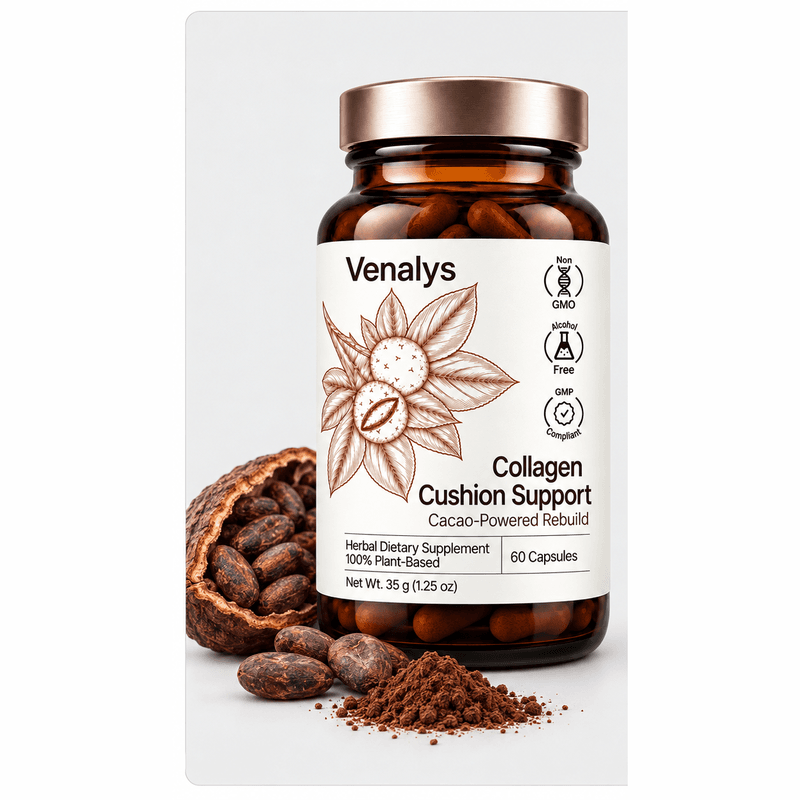
Venalys Collagen Cushion Support is a daily, plant based capsule made with cacao, horse chestnut, butcher's broom, soft psyllium and chicory root. It is formulated to support healthy vein tone and comfortable, regular bowel movements.†
Learn more about Venalys†These statements have not been evaluated by the Food and Drug Administration. This product is not intended to diagnose, treat, cure, or prevent any disease.
FAQs
Do hemorrhoids get worse if you sit all day?
They often do. Long sitting keeps swollen cushions full and pressed. Short breaks every hour help more than any special seat.
How do you get rid of hemorrhoids from sitting too long?
Most flares calm down when you cut the pressure. Stand up often, keep stools soft with fiber and water, and keep bathroom visits short. A warm sitz bath can ease soreness. If it doesn't get better, or it bleeds, see your doctor.
Can sitting cause hemorrhoids to bleed?
Sitting keeps them swollen, and a hard stool passing over a swollen cushion can scrape its thin lining. Any rectal bleeding is worth showing to your doctor.
Why does the toilet seem worse than a chair?
A chair supports you. A toilet seat leaves the area open while you sit, and many people push while they wait. Keep visits short and leave the phone outside.
How can you tell if it's a hemorrhoid or something else?
You can't be sure on your own. Other problems, including colorectal cancer, can cause the same signs. A doctor's exam is the way to know.
What's the longest a hemorrhoid will last?
The hemorrhoidal tissue is part of your body for life. What comes and goes is the flare. If symptoms don't settle, or keep coming back, see your doctor.