
Table of Contents
Living with hemorrhoids is possible for most people, and it mostly comes down to a few daily habits: soft stools, short bathroom visits, less friction and less pressure. You can work, train, travel and sleep well with them, as long as you see your doctor for bleeding or pain that doesn't settle.
You know the routine. You sit down on one side, then shift to the other. You check where the restroom is before you sit down at a restaurant. You plan your morning around one trip to the bathroom. None of that is in your head. It's your body asking for a little more care in a spot you'd rather not think about.
Why hemorrhoids take over your day
Everyone has hemorrhoidal cushions. They're normal pads of tissue, small blood vessels and collagen inside the lower rectum. They help close things off and protect the area when stool passes. Hemorrhoids, the problem, start when those cushions lose their support and slide down.
Harvard Health explains that the tissue holding the cushions in place can weaken with age. Then they bulge and drop. Researchers at Cleveland Clinic Florida also looked at removed hemorrhoid tissue under the microscope. They found a weaker mix of collagen than in normal tissue, as reported in their 2015 study of hemorrhoid collagen.
That explains why your day feels so tied to it. Every long sit, every hard morning and every heavy lift pushes on cushions that have already lost some of their hold.
Is it okay to live with hemorrhoids?
Often, yes. Cleveland Clinic puts it simply: we're all born with hemorrhoids. The tissue is there for life. What matters is whether it bothers you. As one colon and rectal practice puts it in a short video on how long hemorrhoids last, "hemorrhoids are forever." The real question is how long the symptoms last, and those often settle.
Plenty of people have small hemorrhoids that flare now and then and stay quiet the rest of the time. If that's you, good habits may be all you need. If you bleed, if you hurt, or if the bulge stays out, that's no longer something to just live with. That's a reason to book a visit.
The bathroom part of your day
Most of living with hemorrhoids happens in the few minutes you spend in the bathroom. Get those minutes right and the rest of the day gets easier.
Hemorrhoid poop: what's normal
The goal is stool that's soft, formed and easy to pass, without pushing. Hard, dry stool scrapes the area and makes you strain. Loose, frequent stool irritates the skin too. A little bright red blood on the paper is common with hemorrhoids, but you shouldn't guess. Blood in your stool always deserves a doctor's look, especially if it's dark, mixed in, or new for you. Mucus and a feeling that you haven't finished are also common, and worth mentioning at your visit. Read our full guide to hemorrhoid poop.
Bowel movements during a flare
When a flare hits, keep it short and gentle. Go when you feel the urge, don't wait. Sit, relax, breathe out, and let it happen. If nothing comes after a few minutes, get up and try later. A small footstool under your feet can make the angle easier so you don't need to push. Pushing hard is exactly what loads the cushion. Afterward, a short warm sitz bath can calm the area.
Wiping with hemorrhoids
Dry paper rubbed hard is rough on swollen tissue. Pat, don't scrub. Wet the paper with plain water, or use a bidet or a handheld sprayer, then pat dry with a soft towel. Skip wipes with perfume or alcohol, which can sting and irritate. Many people find a bidet changes their day more than any cream. Keep the area clean and dry, without overdoing it. Cleaning too often can irritate the skin as well.
Can you push hemorrhoids back in?
Some internal hemorrhoids slip out during a bowel movement and go back on their own. Others need a gentle push back with a clean, lubricated finger. Ask your doctor first whether that's right for you. For tissue that stays out, a proctologist explains in his video on living with prolapsed hemorrhoids: "I suggest buying some gauze or panty liner." It cuts the friction from your underwear all day. A lump that won't go back in, turns hard or hurts badly needs a doctor the same day.
Work, the gym and bedtime
The other part of living with hemorrhoids is the rest of your day: the chair, the weights, the bed. Each one adds or removes pressure on the cushion.
Sitting all day with hemorrhoids
A desk job, a long drive or a day in the truck keeps steady pressure on the area. Blood pools in the cushion, and by evening it feels full and sore. Stand up often, even for a short break. Walk to the water cooler. Use a soft cushion or a seat with good support, and avoid sitting on hard surfaces for hours. The same proctologist suggests short breaks lying down when you can, "so that those hemorrhoids can release their blood back to your body," as he says in the same video. Read our full guide to hemorrhoids sitting all day.
Lifting weights with hemorrhoids
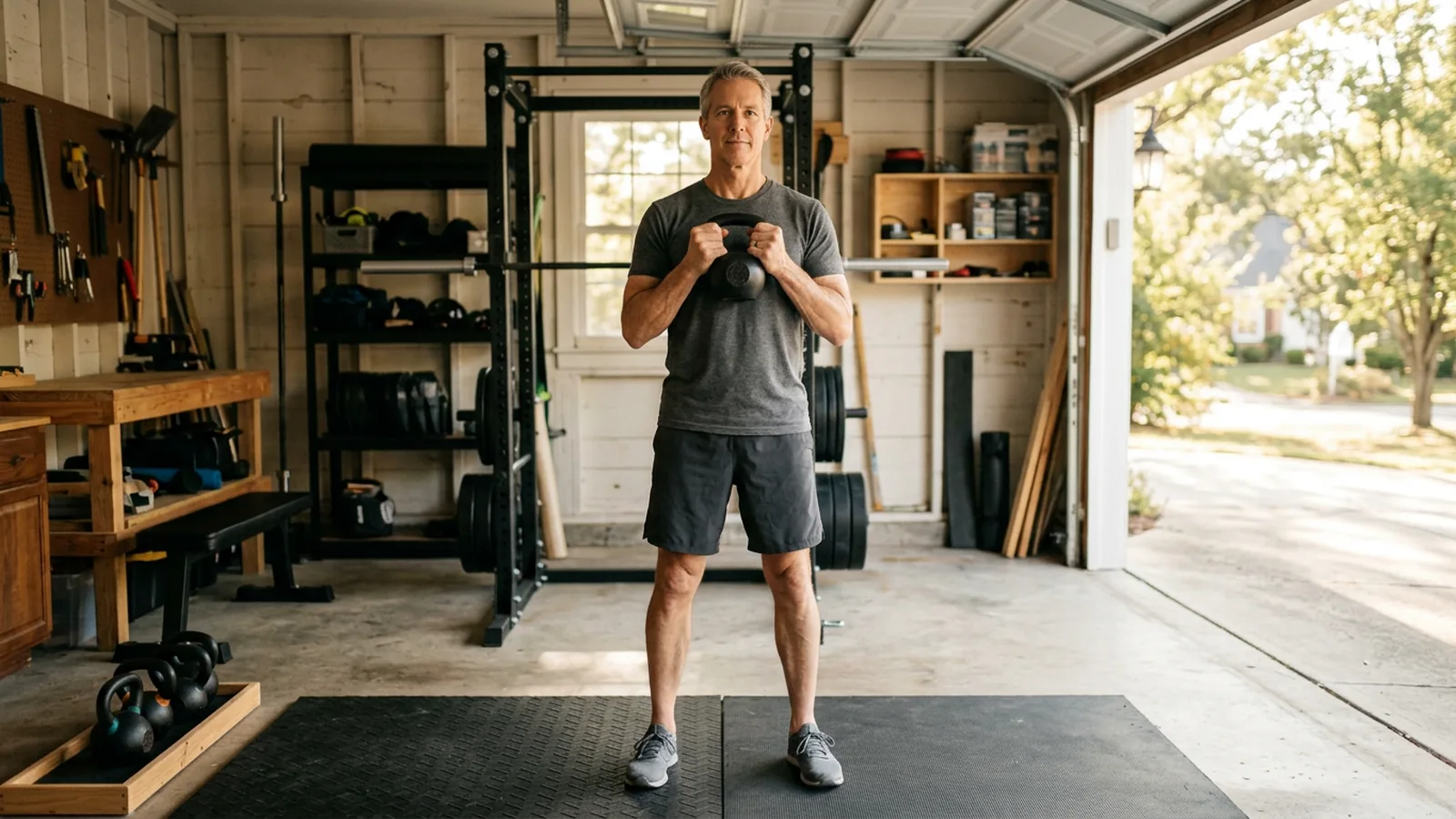
You don't have to quit the gym. The trouble is holding your breath and bearing down during a heavy lift. That pushes pressure straight down onto the cushion. The American Society of Colon and Rectal Surgeons lists straining and pressure among the causes. Breathe out on the effort. Drop the weight a little during a flare. Go easier on heavy squats and deadlifts, and keep training the rest. Walking, cycling on a soft seat and swimming are easy on the area. More detail in our guide to hemorrhoids and lifting weights.
How to sleep with a hemorrhoid
Lying down actually helps, because it takes the weight off the cushion. The hard part is getting comfortable. Many people sleep better on their side with a pillow between the knees. Wear loose cotton underwear or none at all. A warm sitz bath before bed can calm the itch that tends to show up at night. If pain wakes you up every night, that's a sign to see your doctor, not to tough it out.
Travel, long drives and eating out
Trips are where good habits slip. You sit for hours, drink less water and eat whatever the gas station has. Pack your fiber and a water bottle, and keep the same morning routine you have at home. On a road trip, stop at rest areas and walk for a few minutes, even when you don't feel like it. At a restaurant, pick a booth or a padded chair over a hard stool. None of this is dramatic. It just keeps a long day from turning into a rough week.
Daily habits that help most
None of these are new. What makes them work is doing them every day, and not just during a flare.
- Fiber every day. Cleveland Clinic suggests about 25 to 38 grams a day from food or a supplement. Psyllium is a common choice. Add it slowly.
- Water with the fiber. Fiber without enough water can make things harder, not softer.
- Short visits. No phone in the bathroom. If it doesn't come, get up and try later.
- Move. A daily walk helps keep things moving inside too. The ASCRS calls fiber, fluids and exercise the base of care.
- Heat or cold, when you need it. A warm sitz bath soothes. A cold pack wrapped in a cloth, for a few minutes, can ease swelling.
- Answer the urge. Holding it in leads to harder stool later.
When to see your doctor
Doctors see hemorrhoids every day. You won't shock anyone. See your doctor if you have:
- Any rectal bleeding, especially if it's new, dark or mixed with stool.
- Severe pain, or a hard, painful lump near the anus.
- A change in your bowel habits that lasts more than a few weeks.
- Symptoms that don't get better after a week of home care.
Here's one more clue. Internal hemorrhoids usually don't hurt much, because the area has very few pain nerves. Sharp pain often points to something else, like a clot in an external hemorrhoid or a small tear. Bleeding can also come from causes other than hemorrhoids. Your doctor can check, and many options exist, from office procedures like banding to surgery.
If this is the third time this year
If you're reading this during your third flare this year, it's time for a closer look with your doctor. Creams, wipes and pads are made to help you get through a flare. Frequent flares are a reason to ask about your stage and about office options like banding, and to look hard at the daily pressure that keeps pushing the cushions down.
Sources
- Harvard Health Publishing, Hemorrhoids and what to do about them
- Nasseri and colleagues, Cleveland Clinic Florida, 2015, collagen in hemorrhoid tissue
- Cleveland Clinic, Hemorrhoids
- American Society of Colon and Rectal Surgeons, Hemorrhoids
- LAColonRectal, How Long Do Hemorrhoids Last? (YouTube)
- Your Friendly Proctologist, How to live with prolapsed hemorrhoids. It is possible. (YouTube)
This article is for general information and is not medical advice. If you have rectal bleeding, severe pain or a change in your bowel habits, see your doctor.
About Venalys
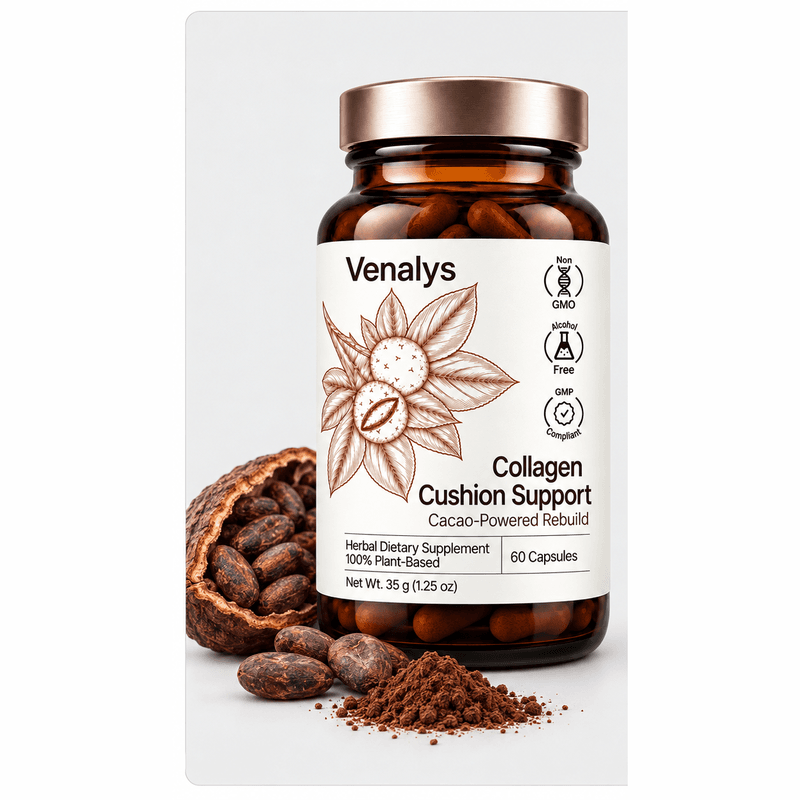
Venalys Collagen Cushion Support is a daily, plant based capsule made with cacao, horse chestnut, butcher's broom, soft psyllium and chicory root. It is formulated to support healthy vein tone and comfortable, regular bowel movements.†
Learn more about Venalys†These statements have not been evaluated by the Food and Drug Administration. This product is not intended to diagnose, treat, cure, or prevent any disease.
FAQs
Is it okay to live with hemorrhoids?
Yes, if they're mild and don't bleed or hurt much. Many people keep them quiet with fiber, water and short bathroom visits. If you have bleeding, strong pain or a bulge that stays out, see your doctor.
What lifestyle changes help with hemorrhoids?
Eat more fiber, drink water, don't strain, keep bathroom visits short and move every day. Break up long periods of sitting, and breathe out when you lift something heavy.
Is heat or cold better for hemorrhoids?
Both have a place. Warm water, like a sitz bath, relaxes the area and soothes itching. Cold, wrapped in a cloth and used briefly, can ease swelling. Never put ice right on the skin.
Can you live with hemorrhoids for years?
Many people do. Some have small flares for decades. Others find the flares get closer together over time. If yours keep coming back, talk to your doctor about your options and about the daily habits that add pressure.
Do hemorrhoids ever go away on their own?
A flare often settles on its own within days with soft stools and gentle care. The cushion itself doesn't go away, because everyone has one. What can fade is the bulge and the symptoms. If a flare lasts more than a week, or keeps returning, check in with your doctor.