
Table of Contents
Bleeding hemorrhoids are swollen blood vessels near the opening that bleed when a stool rubs the thin lining over them. The blood is usually bright red and often comes with no pain, but only a doctor can tell you it's really a hemorrhoid, so it's one of the hemorrhoid symptoms you should always mention.
Here's how it usually goes. You wipe, you look at the paper, and there's red on it. You fold it, look again, and wonder how worried you should be. Maybe it's happened before. Maybe you've never told anyone, not even your doctor.
The MedlinePlus medical encyclopedia, from the National Library of Medicine, says bleeding during bowel movements is the most common problem with internal hemorrhoids. A 2018 review in American Family Physician adds that this bleeding is usually painless and bright red, and shows up as streaks of blood on the stool. So what you're seeing is common. It still deserves a look.
Can hemorrhoids bleed?
Yes. In fact, it's the sign people notice most. Everyone has hemorrhoids. They're soft pads of blood vessels that sit just inside the opening. They only become a problem when they swell and slide down.
When they do, the vessels stretch under a thin lining. A hard stool passes, the lining scrapes, and you see blood. Dr. Dave Longcope, a colorectal surgeon in Denver, explains in a patient video that after years of straining and long sitting, these vessels stretch out, so when you go "they can easily tear and bleed."
That's why bleeding often follows a hard morning, a bout of constipation, or a long time on the toilet. The trigger is pressure. The bleeding is the lining giving way where it's stretched thin.
Hemorrhoids that bleed: inside or outside
Hemorrhoids that bleed
Both kinds can bleed, but not the same way. Internal hemorrhoids sit inside, under a smooth lining, and they bleed mostly when you pass a stool. External hemorrhoids sit under the skin at the opening. Dr. Longcope puts it simply: "unlike internal hemorrhoids which only bleed when you go to the bathroom, external hemorrhoids can bleed at any point." So if you find blood on your underwear in the middle of the day, an outside hemorrhoid is a more likely source than an inside one. We cover each type on its own page, because they're cared for differently.
Blood clots and hemorrhoids
Sometimes the blood inside an external hemorrhoid forms a clot. MedlinePlus explains that this can be very painful. You feel a firm, tender lump that wasn't there yesterday. The word clot sounds scary, but Dr. Longcope tells patients: "This is not a dangerous clot. It is not going to travel anywhere else in your body." A large one can break open and bleed for a short while. If you have a hard, painful lump, see a doctor. A clotted hemorrhoid is its own topic, with its own choices for care.
Bleeding with no pain
Bleeding hemorrhoids with no pain
This is the most common picture, and it confuses people. How can something bleed and not hurt? Dr. Gary Hoffman, a colon and rectal specialist in Los Angeles, explains in a patient video that inside hemorrhoids have a different kind of nerve: "There are stretch receptors and itch receptors, but no pain receptors." So an internal hemorrhoid can bleed with no warning at all. You may feel some itching or a sense of fullness. You may feel nothing. No pain doesn't mean no problem, though. It just means the bleeding comes from a place without pain nerves.
No pain, but rectal bleeding
Painless bleeding is often a hemorrhoid. Often isn't always. The 2018 American Family Physician review warns that people tend to blame every symptom down there on hemorrhoids when there may be another reason. It lists a small tear called a fissure, polyps, inflammatory bowel disease and cancer. The American Cancer Society notes that bright red bleeding can also be a sign of colorectal cancer, and that hemorrhoids can cause the same signs. Dr. Longcope says it plainly: "don't just assume it's a hemorrhoid." Let a doctor check where the blood comes from.
A hemorrhoid with no pain or bleeding
Some hemorrhoids do neither. You might feel a soft bump when you wipe, a little itch, or just the sense that something's there. That's common, and it isn't an emergency. Many people live with small hemorrhoids that never bother them. The same habits still help: soft stools, short bathroom visits and no pushing. If the bump grows, hurts, or starts to bleed, show it to your doctor.
Where and when you see the blood
Hemorrhoid blood on toilet paper
Blood on the paper is the classic hemorrhoid sign. It's usually bright red and comes right after a bowel movement, often after a hard or large stool. That fits a hemorrhoid, but it also fits a fissure, a small tear at the opening. It's worth telling your doctor how often you see it and how much. A short note on your phone, with the date and what the stool was like, makes that talk much easier.
Rectal bleeding from wiping
Sometimes the stool isn't the problem. The wiping is. Rubbing hard with dry paper can scrape a swollen hemorrhoid and start it bleeding again. MedlinePlus suggests using toilet tissue without perfume or color and trying not to scratch. Pat instead of rubbing. A damp, plain cloth or an unscented wipe is gentler. Dry the area softly afterward. If you bleed every time you wipe, even after gentle cleaning, that's a reason to get checked.
A hemorrhoid that bleeds every time you poop
When it happens every single time, look at the stool first. Hard stools and straining keep scraping the same spot. The 2018 American Family Physician review found that fiber supplements cut hemorrhoid bleeding by about half. That's a big change from a simple step. Add fiber slowly, drink more water, and get off the toilet as soon as you're done. If the bleeding doesn't ease, or you're seeing it daily, your doctor needs to know.
Can a rectal exam cause bleeding
A doctor may check with a gloved finger or a short scope. If a hemorrhoid is already swollen, the exam can rub that fragile spot, a bit like a hard stool does, and you may see a small streak afterward. Before you leave, ask the office whether a little spotting is expected and when to call. Steady bleeding, clots, or bleeding that goes on into the next day is a reason to call them back.
How much bleeding is normal with hemorrhoids
Hemorrhoid bleeding is usually small. The 2018 American Family Physician review says it typically shows up as streaks and rarely causes anemia. A few drops in the water can look like a lot. MedlinePlus notes that severe bleeding is rare, but that losing blood over a long time can lead to low iron. So the honest answer is that no amount is "normal." A few streaks now and then are common. Bleeding that fills the bowl, comes with clots, or makes you tired or pale needs a doctor soon.
How to stop a bleeding hemorrhoid
How to stop a bleeding hemorrhoid today
To help the bleeding settle and avoid scraping the same spot again:
- Don't push or strain. If nothing comes after a few minutes, get up and try later.
- Clean gently with plain water or an unscented wipe. Pat dry.
- Sit in a few inches of warm water for 10 to 15 minutes. MedlinePlus lists these sitz baths as a way to feel better.
- Apply witch hazel with a cotton pad, as MedlinePlus suggests for itching.
- Wear soft cotton underwear.
- Drink a big glass of water and plan a soft stool for tomorrow.
The 2018 American Family Physician review notes that warm baths ease pain for a while, and that most drugstore remedies give short relief but haven't been studied for long term use.
How to stop a hemorrhoid from bleeding again
Stopping it today is one thing. Keeping it from coming back is about your stools, every day. The 2018 American Family Physician review calls fiber a first choice, at 25 to 35 grams a day with plenty of water. The current guideline from the American Society of Colon and Rectal Surgeons, summarized in American Family Physician in 2025, says fiber cuts persistent symptoms by 53%. Keep bathroom visits short and leave your phone outside. If bleeding keeps going despite good habits, doctors can offer office procedures, like a small rubber band placed on an inside hemorrhoid. That one has its own page.
When the bleeding keeps coming back
If you bleed every few weeks, even when you do everything right, the question changes. It's no longer about one hard stool. It's about the tissue. Harvard Health explains that the connective tissue that holds hemorrhoids in place can weaken with age. When the support is loose, the cushion slides down more easily, the vessels stretch, and the lining scrapes again on an ordinary morning. That's why the same flare keeps showing up. It's also why soft stools and less pressure matter so much, day after day, and not just during a flare.
When to see a doctor about bleeding
See your doctor about any rectal bleeding, even if you're sure it's a hemorrhoid. Then a doctor can confirm it, and you can stop guessing. Get help right away, as MedlinePlus advises, if:
- you lose a lot of blood
- you feel dizzy, lightheaded or faint
Don't wait either if the bleeding comes with a change in your bowel habits that lasts more than a few days, dark or black stools, belly pain, tiredness or weight loss. The American Cancer Society lists these as signs that need a doctor's visit.
Age matters too. The 2018 American Family Physician review advises that people over 40 with rectal bleeding get their colon checked, unless they had a normal exam in the last 10 years. Harvard Health also stresses a visit for bleeding, especially after 45. The American Society of Colon and Rectal Surgeons guideline says a colonoscopy should be considered when bleeding has no clear source. If you take a blood thinner, tell your doctor about the bleeding, and don't stop the medicine on your own.
Sources
- MedlinePlus Medical Encyclopedia (National Library of Medicine), Hemorrhoids
- Mott, Latimer and Edwards, American Family Physician, 2018, Hemorrhoids: diagnosis and treatment options
- American Family Physician, 2025, summary of the American Society of Colon and Rectal Surgeons guideline on hemorrhoids
- American Cancer Society, Signs and symptoms of colorectal cancer
- Harvard Health Publishing, Hemorrhoids and what to do about them
- Dr Dave Longcope, The Truth About Hemorrhoids: Separating Fact from Fiction (YouTube)
- LAColonRectal (Dr. Gary Hoffman), How Long Do Hemorrhoids Last? (YouTube)
This article is for general information and is not medical advice. If you have rectal bleeding, severe pain or a change in your bowel habits, see your doctor.
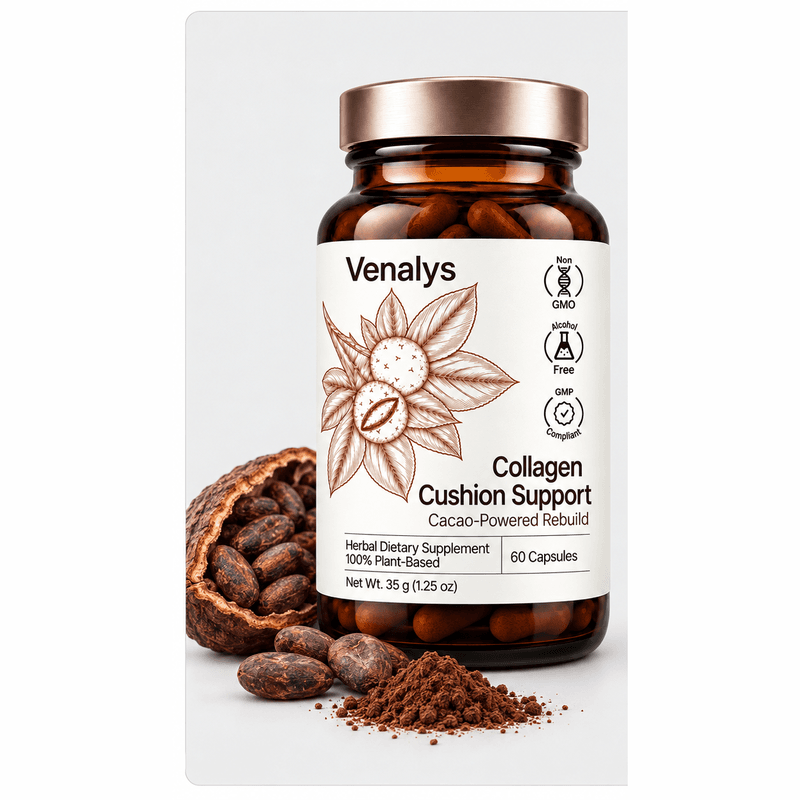
About Venalys
Venalys Collagen Cushion Support is a daily, plant based capsule made with cacao, horse chestnut, butcher's broom, soft psyllium and chicory root. It is formulated to support healthy vein tone and comfortable, regular bowel movements.†
Learn more about Venalys†These statements have not been evaluated by the Food and Drug Administration. This product is not intended to diagnose, treat, cure, or prevent any disease.
FAQs
Why do external hemorrhoids bleed?
The thin skin over a swollen outside hemorrhoid can break when you wipe hard or when a clot stretches it. Unlike inside hemorrhoids, they can bleed at any time of day.
Do hemorrhoid suppositories stop bleeding?
They're mostly made to calm pain, itching and swelling. Soft stools and less straining do more for bleeding. Ask your doctor or pharmacist which product fits you.
Will a burst hemorrhoid get better on its own?
Don't wait to find out. Keep the area clean, protect your clothes, and see a doctor, especially if the bleeding doesn't stop or the pain gets worse.
Are bleeding hemorrhoids dangerous?
Usually they're not. Heavy bleeding is rare. The real danger is assuming it's a hemorrhoid when something else is causing it, so get it checked.
What if I take a blood thinner?
Tell the doctor who prescribed it about any bleeding, and never stop it without their advice. They'll want to know so they can check the cause.
What should I wear when a hemorrhoid bleeds?
Soft cotton underwear and darker pants. Loose clothes rub less. A thin pad can protect your clothes for a day or two.