
Table of Contents
External hemorrhoids are swollen blood vessels under the skin around the opening of your anus. That skin has nerves that feel pain, so these are the hemorrhoids you can see, touch and often feel, and they're the most visible of all the hemorrhoid symptoms.
Maybe you felt a bump when you wiped this morning. You looked with a mirror, and there it was, a small lump that wasn't there last week. It itches, or it's sore when you sit, or it doesn't hurt at all and that worries you even more. You're not the first person to go through this, and most of the time it's not dangerous.
Here's the part most people never hear. Everyone has hemorrhoids. They're normal cushions of blood vessels. Harvard Health explains that the connective tissue that holds them in place can weaken with age. When it does, the same daily pressure lands on looser tissue, and the vessels swell.
What external hemorrhoids are
Near the end of your bowel there's a line where the soft inner lining meets the skin. Doctors call it the dentate line. A 2018 review in American Family Physician explains that external hemorrhoids sit below that line and can become painful when they swell. That's the big difference with internal ones, which sit higher, under a lining with no pain nerves.
Internal hemorrhoids have their own page. Here we stay on the outside, where you can see and feel what's going on.
The same review notes that hemorrhoids are most common between ages 45 and 65. So if you're in that range and just found your first one, you're right on schedule. That doesn't make it pleasant, but it does make it ordinary.
What causes external hemorrhoids
Pressure, mostly. The NIH lists the usual causes:
- straining during bowel movements
- sitting on the toilet for a long time
- constipation or diarrhea that doesn't go away
- a diet low in fiber
- lifting heavy things often
- the supporting tissue getting weaker with age
External ones can also show up fast. Dr. Dave Longcope, a colorectal surgeon in Denver, says in a patient video that after a day of heavy lifting or straining, people often "wake up the next morning with this lump that wasn't there before." Internal ones tend to build slowly. External ones can show up in a matter of hours.
What external hemorrhoids look and feel like
Symptoms of external hemorrhoids
The NIH lists three main signs: itching around the anus, one or more hard, tender lumps near the opening, and an ache or pain, especially when you sit. Cleveland Clinic adds a little bleeding when you wipe. Harvard Health explains why they're often the most uncomfortable kind: the skin over them gets irritated and worn. You may have one sign, or all of them at once. Rubbing and scrubbing tend to make every one of them worse.
A hemorrhoid lump at the anus
A lump at the rim of the opening is the classic sign. It's usually small, round and sits right at the edge. But a lump there isn't always a hemorrhoid. American Family Physician points out that people often blame any problem in this area on hemorrhoids when there may be another reason. An abscess, a fissure, a wart or, rarely, a cancer can also cause a bump. If a lump is new, growing, or you just aren't sure, a doctor can tell with a quick look.
Hard or soft: how they feel to the touch
Both happen. A plain external hemorrhoid often feels soft or a little firm, like a small cushion of skin you can move a bit. When a blood clot forms inside, it changes. Cleveland Clinic says a clotted one is firmer to the touch. So soft and mildly sore usually means swelling. Firm, tight and suddenly very painful usually means a clot. Your fingers can give you a clue, but not a diagnosis.
Why a hemorrhoid can feel like a hard ball
That hard ball feeling almost always means a small blood clot has formed inside the vessel. Doctors call it a thrombosed hemorrhoid. Harvard Health says the pain can be sudden and severe. The clot isn't the dangerous kind that travels through your body. It stays where it is. Clotted hemorrhoids are covered in detail on their own page. The short version: if the pain is bad, see a doctor soon, because early care can ease it faster.
Purple external hemorrhoids
Color tells you a lot. Cleveland Clinic explains that an external hemorrhoid without a clot is usually the color of your skin. A clotted one may look blue, purple or even black, and feel firmer. So a purple lump that showed up quickly and hurts is most likely a clot. It looks scary, but it's common. A dark spot that doesn't hurt, keeps growing or bleeds on its own should still be checked by a doctor.
Is there a hemorrhoid size chart?
Not for external ones. The 1 to 4 grades doctors use apply to internal hemorrhoids and measure how far they slide out. External hemorrhoids have no official scale. Size also changes from day to day. A lump can puff up after a hard bowel movement and settle a few days later. What matters more than size is how it behaves: does it hurt, does it bleed, is it growing, and is it getting in the way of cleaning or sitting.
Circumferential external hemorrhoids
Sometimes the swelling isn't one bump. It's several, spread around the opening, and doctors may call that circumferential. Dr. Albert Chung, a board certified colorectal surgeon in California, explains in a video that with external hemorrhoids "maybe there's like 15 little ones or maybe there's just three bigger ones." That's why he stresses the exam. The same word covers very different pictures, and the options depend on what's actually there.
Hemorrhoids with a skin tag
A skin tag is a soft flap of extra skin at the rim of the anus. Harvard Health explains that when a clot dissolves, it can leave excess skin behind that may itch or get irritated. Dr. Longcope describes it the same way: "sometimes hemorrhoids swell up and then when they go away they leave behind this flap of skin." A tag isn't really a hemorrhoid anymore, because there's no swollen vessel inside. It's harmless, but it can make cleaning harder.
Pain, or no pain at all
An external hemorrhoid with no pain
Plenty of external hemorrhoids don't hurt. Dr. Sameer Islam, a gastroenterologist, says in a patient video that "the vast majority of people who have external hemorrhoids do not have symptoms that come from them." He adds that when people do feel pain, bleeding or itching, it often comes from internal hemorrhoids instead. So a painless bump you can feel may just be sitting there quietly. Still, no pain doesn't mean no checkup. A painless lump that grows or bleeds needs a look.
Hard, painful bowel movements
A hard stool is where a lot of this starts. You push, pressure goes up, and the vessels at the rim fill and swell. Then the next bowel movement hurts, so you hold it, and the stool gets harder. American Family Physician notes that a tearing pain with bowel movements can also point to a fissure, a small tear in the skin. Softer stools break the loop. More fiber, more water and not waiting when you feel the urge all help.
External hemorrhoids in women
Female external hemorrhoids
External hemorrhoids work the same way in women and in men. Same cushions, same pressure, same signs: a lump, itching, soreness when sitting, a little blood on the paper. Cleveland Clinic says hemorrhoids affect people of all ages and backgrounds. Many women feel embarrassed and wait a long time before asking. There's no need. Doctors see this every day, and a short exam can rule out anything else and point to the right care.
Home remedies for hemorrhoids, for women and men
Home care is the same for everyone. Cleveland Clinic suggests a warm sitz bath for 10 to 20 minutes a day, more fiber and water, and over the counter products with witch hazel, lidocaine or hydrocortisone. Clean gently with a damp cloth or wipe. Harvard Health warns that wiping hard to calm the itch can make it worse, so pat dry instead. NIH says that for many people, external hemorrhoid symptoms go away within a few days.
Why external hemorrhoids keep coming back
A flare calms down. The swelling goes away. But the tissue underneath doesn't go back to how it was years ago. Dr. Chung puts it plainly: "each time you cause a flare in your hemorrhoids they will slightly get bigger each time."
In another video, he walks through the life cycle. First the folds around the opening feel a little thicker. Then small round swellings appear after bowel movements. Over the years they can turn into skin tags. His point is hopeful, though: "if we can stop them from getting injured they don't have to grow into full adulthood."
So if your flare comes back every few weeks, the question isn't just how to calm this one. It's what keeps pushing on support that has grown looser. Soft stools, short bathroom visits, less straining and regular movement take pressure off, day after day.
When to see a doctor
Most external hemorrhoids settle with home care. The NIH advises seeing your doctor if you still have symptoms after a week of home treatment, or if you have any bleeding from your rectum. Cleveland Clinic says to call right away for severe rectal bleeding and pain, fever and chills, or nausea and vomiting.
Bleeding needs a word of its own. The American Cancer Society explains that rectal bleeding, blood in the stool and changes in bowel habits can be signs of colorectal cancer, and that hemorrhoids can cause the same signs. Only a doctor can tell them apart. Don't guess, and don't wait it out.
Sources
- NIDDK (NIH), Symptoms and causes of hemorrhoids
- Cleveland Clinic, Hemorrhoids
- Harvard Health Publishing, Hemorrhoids and what to do about them
- Mott, Latimer and Edwards, American Family Physician, 2018, Hemorrhoids: diagnosis and treatment options
- American Cancer Society, Signs and symptoms of colorectal cancer
- Dr Dave Longcope, The Truth About Hemorrhoids: Separating Fact from Fiction (YouTube)
- Sameer Islam MD, What Are Treatment Options For External Hemorrhoids? (YouTube)
- Your Friendly Proctologist (Dr. Albert Chung), External hemorrhoid treatment: Should I remove or leave them? (YouTube)
- Your Friendly Proctologist (Dr. Albert Chung), Can external hemorrhoids go away on their own? (YouTube)
- Your Friendly Proctologist (Dr. Albert Chung), Life cycle of external hemorrhoids (YouTube)
This article is for general information and is not medical advice. If you have rectal bleeding, severe pain or a change in your bowel habits, see your doctor.
About Venalys
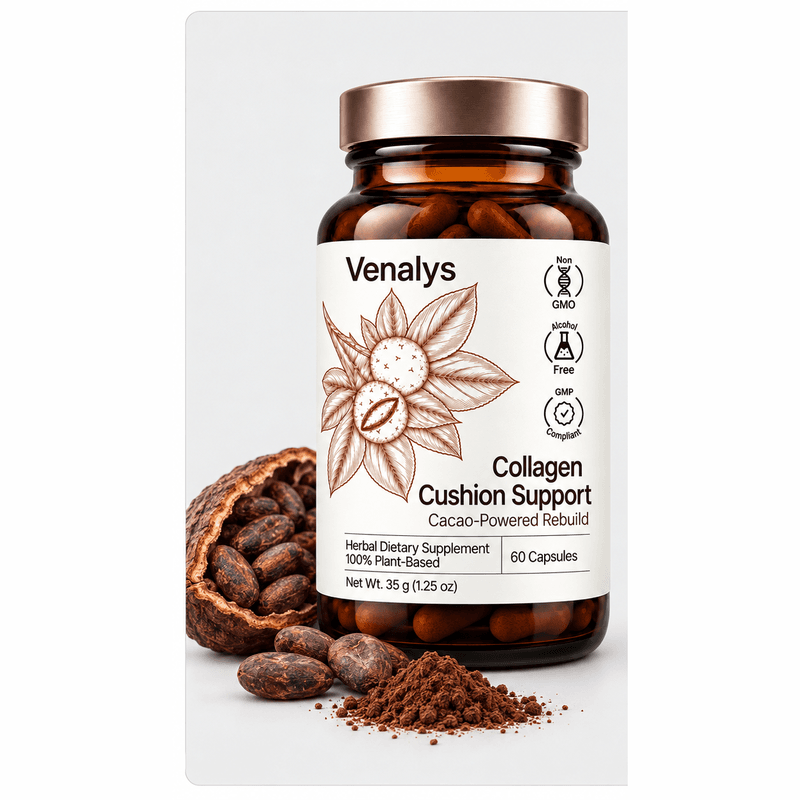
Venalys Collagen Cushion Support is a daily, plant based capsule made with cacao, horse chestnut, butcher's broom, soft psyllium and chicory root. It is formulated to support healthy vein tone and comfortable, regular bowel movements.†
Learn more about Venalys†These statements have not been evaluated by the Food and Drug Administration. This product is not intended to diagnose, treat, cure, or prevent any disease.
FAQs
What is a hemorrhoid lump?
It's a swollen blood vessel under the skin at the rim of the anus. It can be soft or firm, skin colored or purple. A sudden, hard, painful one usually has a small clot inside.
Can an external hemorrhoid go away on its own?
The swelling often settles in a few days to a week with soft stools and less straining. A skin tag left behind by an old flare usually stays.
Should you push an external hemorrhoid back in?
No. An external hemorrhoid already belongs on the outside, so pushing it up can make it hurt more. Internal ones that slip out are a different story.
Can external hemorrhoids burst?
A large clotted one can sometimes break through the skin and bleed. The pain often eases quickly when it does. Call your doctor so the area can be checked and kept clean.
Can a rubber band be used on an external hemorrhoid?
No. Banding works on internal hemorrhoids, which sit above the pain nerves. On the outside, a band would hurt a lot, so doctors use other options there.
Do I need a colonoscopy if I have hemorrhoids?
Not just for having hemorrhoids. But if you have rectal bleeding, your doctor may want to look further to rule out other causes, especially after age 40. Ask about it at your visit.