

Table of Contents
Blood in stool most often comes from something near the opening, like a hemorrhoid or a small tear. But it can also come from higher up, so it always needs a doctor's look, even if you know your hemorrhoid symptoms well.
You stand up, you glance at the bowl, and your stomach drops. Some people panic. Others flush and hope it won't happen again. Here's what you might see, what it can mean and what your doctor will want to know.
What blood in stool usually means
The NIH page on hemorrhoids says internal hemorrhoids can leave bright red blood on the stool, on the toilet paper or in the bowl. That's a very common source. But it also warns that rectal bleeding can also come from Crohn's disease, ulcerative colitis or cancer of the colon or rectum.
A 2018 review in American Family Physician lists the other causes doctors rule out:
- an anal fissure, a small tear that brings a sharp, tearing pain when you go
- polyps, which can bleed without any pain
- inflammatory bowel disease, often with bloody diarrhea and belly pain
- colorectal cancer, sometimes with pain, changed bowel habits or weight loss
The American Cancer Society adds infection and irritable bowel syndrome. You can't tell the cause from the bowl alone. A doctor can.
Say your doctor checked you and it's hemorrhoids. If the bleeding still comes back every few weeks, the question isn't the flare anymore. It's the structure. Harvard Health explains that the tissue holding hemorrhoids in place can weaken with age, so the cushions slide down under daily pressure.
Bright red blood in stool and what the color tells you
Bright red blood in stool
Bright red means fresh blood. It's the color you see with hemorrhoids and fissures, which sit right at the end of the line. But here's the part many people miss. The American Cancer Society lists "rectal bleeding with bright red blood" among the signs of colorectal cancer too. So bright red is common and often minor, but it's not a free pass. Mention it to your doctor.
Hemorrhoid blood color
Hemorrhoid blood is usually bright red. Harvard Health describes it on the toilet paper or dripping into the bowl. The 2018 review in American Family Physician says it often shows up as streaks on the stool and rarely causes anemia, which means a low red blood cell count. Dark brown, maroon or black stool is a different story. The American Cancer Society notes that blood can make stool look dark brown or black.
Blood clots in stool
A clot is a small jelly like lump of blood. It usually means more blood than a few drops, or blood that sat for a while before it came out. That's a reason to call your doctor soon, not next month. Don't confuse it with a thrombosed hemorrhoid. That one is a clot inside an outside hemorrhoid, a hard, painful lump you can feel, not something in the bowl.
Small red pieces in stool that aren't blood
Not every red bit is blood. Food with strong red color or tough red skins can pass through and show up in the bowl. Think back to what you ate in the last day or two. Blood tends to streak, smear or tint the water, while food bits keep their shape. If you can't tell, don't guess. Your doctor can test a stool sample for hidden blood.
Where you see the blood
Hemorrhoids and blood when you poop
With internal hemorrhoids, the blood usually shows up during or right after a bowel movement. It often doesn't hurt. A hard stool passes over a swollen cushion, and the thin lining lets go a little. Dr. Kenneth Brown, a board certified gastroenterologist in Plano, Texas, puts it simply in a patient video: "even a little bit of blood can look pretty dramatic." The water spreads it. Still, he says it's important to get checked.
Blood on toilet paper but not in stool
Blood that only shows up when you wipe usually points to the very end of the tract. Hemorrhoids are the classic cause. A fissure can do the same, and it usually comes with a sharp pain as you go. Wiping hard can make things worse, since the NIH notes that rubbing and cleaning can irritate outside hemorrhoids. Pat gently, and bring it up at your next visit.
Blood in loose stool
Blood mixed into diarrhea is a different picture from a streak on firm stool. The 2018 review in American Family Physician links bloody diarrhea with belly pain to inflammatory bowel disease. The American Cancer Society also names infection as a cause of these signs. Diarrhea itself can irritate hemorrhoids too. If you have bloody diarrhea, fever or belly pain, call your doctor the same day.
Hemorrhoid bleeding through pants
Finding blood on your underwear or pants is upsetting, and it's often why people finally make the call. Harvard Health explains that a hemorrhoid that sticks out can collect small amounts of mucus and tiny stool particles, which can stain. Blood that soaks through is more than a streak, though. Cleveland Clinic says to call your provider for severe rectal bleeding.
Blood with mucus or pain
Bright red mucus and blood in stool
Mucus is a clear or white slime your gut makes to keep things moving. A small amount is normal. When you see it streaked with bright red blood, the lining somewhere is irritated. Harvard Health notes that a hemorrhoid that sticks out can collect mucus. But inflammation of the bowel, like ulcerative colitis, can also bleed, as the NIH page explains. Let your doctor sort it out.
Blood and mucus in stool with no pain
No pain feels reassuring. It shouldn't be the reason you wait. Internal hemorrhoids are usually painless, according to the NIH. But the 2018 review in American Family Physician notes that polyps also bleed without pain. So painless blood and mucus can be minor, or it can be something a doctor should look at with a scope. Pain level alone can't tell those apart.
Stomach pain and bright red blood in stool
Blood that comes with cramps or belly pain needs a call to your doctor. The American Cancer Society lists cramping or belly pain among the warning signs. Cleveland Clinic says to call your provider if rectal bleeding comes with belly pain, fever, nausea or vomiting. Hemorrhoids don't usually cause stomach pain, so that pain is a clue worth sharing.
Painful bowel movement
A painful bowel movement has a few usual suspects. A fissure gives a sharp, tearing pain as you pass stool. An outside hemorrhoid with a clot can be extremely painful, as American Family Physician describes. An inside hemorrhoid that has slipped out can hurt too, according to the NIH. If it hurts so much that you start holding it in, stools get harder. Tell your doctor.
Burning hemorrhoids after a bowel movement
That burning or stinging after you go is common with outside hemorrhoids. The NIH lists anal itching and ache, especially when sitting, and notes that straining, rubbing and too much cleaning can make things worse. Rinse with warm water, pat dry and skip the scented wipes. If the burning lasts more than a week, or comes with bleeding, see your doctor.
Hemorrhoid from pooping
Can one hard morning give you a hemorrhoid? It can make one flare. The NIH lists straining during bowel movements, long sits on the toilet and constipation or diarrhea that doesn't go away among the causes. Every push adds pressure to the cushions. So keep stools soft with fiber and water, get up when you're done and don't read on the toilet.
Stool shape and what unhealthy stools look like
Can a hemorrhoid cause narrow stool
People often blame a hemorrhoid when their stool looks narrow. A large one can make passing stool feel different. But narrow stool that lasts is not something to pin on hemorrhoids by yourself. The American Cancer Society lists "narrowing of the stool" that lasts for more than a few days as a possible sign of colorectal cancer. That's a doctor visit, even if you feel fine.
Can hemorrhoids cause thin stools
One thin stool after a day of little food or little water happens to everyone. Thin stools every day for a week or more are different. That's a change in your bowel habits, and it belongs on your list for the doctor. Don't wait to see if the hemorrhoid settles first. Get the thin stools looked at on their own.
Hemorrhoid and narrow stool: what to tell your doctor
If you have hemorrhoids and narrow stools at the same time, give your doctor the full picture. How long has it been going on? Is every stool narrow, or only some? Is there blood, and where do you see it? Any weight loss or tiredness? Those details help your doctor decide if you need a closer look inside the colon.
Type 6 stool
Type 6 comes from the Bristol stool chart, a scale doctors use to describe stool from type 1 (hard lumps) to type 7 (watery). Type 6 means mushy pieces with ragged edges, close to diarrhea. Once in a while, it's nothing. If it lasts more than a few days, or you see blood with it, tell your doctor. Loose stools can irritate hemorrhoids too.
Unhealthy stools pictures
It's tempting to compare your stool with pictures online. They can't tell you what's going on inside. What helps is noticing a few things: color, shape, blood and where it shows up. Black or tarry stool, blood mixed into the stool, or a change that lasts more than a few days are all worth a call. Write it down so you remember at the visit.
Piles and stool
Piles is the British word for hemorrhoids. Same thing, same advice. Hard stools mean more pushing, and more pushing means more pressure on the cushions. Soft, regular stools that pass without effort are the goal. That's why Cleveland Clinic and Harvard Health both point to fiber and water first.
What a hemorrhoid looks like
How does a hemorrhoid look
Cleveland Clinic describes an outside hemorrhoid as usually the color of your skin and soft. One with a clot inside may look blue, black or purple and feel firmer. An inside hemorrhoid that slips out usually looks like a small lump at the opening that you can push back in. Any new lump deserves a doctor's look, even if it doesn't hurt.
Hemorrhoid white color
The usual descriptions of hemorrhoids are skin colored, or blue, purple or black when there's a clot. White isn't on that list. So if you notice a white or very pale bump, don't assume it's a hemorrhoid. It could be several things, and only an exam can tell. Show it to your doctor rather than treating it on your own.
Blood in stool around your period
Hemorrhoid during your period
During your period, blood in the bowl can come from two places, and it's easy to mix them up. Try to notice where it shows up: on the paper when you wipe from the back, on the stool itself, or only when you change a pad or tampon. If you see blood on or in the stool, it's worth bringing up with your doctor, period or not.
Painful bowel movement during your period
Some women notice that bowel movements feel different or hurt more around their period. If your stools get harder or looser that week, that alone can add pressure on hemorrhoids, since the NIH lists constipation and diarrhea as causes. Pain with every bowel movement, or pain with bleeding, is still a reason to see your doctor. Don't write it off as just your period.
When to worry about blood in stool

Any blood in your stool is worth telling your doctor about. Most of the time it's minor, but you only know that after an exam.
Get help right away, at the ER or by calling 911, if you have:
- a lot of blood, or blood that won't stop
- dizziness, fainting or a racing heart
- black, tarry stool
- severe belly pain
Call your doctor soon if you have:
- bleeding, even just on the paper
- blood mixed into the stool
- a change in your bowel habits that lasts more than a few days
- weight loss you can't explain, or feeling weak and tired
- symptoms that last after a week of care at home
Age matters too. The 2018 review in American Family Physician says people older than 40 with rectal bleeding should have a colonoscopy, unless they had a normal one in the last 10 years. Harvard Health mentions a scope especially after age 45. And remember, bleeding is a symptom. It's not something to save for your next routine screening.
Sources
- American Cancer Society, Signs and symptoms of colorectal cancer
- NIDDK (NIH), Symptoms and causes of hemorrhoids
- Mott, Latimer and Edwards, American Family Physician, 2018, Hemorrhoids: diagnosis and treatment options
- Harvard Health Publishing, Hemorrhoids and what to do about them
- Cleveland Clinic, Hemorrhoids
- Kenneth Brown, MD, Red Blood in Stool, Causes and When to see a Doctor (YouTube)
This article is for general information and is not medical advice. If you have rectal bleeding, severe pain or a change in your bowel habits, see your doctor.
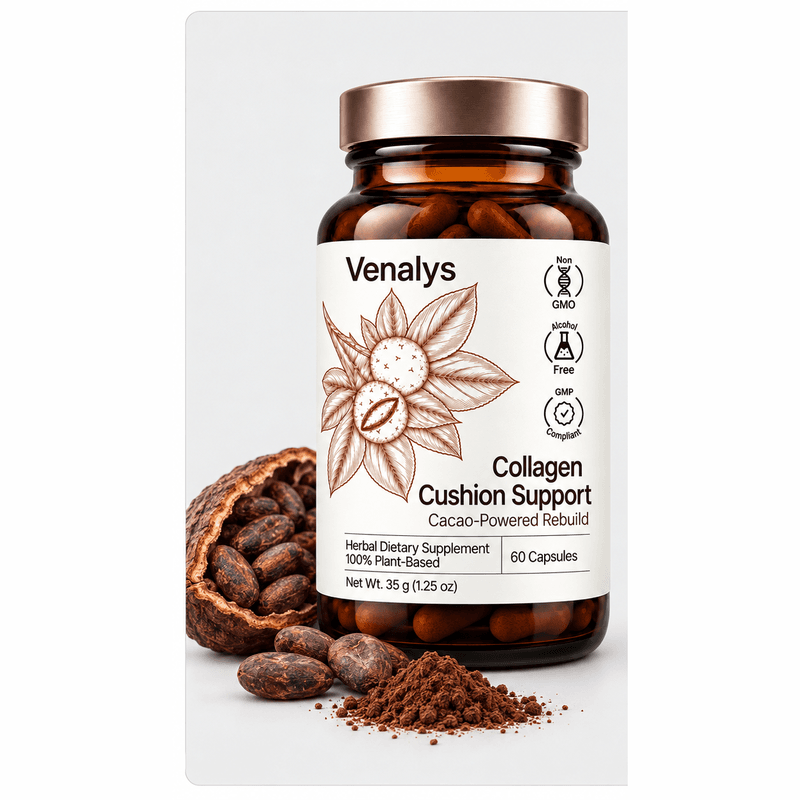
About Venalys
Venalys Collagen Cushion Support is a daily, plant based capsule made with cacao, horse chestnut, butcher's broom, soft psyllium and chicory root. It is formulated to support healthy vein tone and comfortable, regular bowel movements.†
Learn more about Venalys†These statements have not been evaluated by the Food and Drug Administration. This product is not intended to diagnose, treat, cure, or prevent any disease.
FAQs
Can hemorrhoids bleed without causing pain?
Yes. Internal hemorrhoids often bleed bright red without pain. But polyps can bleed without pain too, so get checked.
Will bloody stool go away on its own?
Sometimes the bleeding stops by itself, especially with hemorrhoids. That doesn't tell you the cause. Tell your doctor even if it stopped.
What does cancerous blood in the stool look like?
It can be bright red, dark brown or black. Often you can't see it at all, and the stool looks normal. That's why only an exam can tell.
What can I do about painless bright red blood in my stool?
See your doctor first to find the source. If it's hemorrhoids, soft stools, short bathroom visits and less straining take pressure off.
What could be causing blood and mucus in my stool?
Irritated hemorrhoids, a fissure, an infection or inflammation of the bowel can all cause it. A doctor can tell them apart.