
Table of Contents
Cacao flavanols are natural plant compounds in the cacao bean, mainly epicatechin, that researchers have studied for how they help blood vessels relax. The catch is that most cocoa you can buy has lost most of them in processing, so if you see cacao on a hemorrhoid supplement label, it's fair to ask which kind it is.
Maybe you read that dark chocolate was good for you. So you bought the 85 percent bar, or stirred cocoa into your coffee for a few months. And nothing changed. Here's the thing. Most cocoa sold in stores has been processed in a way that removes much of its flavanols.
Why does this matter for hemorrhoids? Everyone has hemorrhoidal cushions, normal pads of collagen, elastin and small blood vessels. A 2015 study from Cleveland Clinic Florida found a weaker mix of collagen in hemorrhoid tissue. No study has tested cacao flavanols on hemorrhoids. What research does show is how they act on blood vessels, and that's what this guide covers.
Does cacao powder have flavanols
Yes. Raw cacao beans are one of the richest sources of flavanols in the whole food supply. Cacao powder made from beans that haven't been alkalized keeps a good share of them.
The words get mixed up, so here's the short version. "Cacao" usually means the less processed bean and powder. "Cocoa" usually means the roasted, everyday product. Neither word on a label tells you how many flavanols are left. What tells you more is one detail: whether the powder was alkalized, also called Dutch processed.
Cocoa flavanols and blood vessels
This is where the research is strongest. In a study led by UC Davis, healthy men drank flavanol rich cocoa. Their blood vessels relaxed better and blood flow in the small vessels rose. Epicatechin alone did the same thing, and the effect depended on nitric oxide, the gas your vessel walls use to open up. A Yale review of cocoa and blood vessels describes the same nitric oxide link.
Now the honest part. The biggest trial so far, COSMOS, run by Harvard researchers, gave 21,442 older adults a cocoa extract with 500 mg of flavanols a day or a placebo for a median of 3.6 years. It didn't significantly lower total heart events, which was its main goal. Deaths from heart disease were 27 percent lower, but that was a secondary result, so it needs more study.
In 2023 the FDA also said it wouldn't object to a limited, "qualified" heart health claim for high flavanol cocoa powder. Qualified means the agency found the evidence promising but limited. That's a fair summary of the whole field.
Why Dutch processing matters
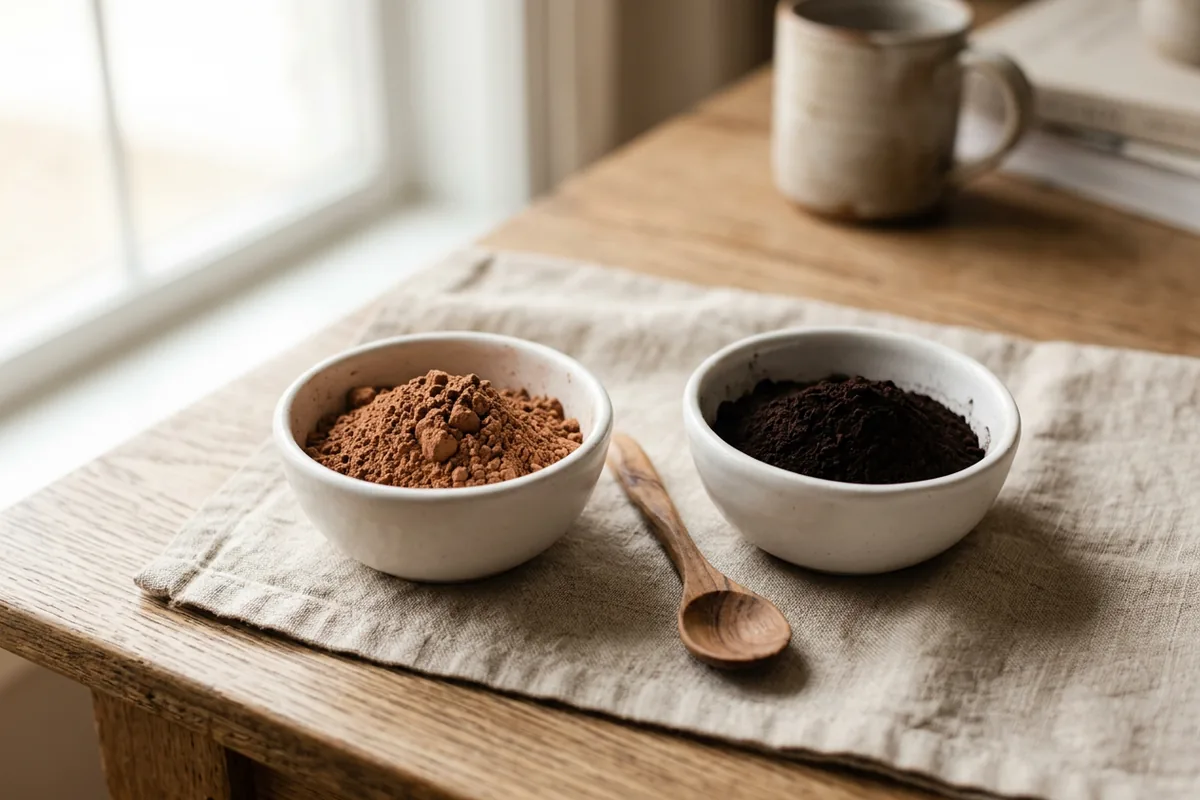
Cocoa is often treated with an alkaline solution. It makes the powder darker, smoother and less bitter. Most cocoa sold goes through this step, called Dutch processing.
Researchers at the Hershey Center for Health and Nutrition measured what it does. In their 2008 study of commercial cocoa powders, flavanols dropped as alkalizing increased:
| Cocoa powder | Flavanols (mg per gram) |
|---|---|
| Natural (not alkalized) | 34.6 |
| Lightly Dutch processed | 13.8 |
| Medium Dutch processed | 7.8 |
| Heavily Dutch processed | 3.9 |
That's a loss of roughly 60 to 90 percent. Dutch processing strips out most of the flavanols. It's the reason a chocolate habit rarely does what the headlines promised.
Cacao powder flavanols: nibs, powder and extracts
You'll see cacao sold in a few forms. Cacao nibs are crushed pieces of the bean, crunchy and bitter. Cacao and cocoa powder are what's left after most of the fat is pressed out, so they're more concentrated. Extracts go one step further and pull the flavanols out on purpose, often with the amount listed per serving.
Each step can lose flavanols along the way. Fermenting the beans, roasting them hot and long, and alkalizing all bring the number down. That's why two powders from the same aisle can be worlds apart, and why a measured amount on the label tells you more than a word like "raw" or "superfood".
Flavanol cocoa powder: how to find cocoa powder high in flavonoids
- Look for "natural" or "non alkalized" cocoa. Skip anything that says "Dutch", "Dutched", "alkalized" or "processed with alkali".
- Lighter, reddish brown powder is usually less processed than very dark powder.
- Unsweetened beats any mix with sugar and milk powder.
- A few brands list flavanols in mg per serving. That number is more useful than "antioxidant rich".
The cacao family, question by question
Flavonoids in cocoa
Flavonoids are a large family of plant compounds found in tea, berries, citrus, onions and cocoa. Flavanols are one branch of that family, and cocoa is one of their best sources. The main ones in cocoa are epicatechin and catechin, plus chains of them called procyanidins. When people talk about the health side of cocoa, these are the compounds they mean.
Cocoa flavanols benefits
The best supported benefit is on blood vessel function: vessels that relax and widen more easily, through nitric oxide. Studies have also looked at blood pressure, memory in older adults and heart health, with mixed results. Most studies used high flavanol extracts, not candy bars. The large COSMOS trial is a reminder to keep claims modest.
Epicatechin in cocoa powder
Epicatechin is the flavanol researchers point to most. In the UC Davis study, it was the compound linked to better blood vessel function, and pure epicatechin had a similar effect. It's also one of the compounds most sensitive to alkalizing. So a cocoa powder can look rich and dark and still hold little epicatechin.
How many flavonoids in cocoa powder
It depends on the processing. In the Hershey study, natural cocoa powder had about 35 mg of flavanols per gram, while heavily Dutch processed powder had about 4. A tablespoon of each looks almost the same. What's inside can differ several times over. Growing region, fermentation and roasting change the number too.
Dark chocolate and cocoa benefits
Dark chocolate carries more cocoa solids than milk chocolate, so it usually carries more flavanols. But it also carries sugar, fat and calories, and many bars use alkalized cocoa. The percentage on the wrapper tells you how much cocoa is in there, not how many flavanols survived. Enjoy it as a treat, not as a health plan.
Dark chocolate cocoa powder benefits
"Dark chocolate cocoa powder" is often a darker, Dutch processed blend made for baking. It tastes rich and looks great in brownies. For flavanols, it's usually a weaker choice than natural cocoa powder. If flavanols are your goal, pick the natural kind and use it in drinks, oatmeal or smoothies, where it isn't baked again.
Side effects of cocoa powder
Cocoa contains caffeine and theobromine, a related stimulant. A lot of it late in the day can keep you up or make your heart race. Some people get heartburn or headaches from chocolate.
Sources
- Nasseri and colleagues, Cleveland Clinic Florida, 2015, collagen in hemorrhoid tissue
- Schroeter and colleagues, UC Davis, 2006, epicatechin and blood vessel function
- Katz and colleagues, Yale, 2011, cocoa and nitric oxide in blood vessels
- Sesso and colleagues, Harvard, 2022, the COSMOS cocoa extract trial
- Miller and colleagues, Hershey, 2008, alkalization and cocoa flavanols
This article is for general information and is not medical advice. If you have rectal bleeding, severe pain or a change in your bowel habits, see your doctor.
About Venalys
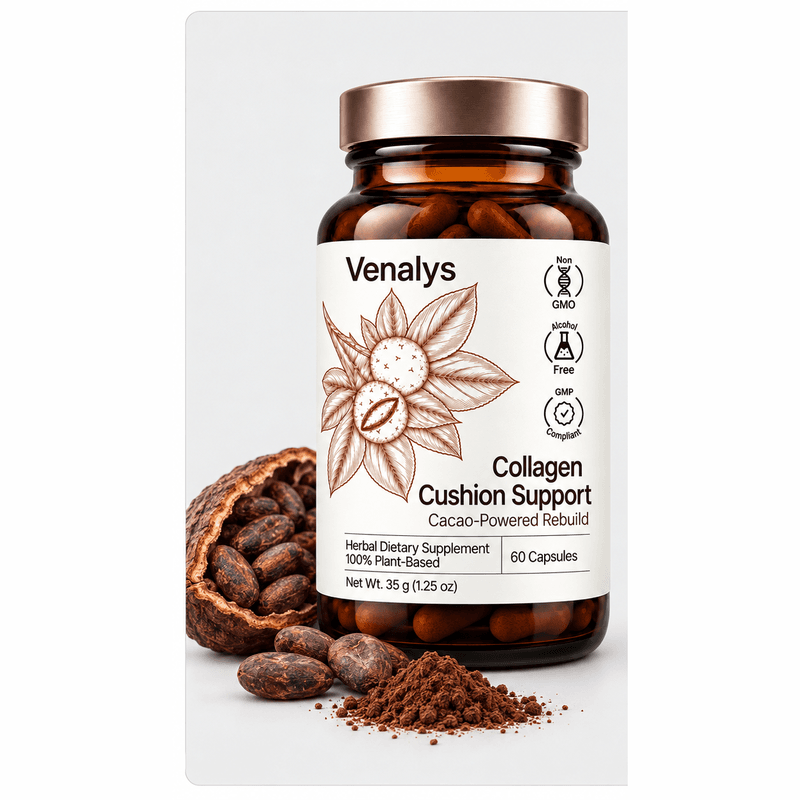
Venalys Collagen Cushion Support is a daily, plant based capsule made with cacao, horse chestnut, butcher's broom, soft psyllium and chicory root. It is formulated to support healthy vein tone and comfortable, regular bowel movements.†
Learn more about Venalys†These statements have not been evaluated by the Food and Drug Administration. This product is not intended to diagnose, treat, cure, or prevent any disease.
FAQs
Is it healthy to drink cacao every day?
For most people, a daily cup of unsweetened natural cacao is fine. Watch the sugar you add, and the caffeine if you drink it late.
How much cocoa flavanols should you take a day?
There's no official daily amount. The COSMOS trial used 500 mg of flavanols a day from an extract, which is far more than most people get from food. If you take a supplement, follow the label and talk with your doctor if you take blood pressure medicine.
Does baking lower the flavanols in cocoa?
Yes, heat can lower them, especially long, hot baking. If you want the flavanols, stir natural cocoa into a warm drink, oatmeal or a smoothie instead of cooking it for a long time.
Should I drink cacao in the morning or at night?
Morning or early afternoon is easier on sleep, because of the caffeine and theobromine. If cacao doesn't keep you up, the timing matters less than the kind you choose.