
Table of Contents
A hemorrhoid supplement is a pill or capsule you take by mouth, instead of putting something on the spot. Most mix plant extracts, flavonoids and fiber. Some ingredients have real evidence behind them for symptoms, others very little, and this guide goes through them one by one.
You probably know the routine already. A flare starts, you buy something, it calms down, and a few months later you're back in the same aisle. Maybe you tried diosmin because Reddit said so. Maybe fiber, then a vein pill, then dark chocolate. Before you buy the next bottle, it helps to know what each ingredient has actually been tested for.
Why hemorrhoids keep coming back
Everyone has hemorrhoidal cushions. They're normal pads of tissue, blood vessels and collagen that help seal things shut. Trouble starts when the tissue that holds them in place gets weaker. Harvard Health explains that this supporting tissue can weaken with age, so the cushions bulge and slide down. More detail in our guide to collagen for hemorrhoids.
Researchers at Cleveland Clinic Florida looked at hemorrhoid tissue under the microscope. They found a weaker mix of collagen than in normal tissue, according to their 2015 study. That helps explain why a cream can quiet a flare while the tissue underneath stays the same.
What to look for in a hemorrhoid supplement

- Ingredients with a clear dose on the label.
- Ingredients that have been studied, and for what. Leg veins and hemorrhoids are not the same thing.
- Fiber that softens stool, like psyllium.
- A product that tells you how long to take it, and when to stop and see your doctor.
Be careful with labels that promise fast results. Hemorrhoid tissue changes slowly, and no supplement replaces a visit to your doctor if you have bleeding or pain that won't stop.
Common ingredients, one by one
Cacao flavanols
Cacao is rich in flavanols, mostly epicatechin. A study at UC Davis found that flavanol rich cocoa improved how blood vessels relax. Here's the catch. Most cocoa in stores is Dutch processed, which means alkalized. A study of commercial cocoa powders found that step strips out most of the flavanols, up to about 90 percent. No study has tested cacao on hemorrhoids directly. More detail in our guide to cacao flavanols.
Collagen for hemorrhoids
Collagen is the protein that gives tissue its strength, and studies have found a weaker type of collagen in hemorrhoid tissue. Collagen powder is broken down into amino acids during digestion, and your body uses them wherever it needs them. There is no study showing that collagen powder changes hemorrhoid tissue.
Horse chestnut benefits
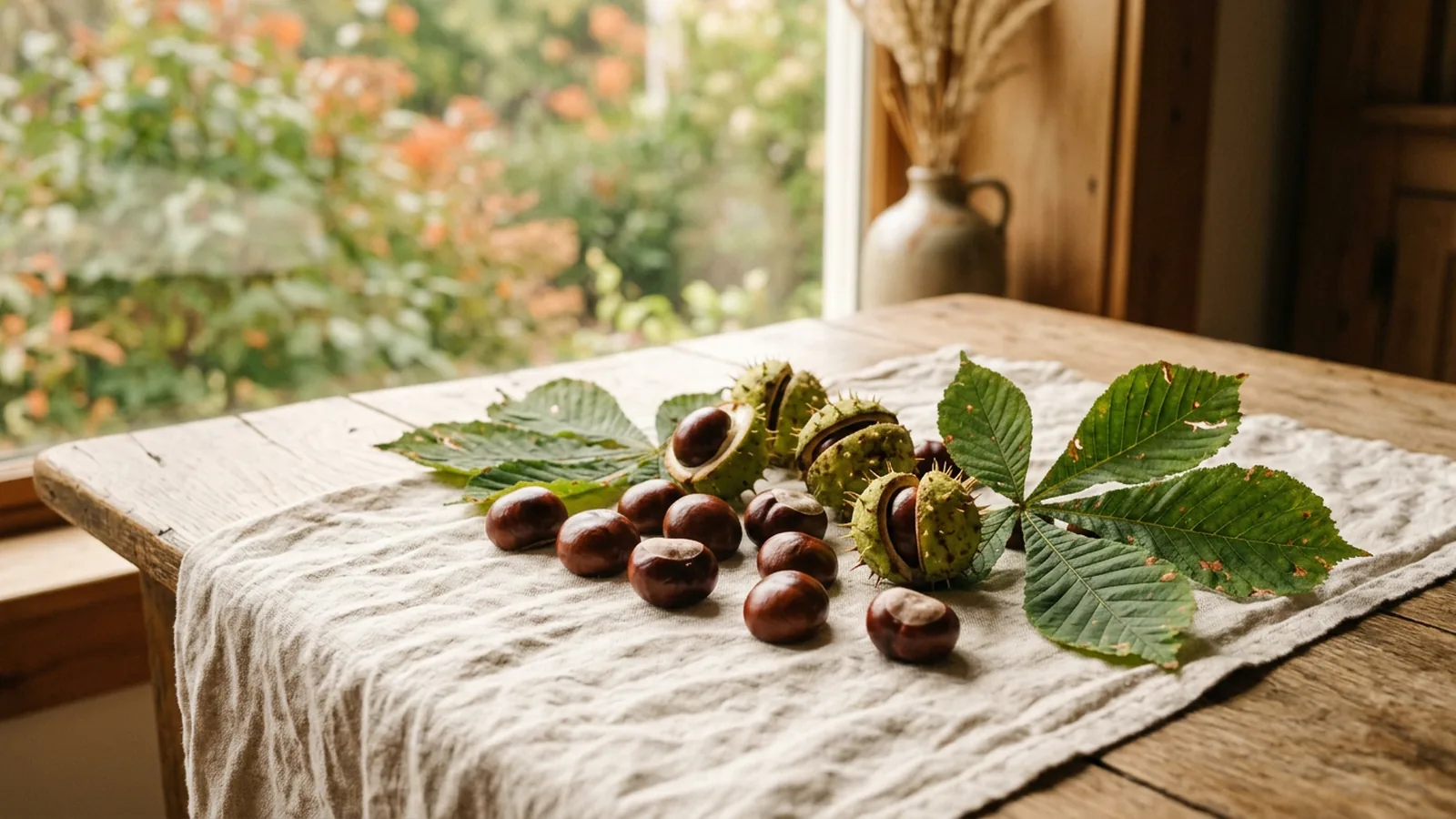
Horse chestnut seed extract has been studied for vein problems in the legs. The Memorial Sloan Kettering herb guide says short term trials support it for that use, and that there's no solid data yet for hemorrhoids. Raw seeds are toxic, so only a standardized extract belongs in a capsule. More detail in our guide to horse chestnut benefits.
Psyllium husk benefit
Psyllium is the fiber doctors mention most for hemorrhoids, because it pulls water into stool and makes it softer. Softer stool means less straining, and less straining means less pressure on the area every morning. More detail in our guide to psyllium husk benefits.
Benefits of chicory root
Chicory root gives inulin, a prebiotic fiber that feeds the good bacteria in your gut. A University of Memphis trial found that chicory fiber made people with slow bowels go more often, though only at a fairly high dose, much higher than most capsules contain. More detail in our guide to the benefits of chicory root.
Butcher's broom benefits
Butcher's broom is an old European plant used for veins and, traditionally, for hemorrhoids. Most studies tested it mixed with other ingredients, for leg veins. Memorial Sloan Kettering notes the hemorrhoid evidence is still thin.
Butcher's broom extract
Extracts are made from the root and standardized for compounds called ruscogenins. If you see it on a label, check that the dose is listed. A plant name with no amount next to it tells you very little.
Diosmin and other flavonoids
Flavonoids for hemorrhoids
Flavonoids are plant compounds found in citrus, cocoa and many herbs. The current guideline from the American Society of Colon and Rectal Surgeons says flavonoid supplements can be suggested to help with bleeding, itching and leakage, as summarized in American Family Physician. They can help symptoms.
Diosmin supplement
Diosmin is the flavonoid people on forums talk about most. It's usually sold with hesperidin, both from citrus. People take it for the vessels, often during a flare. It's one of the better studied options for symptoms, which is why it keeps showing up in recommendations.
Diosmin for hemorrhoids
Most diosmin plans are short, a few days at a higher dose during a flare, then a lower dose. That's the pattern you'll see on most labels. It can help calm symptoms during a flare.
Micronized diosmin
Micronized means the powder is ground into very small particles so the body can absorb more of it. Many products advertise this. If you compare two labels, compare the dose and whether the form is micronized, not the marketing.
Diosmin dose for hemorrhoids
Doses vary a lot from one product to another, and so do instructions for flares. Follow the label and ask your doctor or pharmacist, especially if you take blood thinners or have other health conditions.
How much diosmin is in an orange
Very little. Oranges are rich in hesperidin, a related flavonoid, but diosmin itself is mostly made from hesperidin in a lab. Eating more fruit is good for your gut. It won't give you a supplement dose.
Fiber supplements
Hemorrhoid fiber supplement
Fiber is the first thing surgeons recommend. The same guideline found that fiber cuts symptoms that stick around by about half. Most adults need 25 to 35 grams a day, and most get far less from food. A supplement fills the gap.
Fiber supplement for constipation
For constipation, the goal is softer and easier, not bigger. Start low, add a little each week, and drink more water as you go. That simple step is where most people get it wrong.
Can a fiber supplement cause constipation
It can, if you take a lot without enough water, or jump to a full dose on day one. Gas and bloating are common at first too. Go slow, drink water, and pick a gentle fiber.
Fiber supplement for travel constipation
Long drives and flights change your routine, your water and your food. Many people bring their fiber along and keep the same time of day. A water bottle in the car does more than you'd think.
Pills, oral medicine and other options
Hemorrhoid oral medicine
Doctors can prescribe or suggest stool softeners, pain relief and, in some cases, flavonoids. These help the moment you're in. If you keep needing them, talk to your doctor about what's happening underneath.
Hemorrhoid pills
Most pills on store shelves mix vein herbs, flavonoids and sometimes fiber. Read the label for doses and for how long you're supposed to take them, and check each ingredient against what it has actually been studied for.
Hemorrhoid food supplement
Some products are sold as food supplements or nutrition powders. The ingredients matter more than the format. A good one tells you what each ingredient does and how long to use it.
Herbal remedies for hemorrhoids
Witch hazel, horse chestnut, butcher's broom and many other plants have long histories. Some have decent evidence for veins or symptoms. Few have been tested for hemorrhoids directly, so be wary of big promises.
Does turmeric help with internal hemorrhoids
Turmeric gets a lot of attention online. There isn't good evidence that it helps internal hemorrhoids. It's fine in food, but it shouldn't replace fiber, water and a visit to your doctor if you're bleeding.
Zinc oxide for hemorrhoids
Zinc oxide isn't a supplement. It's a skin protectant in some ointments that forms a barrier on irritated skin. It can soothe the outside. It has no effect on the cushion inside.
Sources
- Harvard Health Publishing, Hemorrhoids and what to do about them
- Nasseri and colleagues, Cleveland Clinic Florida, 2015, collagen in hemorrhoid tissue
- Miller and colleagues, Hershey, 2008, alkalization and cocoa flavanols
- Memorial Sloan Kettering Cancer Center, Horse chestnut
- American Family Physician, 2025 summary of the ASCRS hemorrhoid guideline
This article is for general information and is not medical advice. If you have rectal bleeding, severe pain or a change in your bowel habits, see your doctor.
About Venalys
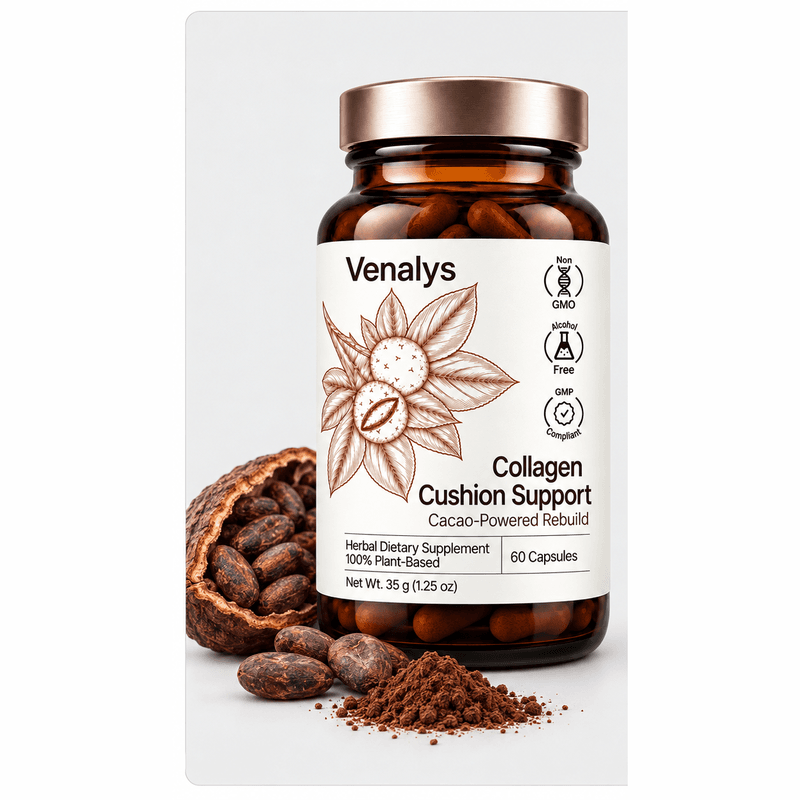
Venalys Collagen Cushion Support is a daily, plant based capsule made with cacao, horse chestnut, butcher's broom, soft psyllium and chicory root. It is formulated to support healthy vein tone and comfortable, regular bowel movements.†
Learn more about Venalys†These statements have not been evaluated by the Food and Drug Administration. This product is not intended to diagnose, treat, cure, or prevent any disease.
FAQs
What is the best supplement for hemorrhoids?
The best one fits the cause. Fiber helps every case. Flavonoids can help symptoms during a flare. If your hemorrhoids keep coming back, look for something that supports the cushion's collagen and has a clear end date.
Do hemorrhoid supplements work?
Some ingredients have good evidence for symptoms, like fiber and flavonoids. No supplement replaces a doctor's visit if you have bleeding or pain that won't stop. Results depend on the ingredients, the dose and how long you take them.
What shrinks hemorrhoids fastest?
For quick comfort, soft stools, short bathroom visits, warm sitz baths and cold packs help most. Supplements work over weeks and months, not hours.
How do I shrink my hemorrhoids naturally?
Eat more fiber, drink more water, don't strain, don't sit on the toilet scrolling your phone, and move every day. If that's not enough, talk to your doctor before trying more.