
Table of Contents
- How horse chestnut works on your veins
- What is horse chestnut
- Horse chestnut extract benefits
- Aescin benefits
- Uses of horse chestnut in medicine
- Horse chestnut for hemorrhoids
- Horse chestnut cream benefits
- Horse chestnut oil benefits
- Horse chestnut benefits for men and women
- Horse chestnut and butcher's broom
- Horse chestnut dosage
- Horse chestnut side effects
- Sources
- About Venalys
The main benefit of horse chestnut is for veins: an extract of its seed can ease leg swelling, heaviness and itching when the leg veins get weak. For hemorrhoids, it has never been properly tested, even though you'll often see it listed in a hemorrhoid supplement next to other plants.
Maybe you found it in the vitamin aisle, right next to the vein pills. Someone online said it helps hemorrhoids because hemorrhoids are veins. Maybe you took it during a flare, and now you wonder if you should take it every day "just in case." Here's the thing. You weren't wrong to look into it. It just helps to know what it has actually been tested for.
Everyone has hemorrhoidal cushions. They're normal pads of tissue, blood vessels and collagen. Harvard Health explains that the tissue holding them in place can weaken with age, so they bulge and slide down. And researchers at Cleveland Clinic Florida found a weaker mix of collagen in hemorrhoid tissue than in normal tissue, in their 2015 study. Horse chestnut has been studied for vessels, mostly in the legs, not for that supporting tissue.
How horse chestnut works on your veins
Your veins carry blood back up to your heart. When their walls and valves get tired, blood pools, fluid leaks out of tiny vessels into the tissue around them, and you feel it as swelling and heaviness. Your ankles at the end of a long day tell the story.
Horse chestnut seed extract is thought to make those small vessel walls less leaky and the veins a bit firmer. Less fluid seeps out, so there's less swelling. That's why people link it to circulation. It doesn't push blood faster. It helps the vessel hold its shape and keep fluid where it belongs.
Keep in mind that this research is about leg veins. Hemorrhoids also involve the tissue around the vessels, and the extract hasn't been studied for that.
What is horse chestnut
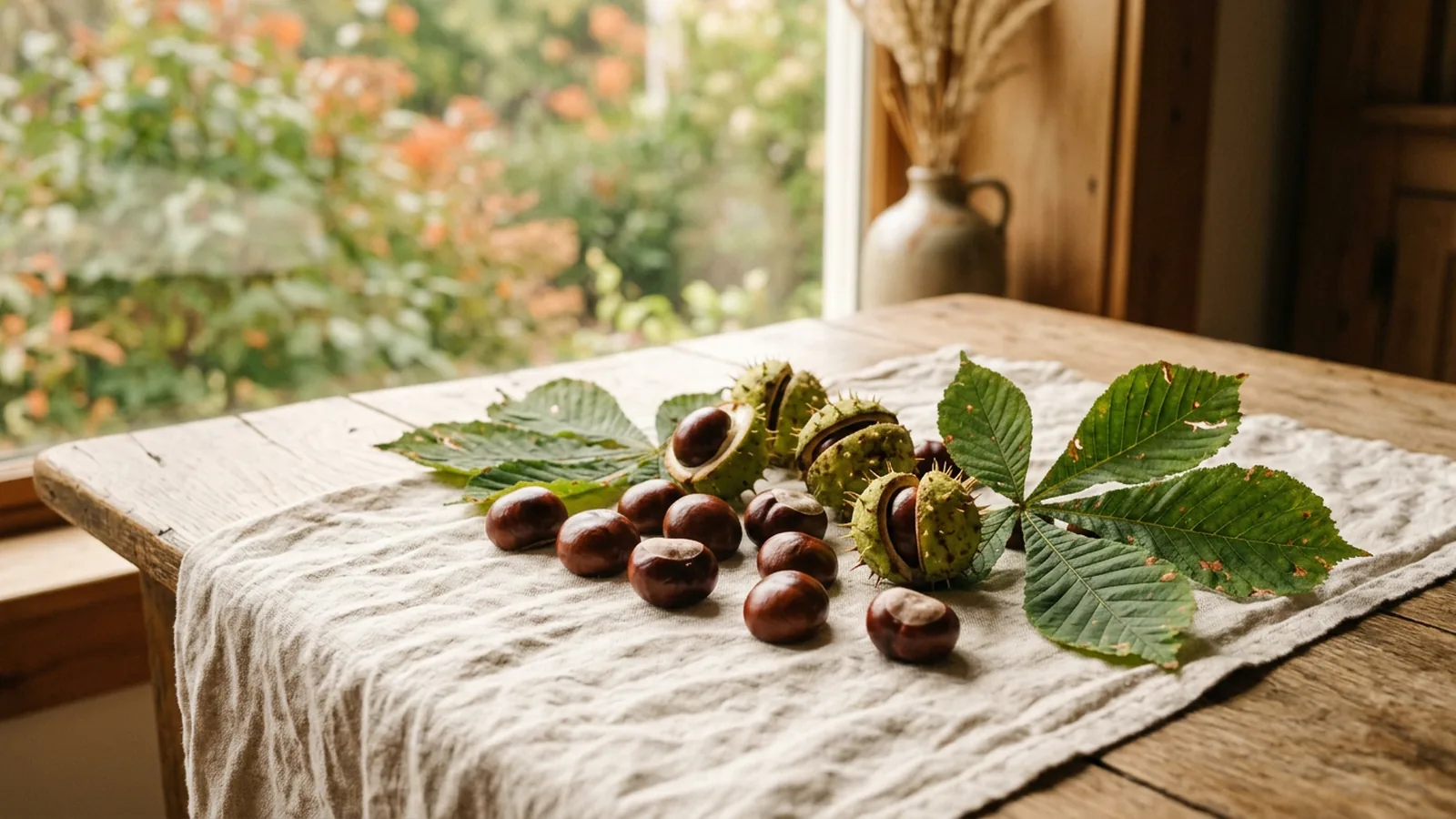
Horse chestnut is a big shade tree, Aesculus hippocastanum, first from southeast Europe and now planted in parks and streets across America. In fall it drops shiny brown seeds inside spiky green husks. These are not the sweet chestnuts you roast in winter. They're a different tree, and you can't eat them.
The NIH page on horse chestnut is clear on this. The raw seeds, bark, flowers and leaves contain a poison. What people take as a supplement is a processed seed extract with that poison removed. So the tree in your neighbor's yard is not a home remedy.
Horse chestnut extract benefits
Almost all the useful research on horse chestnut is about the extract, not the raw seed. The NIH says the extract may help chronic venous insufficiency, the condition behind tired, swollen legs. Short studies found less swelling, pain, itching and heaviness in the legs.
What the extract has not shown is just as useful to know. It hasn't been proven for hemorrhoids, for arthritis, for skin or for the long list of uses you'll see on some websites. When a label promises all of them, you're reading marketing.
Extract of horse chestnut
An extract is made by soaking the seeds so the active part comes out and the toxic part is removed. Good extracts are standardized, which means each dose is set to carry the same amount of the main compound, aescin. That's the detail to look for on a label. A plant name with an amount and a standard tells you something. A plant name alone tells you almost nothing. It also explains why homemade tinctures from yard seeds are a bad idea. You don't know what's in them, and you can't remove the poison at home.
Aescin benefits
Aescin, also spelled escin, is the main active compound in horse chestnut seed. It's a mix of plant compounds called saponins. Most of what horse chestnut does for veins is credited to aescin, which is why extracts are measured by it.
Aescin supplement
Some products list aescin on its own instead of horse chestnut. In practice it's the same idea: a seed extract measured by how much aescin it carries. If you compare two bottles, compare the extract amount and the aescin standard, not the size of the font on the front. And treat aescin like any active ingredient. Read the warnings, check what else you take, and ask your pharmacist if you're on any blood thinner. Simple products with clear doses are easier to judge than long blends with a dozen herbs in small amounts.
What is aescin used for
Aescin is mostly used for vein trouble in the legs: swelling, heaviness and the tired, tight feeling after standing all day. It also shows up in gels rubbed on bruises and puffy skin. Some people use it for hemorrhoids because they're made of vessels too. That use makes sense on paper. It just hasn't been tested well for that use.
Uses of horse chestnut in medicine

For centuries, horse chestnut was used in folk medicine for many complaints, hemorrhoids among them. Most of those uses never held up. The one that did is chronic venous insufficiency in the legs.
Even there, vein doctors keep it in its place. In a video from the American Vein and Lymphatic Society, a vein specialist was asked if horse chestnut is good for varicose veins. The answer was that it can help a little, but what they recommend first is compression stockings and exercise. Walking still beats a capsule.
Horse chestnut for hemorrhoids
Here's the honest version. The Memorial Sloan Kettering herb guide says short term trials support horse chestnut for leg veins, and that there are no data to support it for hemorrhoids. The idea comes from logic: hemorrhoids involve swollen vessels, so a vein herb should help.
Part of that logic holds, since the vessels in the cushions do swell during a flare. But hemorrhoids also involve the supporting tissue around those vessels, and no study has tested horse chestnut on hemorrhoids directly. So any benefit there is a guess, not a finding.
Horse chestnut cream benefits
Horse chestnut creams and gels are sold for tired legs, small visible veins and bruises. They feel cool and pleasant. The research the NIH summarizes is on the extract taken by mouth, though, so the evidence for creams is thinner.
Be careful with "before and after" photos online. Lighting, angle and time of day change how legs look. Leg creams are also not made for the sensitive skin around the anus. Never put a cream meant for legs on broken or sensitive skin without asking your doctor or pharmacist.
Horse chestnut oil benefits
Most "chestnut oil" you'll find is pressed from the edible sweet chestnut and sold for skin and hair. That's a different tree. Real horse chestnut seed is not a cooking oil, and there's no good research on horse chestnut oil for veins. If a product says oil, check which chestnut it means.
Horse chestnut benefits for men and women
You'll see products marketed "for men" or "for women." The plant is the same, and nothing in the research points to a version for men and a version for women. What changes is your health picture: your age, your other medicines and your other conditions. Those matter far more than a label color.
Horse chestnut and butcher's broom
These two plants are often sold together, sometimes with a citrus flavonoid. Both are old vein herbs, and both have the same weak spot for hemorrhoids: thin direct evidence. They do different jobs, though. Horse chestnut works on the leaky vessels. Butcher's broom is used to help the vein wall stay firm. If you see them combined, check that each dose is listed, so you know you're getting more than a pinch of each name.
Horse chestnut dosage
The right amount depends on the extract and how it's standardized, so there isn't one number that fits every product. The studies on leg veins used standardized seed extracts at set doses, often split through the day with food. Follow the label of the product you have. Don't add a second horse chestnut product on top of a blend that already contains it. And never make your own from raw seeds. If you take blood thinners or have a long term health condition, ask your doctor before you start.
Horse chestnut side effects
Most people tolerate the processed extract well. The NIH lists itching, nausea and an upset stomach as the common side effects. The raw plant is a different story: it's toxic and should never be eaten.
The warning many websites skip is from Memorial Sloan Kettering. Horse chestnut products that contain aesculin may raise the risk of bleeding if you take a blood thinner. Ask your doctor first if you:
- take a blood thinner or aspirin every day
- have liver or kidney disease
- have a bleeding problem or bruise easily
- have surgery coming up
Sources
- Harvard Health Publishing, Hemorrhoids and what to do about them
- Nasseri and colleagues, Cleveland Clinic Florida, 2015, collagen in hemorrhoid tissue
- National Center for Complementary and Integrative Health (NIH), Horse chestnut
- Memorial Sloan Kettering Cancer Center, Horse chestnut
This article is for general information and is not medical advice. If you have rectal bleeding, severe pain or a change in your bowel habits, see your doctor.
About Venalys
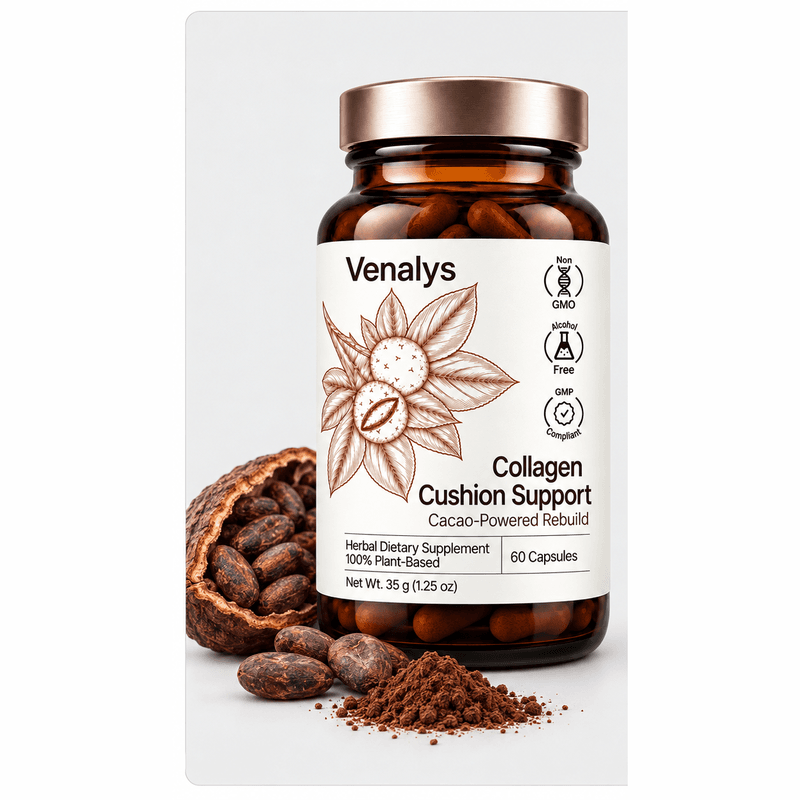
Venalys Collagen Cushion Support is a daily, plant based capsule made with cacao, horse chestnut, butcher's broom, soft psyllium and chicory root. It is formulated to support healthy vein tone and comfortable, regular bowel movements.†
Learn more about Venalys†These statements have not been evaluated by the Food and Drug Administration. This product is not intended to diagnose, treat, cure, or prevent any disease.
FAQs
What is horse chestnut good for?
Its best evidence is for chronic venous insufficiency: swollen, heavy, itchy legs from weak leg veins. Other uses, hemorrhoids included, haven't been proven.
What does horse chestnut do?
The seed extract is thought to make small vessel walls less leaky and veins a bit firmer, so less fluid seeps into the tissue around them.
What is horse chestnut extract used for?
Mostly for leg vein trouble. You'll also find it in vein blends and in some hemorrhoid formulas, though it hasn't been tested well for hemorrhoids.
What is horse chestnut cream used for?
Tired legs, small surface veins and bruises. It can feel soothing, but most of the research is on the extract taken by mouth.
How much horse chestnut should I take daily?
Follow the label of a standardized extract and don't stack products. Your doctor or pharmacist can check the dose against your other medicines.
Is horse chestnut a blood thinner?
It isn't sold as one. But Memorial Sloan Kettering warns that products with aesculin may raise bleeding risk with blood thinners, so talk to your doctor first.
How to use horse chestnut for hemorrhoids?
There's no proven way, because it hasn't been tested well for hemorrhoids. If you try it, use a standardized extract by mouth, never raw seeds, and see your doctor if you have bleeding, severe pain or a lump that won't go away.
Is it safe to take horse chestnut every day?
Studies on leg veins were short. If you want to take it longer, check with your doctor, especially if you take other medicines.
How long does horse chestnut take to work?
For leg veins, studies ran for weeks, not days. Be wary of any product that promises fast results.