

Table of Contents
- How your body makes its own collagen
- Supplement for collagen production: what's on the shelf
- Supplement to increase collagen production: what helps and what doesn't
- If you still want to try a supplement
- What breaks collagen down faster
- Food first: a day that feeds your collagen
- What this means for hemorrhoid cushions
- Sources
- About Venalys
No single pill has been shown to switch on collagen production. Your body makes its own collagen from the protein you eat, with help from vitamin C, zinc and copper, so the best "supplement" for most people is a diet that covers those, plus habits that slow the breakdown. That matters for hemorrhoids too, because the cushions behind them are held together by collagen, as our guide to collagen for hemorrhoids explains.
Maybe you've stood in the supplement aisle reading labels. "Boosts collagen." "Supports natural production." You already stir something into your coffee most mornings. And you still shift in the car seat on a long drive, one side, then the other. So here's a plain look at what your body needs to make collagen, what the bottles on the shelf actually add, and what none of them can promise.
If you typed "supplement collagen production" into a search bar, you probably want a short list of what to buy. The short list is shorter than the shelf makes it look.
How your body makes its own collagen
Collagen is the most common protein in your body. Cleveland Clinic says it makes up about 30% of all the protein you have. It's in your skin, bones, tendons, muscles and blood vessels. It's the stuff that gives tissue its strength.
Your body builds it every day. Think of it like making rope. First it needs the threads. Those are amino acids, mostly glycine, proline and hydroxyproline. Your body gets them by breaking down the protein you eat. Then it twists three strands together into a tight spiral, a bit like a braided rope. That's what makes collagen so strong.
The twisting step needs helpers. According to Cleveland Clinic, your body needs the right amount of vitamin C, zinc, copper and manganese to put the strands together. If you're low on the threads or the helpers, the rope doesn't get made as well.
Here's the part nobody likes. Production slows down as you get older. Cleveland Clinic explains that you make less collagen with age, the collagen you have breaks down faster, and the new collagen is lower in quality. A decline after 60 is normal for everyone.
Researchers at the University of Michigan measured this in skin. In their 2006 study, skin cells from people over 80 made about a third less of the starting material for type I collagen than cells from people aged 18 to 29. That study looked at skin only. Still, it shows the general idea. Your body's collagen factory doesn't run at the same speed forever.
Supplement for collagen production: what's on the shelf
Walk down any drugstore aisle and you'll see a lot of products that claim to help your body make collagen. Most of them fall into a few groups. Here's what each one gives your body, and what it can't do.
Vitamin C
Vitamin C is one of the helpers your body can't skip. Without enough of it, the strands don't get twisted together properly. That's why vitamin C shows up on almost every "collagen support" label.
But you don't need a pill to get it. Cleveland Clinic lists oranges, strawberries, bell peppers, broccoli, Brussels sprouts and potatoes as good sources. If you eat a few servings of fruit and vegetables a day, you're probably covered. A vitamin C pill makes the most sense if your diet is thin on produce. What isn't shown is that extra pills on top of a good diet make your body build more collagen.
Zinc and copper
These two minerals are also on the helper list. You need them in small amounts, and most people get them from food.
- Zinc: oysters, red meat, poultry, pork, beans, chickpeas, nuts, whole grains and milk products.
- Copper: liver, shellfish, shiitake mushrooms, nuts and seeds, leafy greens and tofu.
Some collagen formulas add zinc or copper. That's fine if you're low. If you already take a multivitamin, check the labels so you don't stack the same mineral twice. Ask your pharmacist if you're not sure.
Protein and amino acids
This is the big one. Your body can't make collagen without enough protein, because protein is where the threads come from. Cleveland Clinic points to foods that carry the main building blocks:
- Proline: mushrooms, cabbage, asparagus, peanuts, wheat, fish, egg whites and meat.
- Glycine: red meat, turkey, chicken, pork skin, peanuts and granola.
So eating enough protein at each meal does more for collagen production than most people expect. It's not a special product. It's breakfast, lunch and dinner.
Collagen powder and peptides
A collagen supplement is the most obvious choice on the shelf. It sounds simple. You need collagen, so you swallow collagen.
Your gut doesn't work that way, though. Cleveland Clinic explains that your body can't absorb collagen whole. It breaks it down into amino acids and small pieces first. Eating collagen doesn't directly raise the collagen in your body. And those pieces can't be steered to where you want them. Your body uses them for whatever it needs.
So collagen powder works mostly like any other protein. It adds threads to the pool. Whether it does more than that is still being studied, and most of the research is about skin and joints. If you want to know what those studies found, our page on collagen supplement benefit goes through it.
Extras on the label
Many products add a long list of extras. You'll see vitamins, minerals, plant extracts and flavors. A longer list doesn't make a product work better. It mostly makes it harder to tell what's doing what.
Keep one rule in mind. Cleveland Clinic notes that the FDA doesn't require makers of supplements to prove their products are safe or effective before they go on sale. Many studies are paid for by the companies that sell them. That doesn't make every product useless. It means the label isn't proof.
Supplement to increase collagen production: what helps and what doesn't
If you want one place to compare the options, here it is. This table sums up what each one gives your body and what we actually know.
| Option | What it gives your body | What we know |
|---|---|---|
| Vitamin C | A helper your body needs to put collagen together | Needed. Easy to get from fruit and vegetables. |
| Zinc and copper | Two more helpers, in small amounts | Needed. Most diets cover them. |
| Protein from food | The amino acids collagen is made from | Needed. The most overlooked piece. |
| Collagen powder | More amino acids and small protein pieces | Broken down first. Can't be sent to one spot. |
| Extras on the label | Depends on the product | No proof required before sale. |
| Not smoking, less sugar, less sun | Less damage to the collagen you already have | Backed by Cleveland Clinic advice. |
Notice the pattern. The things your body truly needs are ordinary. Protein, vitamin C, a few minerals. The fancy products mostly repackage those same pieces.
If you still want to try a supplement
That's your call, and it's a fair one. Plenty of people like having a simple daily habit. If you go that way, a few steps keep it honest:
- Check your plate first. Write down what you ate for three days. Count the protein at each meal and the servings of fruit and vegetables. If those look good, a pill has less to add.
- Pick one thing at a time. If you start vitamin C, a collagen powder and a mineral mix in the same week, you'll never know which one did anything.
- Read the back of the label. Look at the amount per serving, not the promise on the front. Watch for added sugar, since sugar works against collagen.
- Keep your fiber and water steady. A protein shake that replaces breakfast can quietly cut the fiber in your day. Harder stools mean more pushing.
- Tell your doctor or pharmacist. Do this if you take other medicines or have kidney problems. They can spot overlaps you'd miss.
Then give it time and watch what changes. If nothing does, you've learned something too, and you can save the money.
What breaks collagen down faster
Making collagen is only half of it. The other half is how fast you lose it. Cleveland Clinic names a few habits that speed up the damage.
- Smoking. It lowers collagen production and damages the collagen and elastin you have. Nicotine also squeezes the small blood vessels near the skin, so less oxygen and fewer nutrients get through.
- Too much sugar and refined carbs. Sugar sticks to proteins and forms compounds that damage collagen nearby. The collagen gets weak, dry and brittle.
- Too much sun. Ultraviolet light lowers collagen production in skin and makes collagen break down faster. This one mostly matters for your face, neck and hands.
- Age. You can't stop the calendar. But you can stop adding the other three on top of it.
If you smoke, quitting will likely do more for your collagen than any jar on the shelf. If you drink soda or eat a lot of sweets every day, cutting back helps too. Neither one costs a thing.
Food first: a day that feeds your collagen
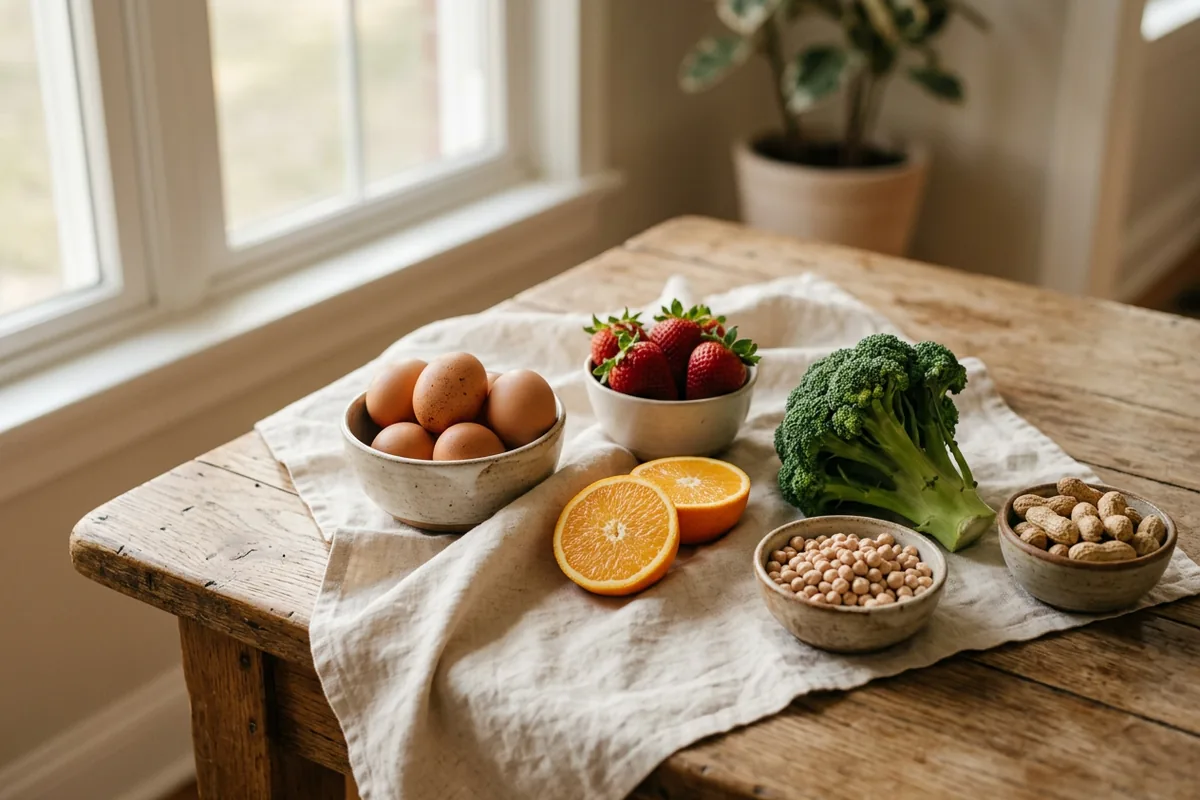
You don't need a special diet. Cleveland Clinic suggests a balanced plate with chicken, beef, fish, dairy, eggs, beans, leafy greens, other vegetables, whole grains and citrus fruits. Here's what that can look like in a normal day:
- Breakfast: eggs with a side of strawberries or an orange.
- Lunch: a bowl of beans or chickpeas with bell peppers and a slice of whole grain bread.
- Snack: a handful of peanuts or other nuts.
- Dinner: fish or chicken with broccoli and a baked potato.
That one day covers protein, vitamin C, zinc and copper. It also brings plenty of fiber, which matters a lot if you deal with hemorrhoids. Fiber keeps stools soft, so you don't have to push. Harvard Health suggests 25 to 30 grams of fiber a day, from food or a fiber supplement.
Drink water through the day too. Fiber works better with enough fluid, and soft stools are easier on the tissue down there.
What this means for hemorrhoid cushions
Everyone has hemorrhoidal cushions. They're normal pads of collagen, elastin and small blood vessels. Harvard Health explains that the tissue holding them in place can weaken with age. When that happens, the cushions can slide and bulge.
The collagen itself may also be different. In a 2015 study from Cleveland Clinic Florida, hemorrhoid tissue had a lower share of strong type I collagen compared with the more stretchy type III. The authors said the tissue seemed less stable. They found no difference by age, and the study can't tell us what came first.
So it's fair to ask whether helping your body make collagen helps the cushions. The honest answer is that no one has tested it. No study has shown that vitamin C, collagen powder or any other supplement for collagen production changes hemorrhoid tissue. Your body decides where its collagen goes, and you can't point it at one spot.
What you can control is the pressure. Hard stools, straining and long hours in a chair push the cushions down every day. Soft stools, short bathroom visits and getting up every hour help take that pressure off. Eating well for collagen and eating well for your bowels turn out to be close to the same plate.
If flares keep coming back, or you see any bleeding, talk with your doctor. Bleeding isn't always hemorrhoids.
Sources
- Cleveland Clinic, Collagen: What It Is, Types, Function and Benefits
- Varani and colleagues, University of Michigan, 2006, collagen production in aged skin
- Nasseri and colleagues, Cleveland Clinic Florida, 2015, collagen in hemorrhoid tissue
- Harvard Health Publishing, Hemorrhoids and what to do about them
This article is for general information and is not medical advice. If you have rectal bleeding, severe pain or a change in your bowel habits, see your doctor.
About Venalys
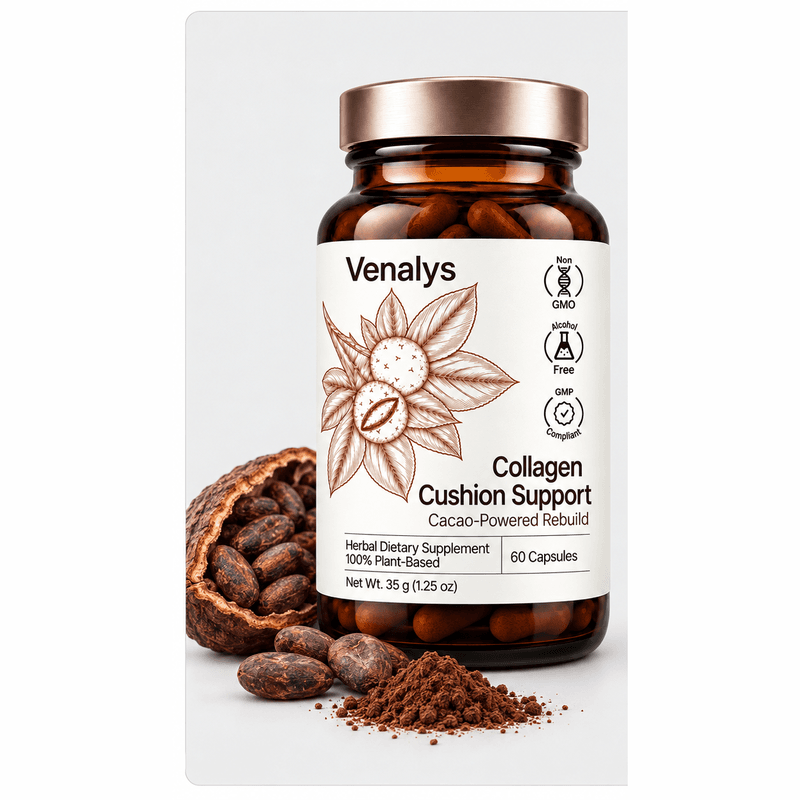
Venalys Collagen Cushion Support is a daily, plant based capsule made with cacao, horse chestnut, butcher's broom, soft psyllium and chicory root. It is formulated to support healthy vein tone and comfortable, regular bowel movements.†
Learn more about Venalys†These statements have not been evaluated by the Food and Drug Administration. This product is not intended to diagnose, treat, cure, or prevent any disease.
FAQs
Do any supplements increase collagen production?
Your body needs protein, vitamin C, zinc and copper to make collagen. A supplement can help if you're low on one of them. There's no good proof that extra pills raise production in someone who already eats well.
Can you really stimulate collagen production?
You can give your body what it needs and avoid what damages collagen. That means enough protein, fruit and vegetables, no smoking, less sugar and less sun. Age still slows production, and no pill has been shown to undo that.
What depletes collagen the most?
Age is the biggest factor, and you can't change it. After that, smoking, a diet high in sugar and refined carbs, and too much sun all speed up the damage.
Should I take vitamin C with collagen?
Your body needs vitamin C to make collagen either way. Many people get enough from food, so a pill isn't always needed. If you're unsure, ask your doctor or pharmacist.
Does collagen production stop at a certain age?
It doesn't stop, but it slows. Cleveland Clinic says a decline after 60 is normal for everyone. Your body keeps making collagen as long as it gets the protein and helpers it needs.
Does protein powder help collagen production?
Any protein gives your body the amino acids it needs to make collagen. A powder can help if you struggle to eat enough protein. Food works just as well for most people.
Can a supplement for collagen production help hemorrhoids?
No study has tested that. Hemorrhoid tissue does carry a weaker mix of collagen, but your body decides where new collagen goes. Fiber, water and less straining have much better evidence for hemorrhoids.