

Table of Contents
- What a thrombosed hemorrhoid is
- Thrombosed hemorrhoid images: what it looks like and how it feels
- How long it takes and what helps
- Close cousins people confuse it with
- Thrombosed hemorrhoid in the ER: what the WikEM approach looks like
- When it's time to get help now
- When clots keep coming back
- Sources
- About Venalys
A thrombosed hemorrhoid is an external hemorrhoid with a small blood clot inside it. It shows up fast as a firm, tender, bluish purple lump at the edge of your anus, and it's the most painful of all the hemorrhoid symptoms, even though it's rarely dangerous.
Maybe it started after a hard morning, a long drive or a day of yard work. By evening you were sitting on one side, walking a little stiff, and checking with a mirror. It came out of nowhere, and that's what scares people most.
Here's what's going on. Everyone has hemorrhoidal cushions, and Harvard Health explains that the tissue holding them in place can weaken with age. The American Society of Colon and Rectal Surgeons explains that when a clot forms in an external hemorrhoid, which sits in a tightly held spot, the pressure goes up very quickly. That fast rise in pressure is why it hurts so much.
What a thrombosed hemorrhoid is
A hemorrhoid is a cushion of blood vessels that has swollen and slid down. When blood pools and clots inside one, doctors call it thrombosed. Cleveland Clinic notes that the clot stays in that spot and doesn't travel to other parts of your body.
Most clots form in external hemorrhoids, the ones under the skin around the opening. That skin has pain nerves, so you feel every bit of it. A 2018 review in American Family Physician says hemorrhoids are most common between ages 45 and 65, and that thrombosed external hemorrhoids can be extremely painful.
The good news: the body clears most clots on its own, and you have clear options while it does.
Thrombosed hemorrhoid images: what it looks like and how it feels
What you'd see in thrombosed hemorrhoid images
If you look up thrombosed hemorrhoid images, you'll see a small, round lump right at the edge of the anus. Cleveland Clinic describes it as blue, black or purple, and firmer to the touch than a regular hemorrhoid. The skin over it looks tight and shiny. A plain hemorrhoid is soft and skin colored, and it gives a little when you press. A clotted one feels like a small marble. If what you see is red, warm and growing, with fever, that looks more like an infection, and a doctor should check it.
Clotting hemorrhoids and why the clot forms
A clot forms when blood sits still inside a swollen vessel. Hard pushing, a long time on the toilet, heavy lifting or hours in a seat all trap blood in the cushion. Many people can point to the moment: a hard stool, a heavy box, a long flight. Others can't. American Family Physician also notes that clots can come back, and that early removal lowers that risk.
Large external hemorrhoid or a clot
A large external hemorrhoid isn't always clotted. Size alone doesn't tell you much. A big, soft, skin colored bump that swells after a bowel movement and calms down later is usually a swollen external hemorrhoid. A clot is different. It appears in hours, it's hard and dark, and the pain is constant, even when you're lying still. The American Society of Colon and Rectal Surgeons also notes that some people have swelling and pressure from external hemorrhoids that aren't clotted at all. The full picture of external hemorrhoids has its own page.
How long it takes and what helps
Thrombosed hemorrhoid: how long to go away
The American Society of Colon and Rectal Surgeons explains that the pain often peaks about 48 to 72 hours after it starts and is mostly settling after four or five days. Dr. Albert Chung, a board certified colorectal surgeon in Orange County, California, puts it simply in his video guide: "the first three days are the most painful." The lump itself takes longer. The body absorbs the clot slowly over the following weeks. When it's gone, a small flap of loose skin is often left behind, called a skin tag. That's stretched skin, not a new hemorrhoid.
Home care while the clot clears
If the pain is bearable, home care is a reasonable choice. The NIH suggests sitting in a few inches of warm water, called a sitz bath, several times a day. Harvard Health says that if the pain is tolerable and the clot has been there for more than two days, home care is the usual path. A few simple steps help:
- Keep stools soft with fiber and plenty of water, so you don't push.
- Cut back on heavy lifting and long hours in one seat for a few days.
- Rinse instead of rubbing when you clean up.
- Ask your pharmacist about an OTC pain reliever or numbing cream that's safe for you.
When a doctor removes the clot
If the pain is severe and the clot is new, a doctor can numb the area and take out the clot in the office. American Family Physician says that when this is done within the first two to three days, people get relief faster, have a lower risk of it coming back, and go longer before the next one. After that window, the pain is usually already easing, so many doctors suggest home care instead. Don't try to open it yourself. That can bring infection and more bleeding.
Close cousins people confuse it with
Thrombosed external hemorrhoid in women
A thrombosed external hemorrhoid looks and feels the same in women as in men: a sudden, hard, dark lump with strong pain. The same triggers apply too, like constipation, straining and long hours sitting at a desk. It's easy to mistake it for a cyst or a pimple, and it's easy to feel too embarrassed to get it checked. There's no reason to wait. A doctor can tell a clot from other lumps in a short exam, and Cleveland Clinic reminds readers that not every lump is a hemorrhoid.
Hemorrhoid strangulation
Strangulation is a different problem. Cleveland Clinic describes it as an internal hemorrhoid that has slipped outside, where the muscles of the anus cut off its blood flow. The tissue swells, turns dark and hurts a lot. A hemorrhoid that's out, very painful and won't go back in needs a doctor soon. Internal hemorrhoids are covered in more detail on their own page.
Prolapsed hemorrhoid vs external
A prolapsed hemorrhoid starts inside and slides out, often after a bowel movement. Cleveland Clinic says it's usually a small lump you can gently push back in. It's covered with pink, moist lining and often doesn't hurt much. An external hemorrhoid sits under the skin outside and stays there. A thrombosed one is external, hard, dark and painful. So if you can push it back, it's likely internal. If it stays put, hurts and feels firm, think clot.
Thrombosed hemorrhoid in the ER: what the WikEM approach looks like
WikEM is a free online reference written for emergency doctors, and it often comes up when people search for what the ER will do. You don't need to read it yourself. Here's how an ER visit for a clot usually goes, based on what US surgeons describe. First, the doctor looks at the lump and checks that it isn't an abscess, which needs draining. Then the timing matters. If the clot is only a day or two old and the pain is severe, the doctor may numb the area and remove it. If it's older and already easing, you'll likely go home with a plan for sitz baths, soft stools and pain relief.
When it's time to get help now
The NIH says to get care right away for severe anal pain with bleeding, especially with belly pain, diarrhea or fever. Also call your doctor if:
- the lump keeps growing after the first few days
- you have fever, chills or a red, hot area that spreads
- bleeding is heavy or doesn't stop with gentle pressure
- you can't pass urine or stool
- you're not sure it's a hemorrhoid at all
Cleveland Clinic points out that other conditions can cause bleeding and lumps like hemorrhoids, and some of them are serious. A short visit puts a name on it.
When clots keep coming back
One clot can be bad luck. Two or three in the same spot is a pattern. When that happens, the question isn't really this flare anymore. It's the support around the cushion and the daily pressure that keeps landing on it. Tissue that holds a little less well than it used to swells more easily with every hard push and every long day in a chair. That's why the habits between flares matter most: soft stools, enough water, short bathroom visits and regular movement. If clots keep returning, ask your doctor whether removing that hemorrhoid makes sense for you.
Sources
- American Society of Colon and Rectal Surgeons, Hemorrhoids expanded information
- Mott, Latimer and Edwards, American Family Physician, 2018, Hemorrhoids: diagnosis and treatment options
- Cleveland Clinic, Hemorrhoids
- Harvard Health Publishing, Hemorrhoids and what to do about them
- NIDDK (NIH), Treatment for hemorrhoids
- Your Friendly Proctologist (Dr. Albert Chung), Step by step guide: External Thrombosed Hemorrhoids (YouTube)
This article is for general information and is not medical advice. If you have rectal bleeding, severe pain or a change in your bowel habits, see your doctor.
About Venalys
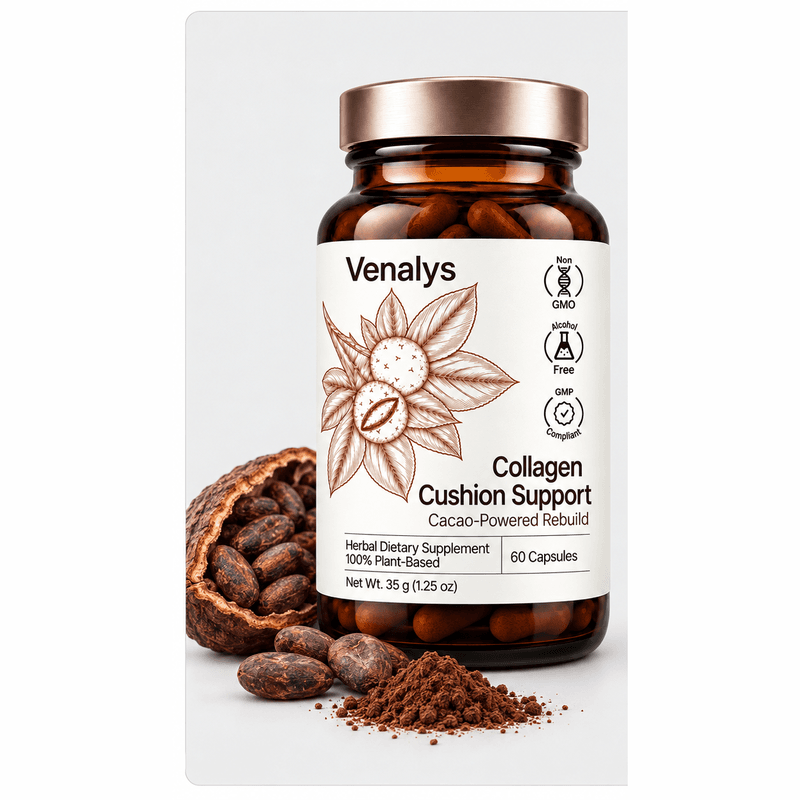
Venalys Collagen Cushion Support is a daily, plant based capsule made with cacao, horse chestnut, butcher's broom, soft psyllium and chicory root. It is formulated to support healthy vein tone and comfortable, regular bowel movements.†
Learn more about Venalys†These statements have not been evaluated by the Food and Drug Administration. This product is not intended to diagnose, treat, cure, or prevent any disease.
FAQs
Does a thrombosed hemorrhoid go away on its own?
Yes, in most cases. The worst pain usually passes within a few days, and the body absorbs the clot over the next few weeks. A small skin tag may stay.
My thrombosed hemorrhoid popped. What should I do?
The skin over the clot sometimes opens and some old blood leaks out. That often eases the pressure. Keep the area clean with warm water, press gently with soft gauze if it oozes, and call your doctor if the bleeding is heavy or you get a fever.
When are hemorrhoids an emergency?
Go now for heavy bleeding, fever with anal pain, a hemorrhoid that's out and won't go back in, or pain you can't control. Those signs need a doctor the same day.
What will urgent care do for a thrombosed hemorrhoid?
Urgent care can examine the lump, rule out an abscess and suggest pain relief and home care. Some clinics remove a fresh clot, while others refer you to a surgeon.
How do you sit in a car with a thrombosed hemorrhoid?
Sit on a soft cushion and shift your weight from side to side. On long drives, stop every hour or so to stand and walk for a few minutes.
Is a thrombosed hemorrhoid dangerous?
Rarely. It hurts a lot, but the clot stays where it is. The main risks are infection and bleeding, so watch for fever, spreading redness or heavy bleeding.